Get Full Government Meeting Transcripts, Videos, & Alerts Forever!
Get email alerts on the Municipal Government topic
No spam. Unsubscribe anytime.
City proposes new Neighborhood Improvement Division; council seeks more detail on costs and structure
Summary
City officials proposed a new Neighborhood Improvement Division on Jan. 21 to centralize code enforcement, demolition and blight remediation; officials said the structure would be funded through reallocation of positions and would require subsequent budget adjustments.
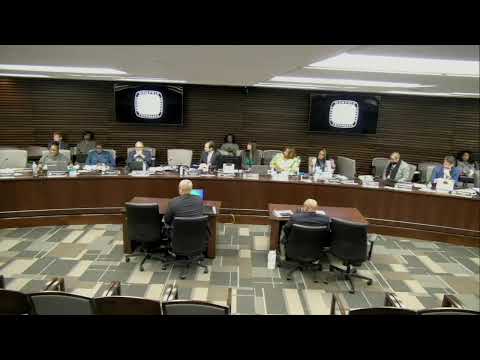
City administration officials on Jan. 21 presented a proposal to create a new Neighborhood Improvement Division that would centralize code enforcement, blight remediation, demolition and a proposed public‑service corps. The proposal is a midyear structural change that officials said will require budget-line adjustments and further council consideration.
Chief Operating Officer Antonio Adams and CFO Walter Parson told the executive committee the division would pull personnel and support functions out of Public Works, Solid Waste and other departments and consolidate them under a single director for neighborhood improvement. Parson cited a preliminary structural-change impact of roughly $1,036,027 in personnel and operational changes and said additional solid-waste funding of about $964,299 would be shifted to support positions transitioning into the new division; he described the net structural-change profile as roughly $2,000,000 in adjustments that would be addressed in the FY‑26 budgeting cycle. Parson said the FY‑25 budget impact would be absorbed through interdepartmental repositioning of existing funds and roles.
Council members asked detailed budget questions and pressed for a multi-year plan. Councilman Carlisle urged a working-session format to examine structure, scope, three- to five-year costs and measurable outcomes before the council commits to larger allocations. Council members raised concerns about duplication (the city previously had a neighborhood-improvement function) and asked how the new division would coordinate with police for enforcement in hazardous situations; staff said relationships with NPD would be part of the enforcement strategy.
Council members also discussed the city’s upcoming debt‑service profile and “debt‑cliff” timing; staff said the main structural-budget changes for the proposed division would occur in FY‑26 and that the administration would return with more detailed budget language and a director selection for committee consideration.
Ending — Committee members expressed general support for the concept of a single, focused neighborhood‑improvement organization but asked the administration for a detailed implementation plan, staffing chart, multi‑year cost estimates and clear performance metrics before final approval.