Get Full Government Meeting Transcripts, Videos, & Alerts Forever!
Get email alerts on the Utilities topic
No spam. Unsubscribe anytime.
MLGW committee reviews fiscal consent items, customer communications and plans for community focus groups
Summary
Memphis Light, Gas & Water presented a fiscal consent agenda that included cable and pole purchases and urged residents to conserve energy during an expected peak. MLGW communications described outreach, assistance programs and planned district focus groups for a 2045 community engagement process.
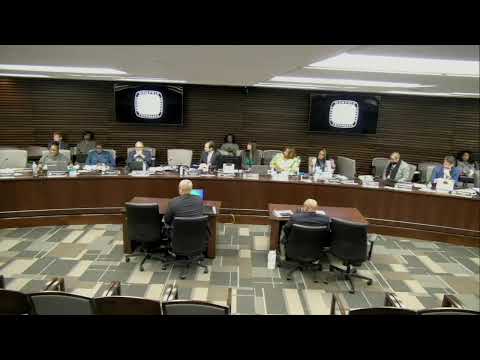
Memphis Light, Gas & Water (MLGW) briefed City Council’s utility committee Jan. 21 on a fiscal consent agenda and on the utility’s communications, customer assistance and community engagement plans.
President Doug McGowan outlined consent-agenda purchases and service contracts the utility was seeking to renew or authorize, including renewal of the municipal contribution to the Shelby County Groundwater Pollution Control Board at $0.55 per meter, identity-management support, multi-year Splunk enterprise licenses, purchases of distribution cable and steel utility poles, and grounds maintenance contracts. McGowan said the purchases maintain inventory for routine replacement and new construction and noted the utility’s effort to track cumulative city approvals so far in 2025.
Committee members asked about the groundwater fee level; McGowan said the Shelby County Board has discussed an increase (he described a prior proposal that would have been substantially higher) and that municipalities expect to revisit the charge in cooperation with the county board. Council members also clarified that vacant-lot maintenance contracts covered MLGW-owned parcels that are sometimes needed for future infrastructure.
Ursula Madden, MLGW vice president for corporate communications, described the department’s work in 2024: about 9 million page views of MLGW web pages, steady growth across social platforms, and a print/mail operation delivering about 5.8 million bills and 1.1 million postal mail pieces last year. She reviewed utility assistance programs administered or supported by MLGW — including an on-bill deferred-payment program, a “gift of comfort” customer-gift program and partnerships with MIFA and neighborhood organizations to coordinate aid — and told council staff the utility manages roughly 1,200 public-records requests annually.
Madden said MLGW plans two engagement tracks in 2025. One is a district-level series of focus groups and meetings to inform a long-range plan for “what the utility should look like in 2045,” with sessions planned in all seven council districts and partner municipalities. The other is project-specific town halls (for example, outreach tied to the Weaver–Gill gas-line replacement and the Orange Mound infrastructure initiative). Madden also said the utility plans a website overhaul and a new outage map and account portal in future IT work.
McGowan also told the committee that extreme cold could push regional generation demand close to historic peaks and asked residents to conserve energy the following morning between 5 a.m. and 10 a.m. to reduce peak load risk.
Ending — Committee members supported MLGW’s outreach plans and asked staff to publicize focus-group dates and to coordinate town halls for major construction projects.