Get Full Government Meeting Transcripts, Videos, & Alerts Forever!
Get email alerts on the Riverfront Development topic
No spam. Unsubscribe anytime.
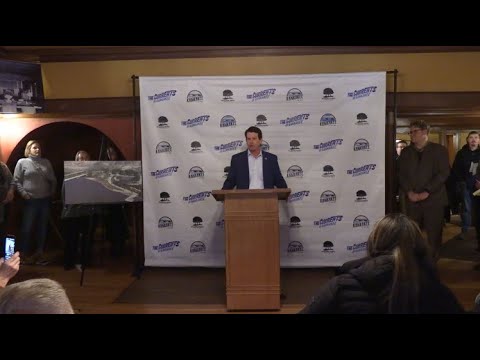
Kankakee officials, partners mark riverfront groundbreaking as start of multi‑decade plan
Summary
City leaders, park officials and community partners gathered Jan. 22 at the Bradley House to mark the groundbreaking of the first phase of the Kankakee riverfront redevelopment, which organizers say is funded largely by grants and philanthropy and will require additional phases and environmental approvals over the next decades.
KANKAKEE — Mayor Chris Curtis and local, county and state officials on Jan. 22 celebrated the groundbreaking of the first phase of a long‑planned Kankakee riverfront redevelopment at the Bradley House, calling the start of construction a milestone in a multi‑phase effort to open riverfront land and connect walking trails.
“This is going to be completed. And when it’s all said and done, the community is going to be able to use this,” Mayor Chris Curtis said, describing the project as the first step in what he and others expect will be a 25‑ to 30‑year effort to develop the riverfront.
Organizers said the project is mostly funded by grant and philanthropic contributions raised for the initial phase. “We have nearly $2,000,000 in grant money for this. Nearly a half a $1,000,000 in philanthropy money from the public sector,” Curtis said at the event.
Why it matters: City and park district officials said the redevelopment aims to improve public access to the river, spur adjacent residential and commercial development, and create recreation and tourism opportunities for Kankakee and the surrounding region. City leaders framed the ground‑breaking as a community achievement after more than seven years of planning and public engagement.
During the ceremony, speakers described concurrent and upcoming work tied to the project: final engineering for a riverfront trail that would connect the bridge across from Riverside to Kennedy Avenue and continue south to Station Street and under the Court Street Bridge; ongoing property acquisitions along the West River Walk; and future phases of design and engineering.
Senator Joyce characterized the river as a regional asset and recalled an environmental review that briefly delayed the start. “The mussel study showed 7 endangered mussels,” Senator Joyce said, referring to a Department of Natural Resources review that officials said required additional coordination before crews could break ground.
State Representative Jackie Hausch, who said she grew up near the river, said the project reflects sustained local support. “The river is probably the hidden gem for our community,” Hausch said.
Park District Commissioner Ray Eads and community organizer Robbie Brewer Watts emphasized community ownership. Eads said early donors and volunteers — whether $5 or $50 or $1,000 — helped advance the project. Robbie Brewer Watts, who described herself as both chair of the Peggy Gervais Society and a city official overseeing economic and community development work, said the groundbreaking caps more than seven years of community meetings, design work and compromise: “This project honors all of that.”
Bill Yaga, identified as the riverfront executive director, was singled out by the mayor for day‑to‑day work on fundraising, marketing and implementation. The mayor also thanked PSI Construction and members of the Bradley House team for preparing the site for the winter ceremony.
Officials said this is the first of multiple phases and that significant work remains: further engineering, grant applications for the trail in the coming fall, continued property acquisitions near Legion Park, and design for later riverfront phases. Curtis said the city expects to complete meaningful work in the next five to six years while acknowledging the full build‑out could span decades.
No formal votes, ordinances or contract awards were recorded during the ceremony. Organizers encouraged continued volunteer and philanthropic support and planned a series of follow‑up meetings and fundraising outreach.
The Department of Natural Resources review and the presence of endangered mussels were cited as reasons the schedule briefly shifted; officials said they have resolved the issue sufficiently to proceed with the current construction activities. Speakers noted the project involves partnerships among the City of Kankakee, the Kankakee Valley Park District and nonprofit groups including the RiverFront Society and the Peggy Gervais Society.