Get Full Government Meeting Transcripts, Videos, & Alerts Forever!
Get email alerts on the Local Economy Food Safety topic
No spam. Unsubscribe anytime.
Council debates how to regulate food trucks; staff told to return with more options
Summary
Council members discussed whether to change the city’s rule that allows one fixed-location mobile food vendor per 5,000 residents and asked staff to return with regulatory options.
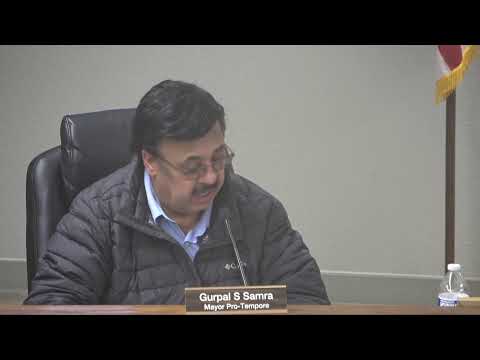
The Livingston City Council discussed whether and how to change municipal code section 3-2-8, the city’s ‘‘restaurants on wheels’’ provision, at its Jan. 21 meeting.
Under the current code, the city allows one fixed-location mobile food vendor for every 5,000 residents. Council members raised concerns about whether that numeric limit, and the code’s definition of what counts as a mobile food vendor, is still appropriate as the city grows. Several council members suggested considering classification by type (for example, distinguishing full food-service vendors from small coffee or pastry carts) and protecting existing brick-and-mortar restaurants from direct competition.
The city attorney outlined the tools available to local government: the council can limit the number of licenses, restrict where food trucks operate by zoning (for example, near schools), authorize temporary special-event clusters of food trucks, or set distance buffers from brick-and-mortar restaurants. The attorney also explained that county public-health and sanitation regulations still apply to mobile food vendors and that state law has in recent years adjusted some local authorities, but local jurisdictions retain options on location, zoning and special-event waivers.
Council members discussed calling the issue to the Planning Commission for detailed recommendations, with suggested guideposts from council about whether the focus is limiting numbers, protecting local businesses, allowing special-event concentrations, or other priorities. One council member recommended a 30-day outreach and review period before sending the item to planning; another suggested a two-month continuance to gather input.
There were no formal votes to change the ordinance at the meeting. For the record, the mayor said there was ‘‘a general consensus of the council to continue this’’ and to have staff return with options in a couple months that could include Planning Commission input.
Next steps: staff will prepare options for council and the Planning Commission that outline license limits, zoning restrictions, buffer distances from brick-and-mortar restaurants, rules for private-property operations and templates for special-event permits.