Get Full Government Meeting Transcripts, Videos, & Alerts Forever!
Get email alerts on the Nominations topic
No spam. Unsubscribe anytime.
Senate Energy and Natural Resources Committee advances Burgum, Wright nominations to Senate floor
Summary
The Senate Energy and Natural Resources Committee voted to report Gov. Doug Burgum’s nomination for secretary of the interior and Chris Wright’s nomination for secretary of energy to the full Senate, approving Burgum 18–2 and Wright 15–6. The committee also amended its internal quorum rule by unanimous consent.
The Senate Energy and Natural Resources Committee on a markup vote reported two presidential nominees to the full Senate: Gov. Doug Burgum to be secretary of the interior and Chris Wright to be secretary of energy. The committee approved Burgum by a roll-call vote of 18–2 and Wright by a roll-call vote of 15–6. The committee also amended Rule 6(b) of its rules to increase the quorum for reporting legislation from 10 to 11 members; that change was adopted by unanimous consent.
Why it matters: The committee action sends both nominations to the Senate floor for consideration by the full Senate. Committee debate highlighted sharp differences among senators over climate policy, energy technology, the pace of regulatory rollbacks, tribal consultation, and cleanup of the Hanford nuclear site — issues that senators said will shape how each nominee would run their respective departments if confirmed.
Committee action and votes The committee adopted a technical amendment to Rule 6(b) by unanimous consent to reflect the committee’s increased membership and the corresponding quorum requirement under Senate Rule 26.
On the nomination of Gov. Doug Burgum to be secretary of the interior, the committee recorded a roll-call vote of 18 ayes and 2 nays and ordered the nomination reported to the Senate floor.
On the nomination of Chris Wright to be secretary of energy, the committee recorded a roll-call vote of 15 ayes and 6 nays and ordered the nomination reported to the Senate floor.
Discussion highlights (attributed) Senator Martin Heinrich praised both nominees’ qualifications but flagged disagreements on climate and energy technology. Heinrich noted falling battery costs and growing storage deployment, saying, “The price of installing battery storage projects continues to decline — 34 percent just between 2023 and 2024 — and the cost of lithium-ion batteries has declined 92 percent since 2010.” Heinrich added that nearly 2.6 terawatts of generation and storage capacity are waiting to connect to the U.S. grid today.
Senator Ron Wyden announced he would vote no on the nominations, citing concern that the nominees would carry out administration policy rollbacks of the 2022 clean-energy tax credits. “Rolling back this law is unilaterally disarming America in the face of China,” Wyden said.
Senator Alex Padilla said he voted against Wright because of insufficient commitment to the Hanford cleanup and the Tri-Party agreement that governs it, noting the importance of sustained federal funding for that cleanup program to his state.
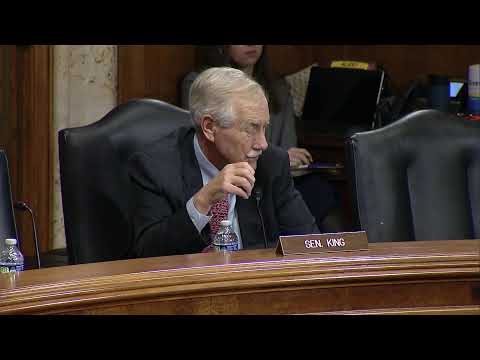
Senator John Hickenlooper, who said he knows both nominees, urged cooperation and use of science across energy policy debates. Senator Angus King emphasized that his view of “all of the above” energy policy explicitly includes wind, solar and storage; King criticized any narrowing of the portfolio, saying the intermittency issues are solvable and that wind and solar are among the cheapest generation technologies today.
Points of contention Climate and energy transition: Several senators disagreed over whether climate change should be treated as an existential threat and over the role of renewable technologies. Senator Heinrich said he disagrees with Wright’s comment that climate change is not an existential threat; Senator Wyden framed the nominees’ potential policy direction as risking American competitiveness on clean energy.
Hanford cleanup: Senator Padilla said Wright’s commitments on upholding the Tri-Party agreement were “unsatisfactory,” citing the program’s multibillion-dollar annual cleanup work and urging a stronger pledge to resist pressure to shorten cleanup timelines.
Tribal and public-land consultation: Burgum told the committee he would meet with local stakeholders and tribal leaders before recommending changes to public land protections; several senators welcomed that commitment and emphasized the need for robust tribal consultation on land and water decisions.
What happens next Both nominations were forwarded to the full Senate for consideration. A confirmation vote on the Senate floor is required for either nominee to take office.
Ending note Senators on both sides said they expect to continue engagement with both nominees on technical priorities — including grid reliability, energy storage, tribal water claims and Hanford cleanup — as the nominations proceed to the floor.