Get Full Government Meeting Transcripts, Videos, & Alerts Forever!
Get email alerts on the Economic Development topic
No spam. Unsubscribe anytime.
Waynesboro economic development director outlines strategy, targets manufacturing and downtown revitalization
Summary
City economic development director Greg Hitchen presented a revenue-focused strategy to the Waynesboro Planning Commission, emphasizing support for existing businesses, downtown building rehabilitation, entrepreneurship programs and readiness of industrial sites for manufacturing investment.
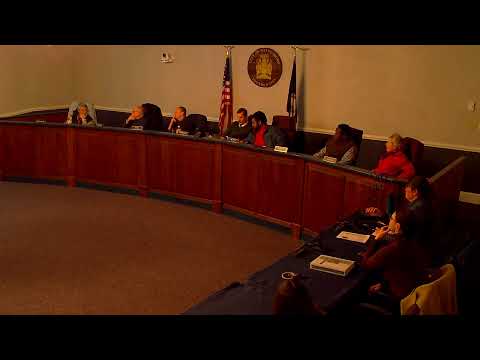
Greg Hitchen, Waynesboro’s director of economic development and tourism, told the Planning Commission on Jan. 21 that the city’s economic-development work is intentionally revenue-driven and focused on three linked goals: attract outside investment, help existing businesses grow and strengthen entrepreneurship.
Hitchen said statewide data show strong returns on investment for economic development programs, and he stressed Waynesboro’s emphasis on expanding existing firms rather than chasing headline-grabbing relocations. “Our goal is revenue generating,” he said, describing a state analysis that averages about $7,700,000 in tax revenue to a locality per project over a roughly 10-year window.
The presentation laid out a four-part strategic “stool”: attract new investment, grow existing businesses, deliver entrepreneurship guidance and manage real-estate opportunities. Hitchen highlighted downtown building vacancies as the single biggest local concern raised in a recent strategy survey, saying a small number of large buildings account for most empty space in the downtown core — he reported roughly 35 percent vacancy in the central square area, with four buildings representing about 30 percent of that total (survey figures from September; occupancy has changed slightly since then).
On entrepreneurship, Hitchen described the city’s Grow Waynesboro program and a local loan product capped at $15,000 (typical terms cited: about 3 percent for three years). He said the most recent round of entrepreneur support awarded $51,000 to four businesses; all four remained in operation and were expanding. “We gave out $51,000 to 4 businesses. They’re also operating. They’re also growing,” he said.
Industrial development and ready sites were a central focus of the discussion. Hitchen said Waynesboro owns roughly 205 acres of industrial land and that City Council has placed covenants on the two city industrial parks limiting uses to manufacturing or technology. He called a “ready site” — one with engineering, utilities and permitting largely complete or planned within 12–18 months — the most important local asset for landing manufacturing projects. “If we could do something that would make your job easier. Having a ready site is number one, I think, these days,” he said.
Hitchen said the city is targeting rail-served manufacturing at Nature’s Crossing, noting that true rail-served sites of 40 acres are rare in the mid-Atlantic. He also flagged constraints that typically follow manufacturing growth: workforce needs, childcare, housing and public-transportation access for non-driving workers.
Commissioners pressed on specific local assets and constraints. Several commissioners asked whether the economic-development authority keeps ongoing contact with downtown building owners; Hitchen said some owners have plans but others are “stuck in neutral.” Commissioners also asked whether certain former industrial properties, such as the DuPont site, are likely to redevelop; Hitchen said the DuPont property remains privately held and “I’m not sure much is ever gonna happen behind those gates.”
On tourism, commissioners discussed opportunities to increase overnight stays and lengthen visitor stays to capture more spending. One commissioner suggested pursuing formal recognition as the state’s fly-fishing capital to attract highway traffic; Hitchen said the office explores a range of outdoor-recreation opportunities but has not pursued that specific designation yet.
Why it matters: Waynesboro’s strategy ties revenue-generation, targeted manufacturing recruitment and support for local entrepreneurs to upcoming planning and infrastructure decisions. Readiness of sites and the city’s ability to package utilities, zoning and due diligence will determine whether the city can convert planning work into new investment and jobs.
Ending: Commission discussion ranged from technical questions about fiber and utility capacity to broader questions about downtown incentives and tourism branding. Hitchen invited further, smaller-group follow-up from commissioners and staff as the city finalizes its strategic plan.