Get Full Government Meeting Transcripts, Videos, & Alerts Forever!
Get email alerts on the Mtc Toc Policy topic
No spam. Unsubscribe anytime.
Orinda hears MTC Transit-Oriented Communities overview; council asks staff to pursue selective compliance and regional advocacy
Summary
Planning staff presented MTC’s Transit-Oriented Communities guidance and requested initial direction on which TOC measures Orinda should pursue to protect OBAG and other regional funding options.
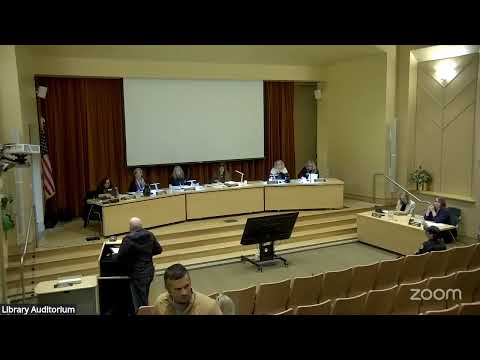
Orinda planning staff briefed the City Council on the Metropolitan Transportation Commission’s Transit-Oriented Communities (TOC) policy and its potential effects on future regional grant eligibility.
Lede: On Jan. 21 the council heard an overview of MTC’s TOC guidance and discussed whether Orinda should pursue “substantial compliance” to preserve competitiveness for One Bay Area Grant (OBAG) and other regional funding.
Nut graf: The TOC guidance focuses on station-area density, affordable-housing tools, parking management, and multimodal access; adherence is voluntary but staff said that substantial compliance could be a meaningful factor in MTC grant decisions. Staff asked for initial council direction on the mix of policies Orinda should consider.
What staff presented
Associate Planner Darren Hughes summarized the TOC toolkit and the four policy components: (1) residential and commercial density ranges; (2) production/preservation/protection housing policies such as inclusionary requirements and tenant protections; (3) parking-management measures (maximums, bicycle parking and unbundled parking); and (4) station access and circulation (complete streets, mobility hubs and multimodal connections). Mr. Hughes said the guidance is voluntary but that, as MTC refines OBAG/technical-assistance rules, substantial compliance could increase eligibility for competitive funds.
Grant history and potential impacts
Staff summarized prior OBAG and related awards: in previous cycles MTC distributed roughly $750 million regionally; Orinda directly received about $1.27 million in OBAG grants plus roughly $657,000 as part of a regional signal project slice, and additional technical-assistance funding for planning, for a total over the past decade in the low millions. Staff said the next OBAG funding cycle is scheduled for 2026, and that MTC has indicated compliance with TOC measures will be used as a meaningful factor.
Council and public reaction
Public commenters — including residents who spoke during the meeting — expressed strong reservations about adoption of policies that would increase local densities in station areas. Several speakers urged that council prioritize wildfire preparedness and evacuation planning over upzoning or other TOC measures.
Council members voiced two parallel positions: they want to remain competitive for grant funding that supports evacuation, multimodal access and traffic-signal upgrades, but they also want to avoid automatic adoption of urban-scale commercial density standards that do not fit Orinda’s downtown character. Council asked staff to identify a limited set of TOC tools that would both support grant eligibility and remain consistent with Orinda’s community goals.
Next steps and direction
Council gave staff guidance to pursue a practical path: implement or complete those TOC policies that align with the city’s existing housing-element obligations (for example, an inclusionary ordinance and objective design standards work); prioritize parking-management updates and multimodal access planning that could improve grant competitiveness; and continue discussions with Lafayette, Moraga and the county and to actively engage MTC commissioners and staff on policy refinements. Several council members volunteered to engage in regional outreach and coalition building.
Why it matters
MTC’s TOC approach is intended to align transportation investment with land-use outcomes around transit. For Orinda, the main stakes are grant eligibility for projects that can improve evacuation corridors, pedestrian and bicycle access, and signal coordination — resources the city lacks if it declines to participate or cannot demonstrate meaningful progress toward TOC measures.
Ending: Staff will return with more detailed recommendations that map TOC policy choices to Orinda’s downtown planning schedule and the housing-element implementation plan; council also asked city staff to pursue regional advocacy to refine MTC’s guidance for communities with wildfire and evacuation constraints.