Get Full Government Meeting Transcripts, Videos, & Alerts Forever!
Get email alerts on the K 12 Budget topic
No spam. Unsubscribe anytime.
Rutland City schools present FY2026 budget; district projects flat tax rate dependent on state yield
Summary
Rutland City Public Schools presented a level-service FY2026 budget that would hold educational programs and staffing near current levels; an early estimate showed the homestead tax rate could fall about 6¢ but remains contingent on the state property yield and final legislative actions.
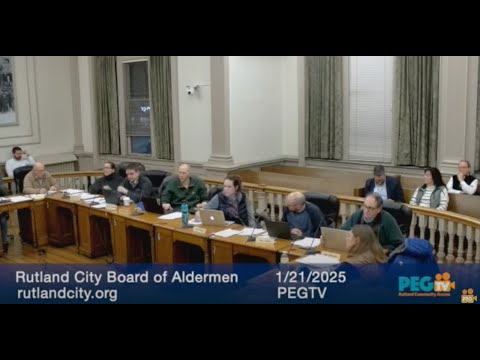
Ted Plimenos, representing Rutland City Public Schools, presented the school district’s proposed fiscal year 2026 budget to the Rutland City Board of Aldermen on Jan. 21, outlining a level-service spending plan and early tax-rate projections.
Plimenos said the budget maintains key educational programs and staffing near current levels and that, based on available information, the district’s homestead property tax rate for FY26 could fall from $1.67 to about $1.61 (a decline of roughly 6¢). He emphasized that the estimate depends on the state property yield announced by the tax commissioner and is not final until the legislature acts in spring; a modest change in the yield could eliminate the estimated drop and leave the rate flat at $1.67.
The district expects total expenses to rise about 5% to roughly $67 million, while the Agency of Education (AOE)–defined education spending — the figure that drives the statewide property tax calculation — is estimated to decline about 2% to just under $12,200 per pupil. Plimenos explained the apparent mismatch: changes in state metrics and student-weighting formulas implemented under Act 127 affect the denominator used in per-pupil calculations (long-term weighted average daily membership), and those adjustments can lower the per-pupil metric even as total district spending increases.
Plimenos noted the district has used one-time federal ESSER grants in recent years (about $17 million) to support COVID recovery efforts, tutoring and infrastructure projects, and that most of those funds have been expended. He pointed patrons to budget materials and an explanatory video on the district’s website for additional detail and said school staff would be available at public events to answer questions.
Aldermen asked whether the projected increase in the weighted average daily membership reflected an actual rise in students. Plimenos said the underlying unweighted enrollment is essentially flat year to year and that the change in the weighted metric slowed a prior multi-year decline rather than representing a large new inflow of students.
The school presentation included a detailed chart breakdown (total expenses, revenue offsets such as tuition from other towns, federal and local receipts) and a discussion of how education spending, not total expenditures, drives the homestead tax rate. Plimenos reiterated that the tax-rate projection should be treated as provisional until the legislature finalizes the state yield and other calculations later this spring.