Get Full Government Meeting Transcripts, Videos, & Alerts Forever!
Get email alerts on the Marina Repairs topic
No spam. Unsubscribe anytime.
Dunedin approves design contract for east seawall as debate continues over marina reopening and FEMA risk
Summary
Dunedin approved a $298,083 design and permitting contract with Kimley‑Horn for the marina’s east bulkhead replacement after lengthy debate about reopening parts of the marina, procurement methods and FEMA reimbursement risks.
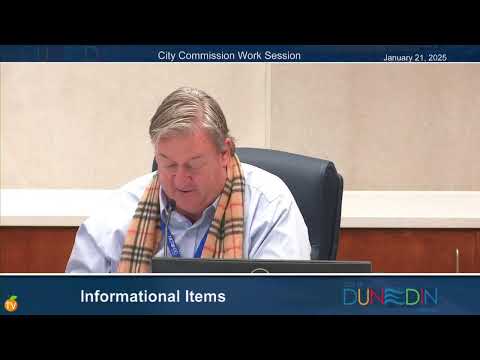
Dunedin — The City Commission on Jan. 21 unanimously approved a $298,083 contract with engineering firm Kimley-Horn and Associates to design and seek permits for the marina’s eastern bulkhead replacement and repairs to a damaged north bulkhead, while residents and commissioners pressed staff for a faster plan to stabilize docks and reopen portions of the marina.
The vote followed several hours of public comment, technical presentations from city staff and consultants, and a heated public exchange over procurement, timelines and how much the federal government might reimburse. Clayton Watkins, the city’s assistant utilities director and city engineer, told commissioners the quick schedule aims to complete design by April, bid in May and start construction in August with an estimated construction cost of about $3,555,000.
Why it matters: The marina is a central economic and recreational asset for Dunedin’s downtown, and its closure has affected restaurants, marina businesses and slip renters. Commissioners sought both an accelerated technical plan to repair the failing seawall and a short-term stabilization strategy that would allow limited marina operations before construction begins, while staff warned that moving too quickly can jeopardize FEMA reimbursement.
What the commission approved Commissioners voted 5–0 to authorize the city manager’s recommended service authorization for Kimley-Horn. The motion, read into the record by the mayor, directed the city to proceed with design, permitting and post-design services and named Deputy City Manager Jorge Quintas as the city designee authorized to execute the service authorization.
Commissioner Rob Dugard moved the contract approval and Commissioner Rob Walker seconded. The formal vote was recorded as unanimous.
Public questions and technical findings City staff and outside consultants described a mix of damage: a large section of east bulkhead that “moved substantially,” sinkage behind the wall and utilities (water and electrical) that were compromised where the wall shifted. Harbor Master Lori Ferguson and consultant teams reported that the commercial slips on the north side had temporary water restored and could be operated with temporary measures. The engineering team said a bathymetric survey and geotechnical work are planned to refine design.
Consultant Tucker Conklin of Tetra Tech, who advised on FEMA rules, told the commission that "FEMA reimburses temporary repairs," but cautioned there is no absolute guarantee: his experience showed similar projects that were accepted and others that were denied depending on documentation and procurement choices.
Citizen engineers pushed for quicker action Local engineer David Perro, representing a private engineering analysis provided to the city, urged a faster, less disruptive approach. "The docks are not destroyed," Perro told the commission, arguing many pilings, pedestals and utilities could be reset or repaired in weeks and that the marina could return to safe, limited operations without full reconstruction of the seawall.
Staff urged caution on procurement and reimbursement risk City staff said they used the city’s existing general engineering contract list (a continuing services pool) to speed procurement under Florida’s Consultants' Competitive Negotiation Act (CCNA) and to avoid a full multi-month solicitation that would delay design. Staff also flagged a modest but real risk that FEMA could audit and deny reimbursement if the city’s use of continuing services were not sufficiently justified and documented.
Commissioners asked for a parallel stabilization plan Multiple commissioners asked staff to return quickly with a bounded, costed plan to stabilize the marina for the upcoming storm season so boats can safely return. Commissioners emphasized two nonnegotiables: (1) any temporary work must protect citizens and property and be documented for reimbursement; and (2) the city should avoid decisions that foreclose later FEMA-eligible reconstruction or mitigation funds.
Votes at a glance - Kimley-Horn service authorization (design, permitting, post-design): Motion to approve carried 5–0. Mover: Commissioner Rob Dugard; Second: Commissioner Rob Walker. Outcome: approved. Notes: Commissioners and staff recorded a limited risk of FEMA denial if procurement/documentation is insufficient; staff will return with a funding plan if FEMA denies reimbursement.
Next steps and outstanding questions Staff said they will: (a) start Kimley‑Horn design work; (b) complete bathymetry and geotechnical sampling; (c) seek written reports on electrical and fire-suppression standpipe repairs; and (d) bring a targeted plan and cost estimate for temporary stabilization and limited reopening before construction, including an assessment of potential FEMA reimbursement and insurance coverage. The city manager said she would seek a project manager with marina reconstruction experience to coordinate complex work and stakeholder communications.
What remains uncertain Staff and consultants stressed three remaining uncertainties: (1) the final construction cost estimate; (2) how FEMA will treat expedited procurement and temporary stabilization work; and (3) the timing of agency permitting. Tetra Tech’s Conklin said the city can reduce risk by documenting the need for speed and using federal‑compliant contract language, but that some risk remains.
Ending note The Commission’s vote starts a compressed permitting and design schedule staff says is necessary to reach construction this summer. Commissioners and residents made clear they expect a concrete short‑term stabilization plan that balances reopening the marina and safeguarding the city’s eligibility for federal reimbursements.