Get Full Government Meeting Transcripts, Videos, & Alerts Forever!
Get email alerts on the Child Fatality Reviews topic
No spam. Unsubscribe anytime.
Committee considers updates to child fatality review law to improve data access and confidentiality
Summary
Senate Human Services Committee heard Senate Bill 5163 to revise child fatality review statute: expand age coverage to 19, clarify data access and confidentiality rules, and permit retention of identifiable data for analysis. Sponsors and public-health partners said changes help identify trends and prevent future deaths.
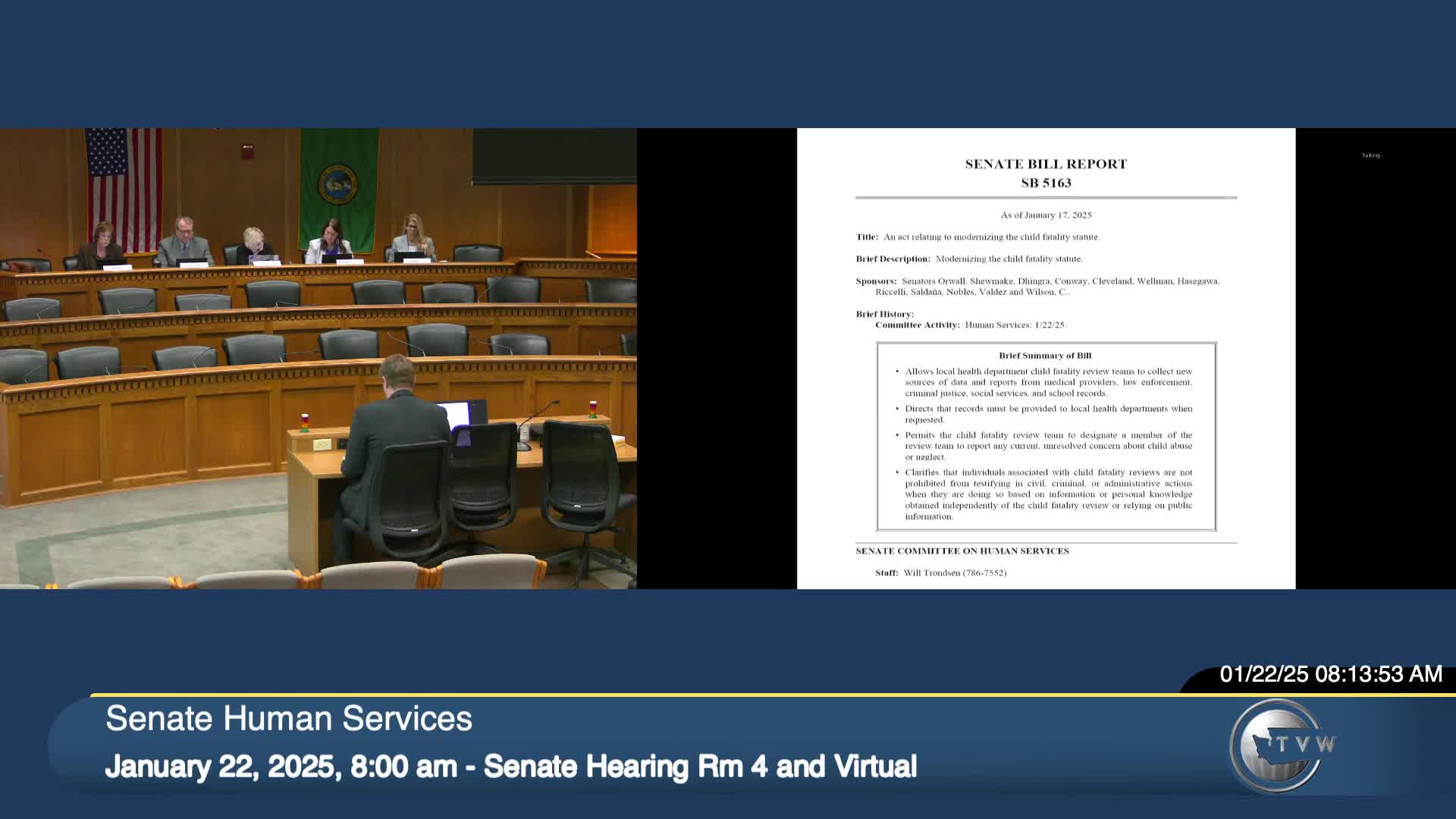
Senate Bill 5163, sponsored by Sen. Tina Orwell, received a committee briefing Jan. 22 on changes to Washington—s child fatality review statute to improve local review teams— access to records, adjust confidentiality rules and extend reviewable age to 19.
Will Tronson, committee staff, summarized the bill and told the committee the Department of Health supports local health departments conducting child fatality reviews. Tronsen said the bill—s changes would allow local review teams to request and receive medical, school, criminal-justice, law enforcement and social-services records for review while maintaining strict confidentiality and public nondisclosure of identifying information.
Jamie Bodden of the Washington State Association of Local Public Health Officials said the bill clarifies age to include 18-year-olds and establishes a clear process for mandated reporting when suspected abuse or neglect is identified. Bodden said teams need records to identify protective and risk factors and to recommend prevention policies.
Russell Brand, executive director of the Washington Association of Prosecuting Attorneys, and Katie Eilers of the Department of Health said stakeholders worked over the interim to address concerns and reach agreed language. Eilers said the Department of Health will use review findings to support statewide, data-driven prevention initiatives and liaise with the National Center for Fatality Review and Prevention.
The bill also clarifies that people associated with fatality review teams may testify in civil, criminal or administrative proceedings only when the testimony is based on information obtained independently of the review or is limited to public information. Staff noted a fiscal note had been requested and not yet received. No committee vote was taken during the Jan. 22 hearing.
Supporters argued the bill balances data access for prevention work with protections for confidential information; some committee members noted the change aims to capture deaths of 18-year-old youth who remain engaged with school or local services.