Get Full Government Meeting Transcripts, Videos, & Alerts Forever!
Get email alerts on the Early Childhood Courts topic
No spam. Unsubscribe anytime.
Senate committee hears push to expand early childhood courts from age 3 to 6
Summary
Senate Human Services Committee held a public hearing on SB 5149, a bill to expand Washington—s Early Childhood Courts (ECCs) to serve families with children up to age 6; witnesses, court staff and advocates said the change would let programs reach more families and improve reunification outcomes.
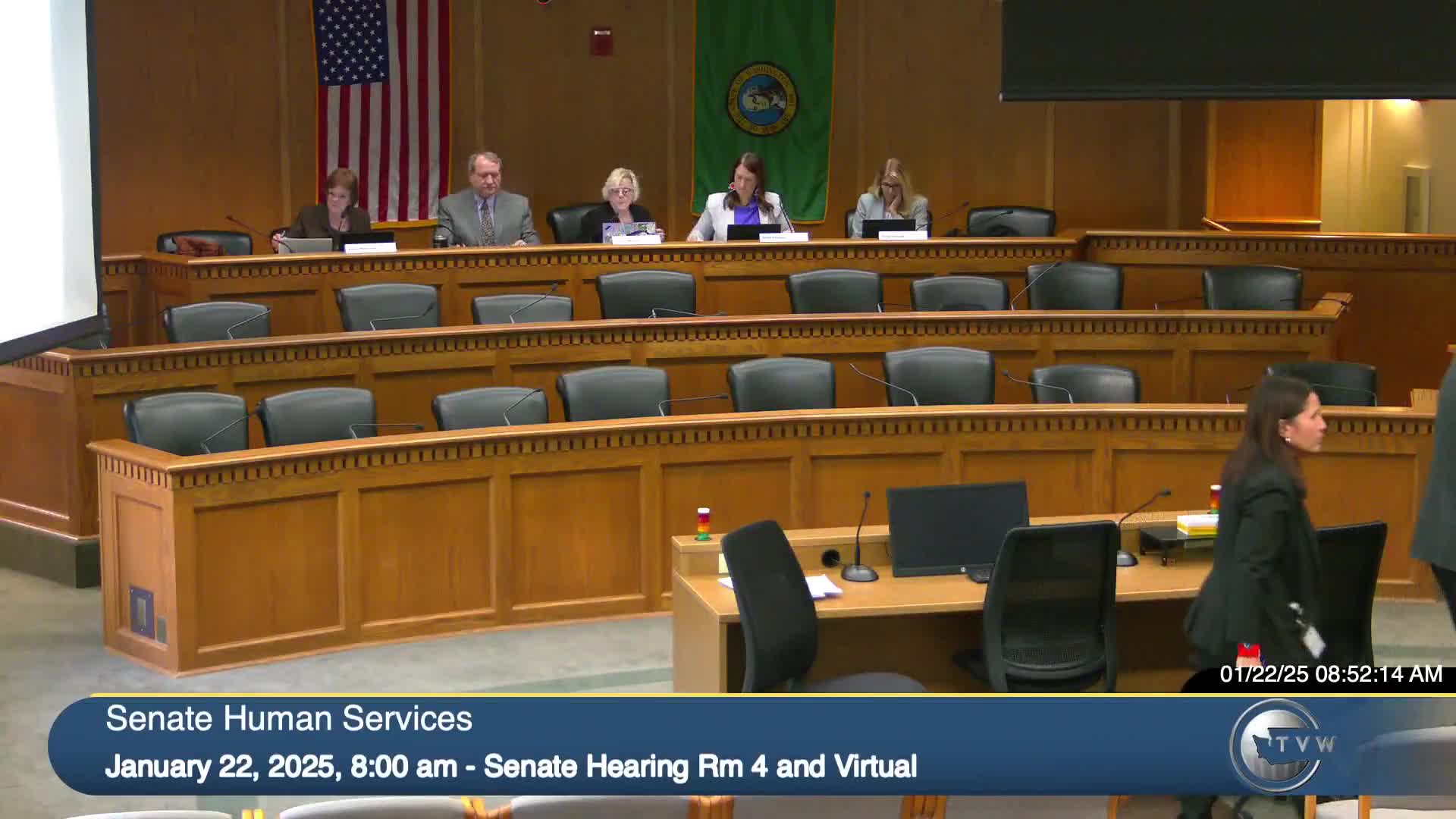
Senate Human Services Committee members heard testimony Jan. 22 on Senate Bill 5149, a measure sponsored by Sen. Adrianne Cortez to expand early childhood courts so they may serve families with children under age 6 rather than the current cap of under age 3.
Advocates, court partners and people with lived experience told the committee the expansion would allow ECCs to reach more families, improve reunification rates and produce better data on program outcomes. Committee staff said the pilot ECC model was enacted in 2021 and currently operates in Clark, Kitsap, Pierce, Spokane and Thurston counties.
Allison Mendiola, committee staff, briefed the bill and described ECCs as dependency courts designed to serve families whose children are under age 3 when cases enter the system; under the bill that would change to under age 6. Mendiola said key components include separate, more frequent status hearings, family team meetings facilitated by a community coordinator, and prioritizing voluntary access to available services.
Sen. Adrianne Cortez, the bill sponsor, told the panel the expansion would let courts provide services earlier and reach a greater number of families without changing program commitments. Cortez said other states have expanded ECCs to 0 through 5, and the change would align Washington with that approach.
Morgan Silverman of the Center for Children and Youth Justice (CCYJ) said CCYJ oversees the ECC pilot in partnership with the Administrative Office of the Courts and supports SB 5149. Silverman said preliminary data show higher reunification and lower adoption rates in ECCs, including for Black, Indigenous and other communities of color. She added that explicit statutory authorization would help partners implement changes and that current funding runs through September 2027.
Charles (last name not specified in the testimony record), a parent with prior involvement in the child-welfare system who now works as a parent professional, and Elizabeth Beaulieu, who said she participated in the Spokane ECC as a parent, both described personal experiences they said demonstrated ECCs— value in supporting reunification and connecting families to services.
Committee staff noted a fiscal note had been requested and was not yet available. No committee vote on SB 5149 was taken at the Jan. 22 hearing.
The hearing record shows interest from committee members but no formal action; staff and proponents said data collection and sustained funding would be necessary to measure long-term outcomes.