Get Full Government Meeting Transcripts, Videos, & Alerts Forever!
Get email alerts on the Wildland Urban Interface Code topic
No spam. Unsubscribe anytime.
Lawmakers, insurers and builders spar over adopting full International WUI code
Summary
A public hearing on House Bill 1254 drew support from the state insurance regulator and opposition from builders, environmental groups and some local officials over defensible-space rules, mapping accuracy and implementation costs.
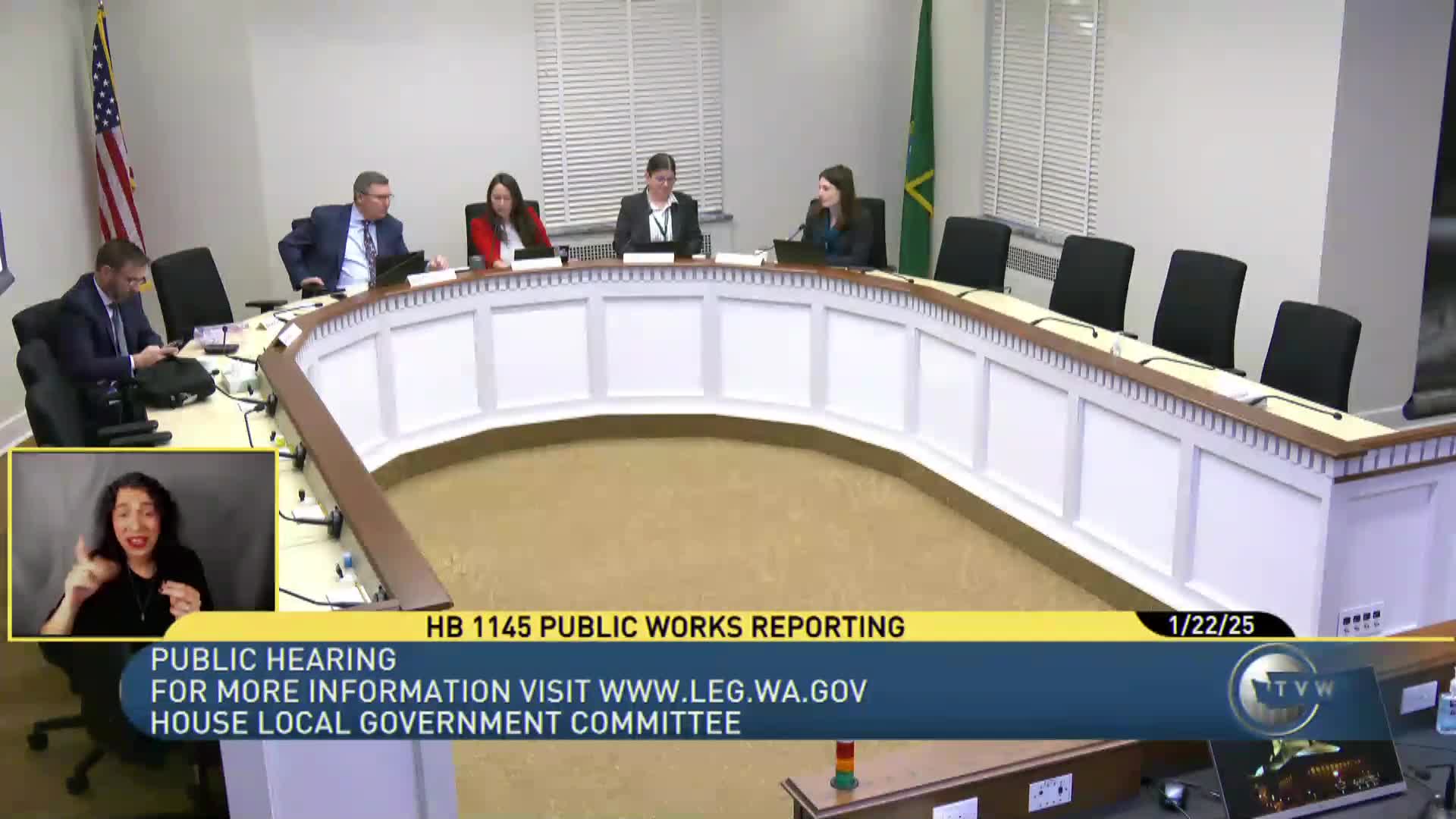
Representative Divina Deuer opened the public hearing on House Bill 1254, which would incorporate the International Wildland-Urban Interface (WUI) Code into Washington's state building code and allow the State Building Code Council (SBCC) to adopt the code for the state.
The Office of the Insurance Commissioner told the committee the bill should reduce wildfire risk and could improve insurance availability by establishing uniform building-material and defensible-space standards. "Anything that you can do to uniformly reduce the risk and the spread of wildfire from wild lands to the urban communities will have a positive impact on premiums," said Rory Payne Donovan, Office of Insurance Commissioner (testifying with David Ford).
Opponents included builders, environmental groups and local officials who said the international WUI model code contains technical defensible-space rules that are inappropriate for Washington's varied landscapes and may conflict with state environmental protections. "The international code’s defensible-space chapters, which use 30-to-100-foot buffers, do not reflect the body of wildfire science or Washington’s environment," said Lynn Fitzhugh of Restoring Earth Connection. The Department of Ecology warned that mandatory vegetation-clearing requirements could conflict with wetland and riparian protections and urged language that preserves local land‑use safeguards.
Several witnesses urged more technical work and better maps before adopting the full code. Testifiers said DNR-derived WUI maps used previously produced implausible results—e.g., urban sites mapped as higher risk than wooded parcels—and they urged the SBCC to convene broad technical advisory groups before final rulemaking. Dustin Kurban, managing director for the State Building Code Council, said the council supports the bill's intent and that off-cycle rulemaking would be required to adopt the WUI code sooner than the normal code cycle.
Builders and housing advocates warned of cost and housing-supply impacts if the WUI code's building and system requirements are applied in full. "Estimates here in Washington state put the incremental cost closer to $24,000–$25,000 per home in WUI areas," said Morgan Irving of the Association of Washington Business. The Building Industry Association also urged a slower, more inclusive process; Ron Perkowitz of the Kitsap Building Association said current maps already are prompting some insurers to cancel coverage in localized areas.
Environmental and wildfire-resilience witnesses disputed whether large defensible-space clearings reduce home loss; several urged focusing on "home hardening"—upgrading building materials and details close to the structure—rather than broad clearing. Charlotte Parsons of Black Hills Audubon asked the committee to require the SBCC to consult national wildfire-science experts and to ask insurers what they require to continue offering coverage in high-risk areas.
Representative Griffey pressed multiple witnesses on whether publishing risk scores or maps would prompt insurers to deny or cancel coverage. David Ford of the Office of the Insurance Commissioner said insurers already use proprietary wildfire‑risk models and that a robust WUI code could help some communities be seen as lower risk.
SBCC staff explained the council's planned technical-advisory approach and invited stakeholders to apply to its advisory groups. Ecology said the agency was willing to develop guidance to help reconcile defensible-space requirements with wetlands and riparian protections. SBCC staff estimated off-cycle rulemaking would cost roughly $20,000 and said an update aligned with the 2024 code cycle would produce an implementation date around Nov. 1, 2026, if the full adoption waited for that cycle.
The committee heard a mix of support and caution: supporters emphasized reduced risk and insurance benefits, while numerous testifiers urged delay until maps, science-based defensible-space guidance, and a broader, better‑resourced SBCC process are in place. The committee took testimony and did not take a final vote during the hearing.