Get Full Government Meeting Transcripts, Videos, & Alerts Forever!
Get email alerts on the Comprehensive Plan topic
No spam. Unsubscribe anytime.
Newcastle planning commission tables comprehensive plan after rejecting proposed connected‑streets policy amid public pushback on housing and DEI language
Summary
The Newcastle Planning Commission voted down a proposed replacement policy on connecting through streets and, after extensive public testimony focused on housing and DEI language, agreed by consensus to return the draft comprehensive plan to staff for further legal review and reformatting before forwarding to city council.
The Newcastle Planning Commission on Jan. 22 voted down a proposed change to the draft comprehensive plan that would have discouraged creating through streets between existing subdivisions and then agreed to delay a formal recommendation to city council so staff can clarify legal requirements and rework supporting materials.
The commission’s discussion focused heavily on two related issues: a new proposed policy limiting creation of through streets between recorded subdivisions, and several sections of the draft plan addressing housing requirements and “DEI”/racial‑equity language that multiple residents said were unnecessary or misleading. Director Fitzgibbons told the commission and public that some requirements are driven by state and regional law; she also said the Washington State Department of Commerce had issued an interpretation requiring local governments to allow two accessory dwelling units per single‑family lot, meaning "the city will be required to allow 2 ADUs per single family home." Director Fitzgibbons attributed that interpretation to the Department of Commerce and said staff is planning around it.
Why it matters: the comprehensive plan is the city’s primary long‑range policy document and must meet state and regional Growth Management Act (GMA) requirements in order to qualify the city for certain grants and regional certifications. Residents and commissioners debated where to draw the line between legally required content and material that could be presented as background or optional guidance. Dozens of residents attended and more than a dozen provided testimony, many urging the commission to preserve the city’s existing single‑family character and to remove or reformat the equity and housing analyses.
Most important facts first: The commission failed on a motion to replace draft policies (identified in the meeting as policies 41–43) with language that would have said, in effect, the city should not create new through streets between recorded subdivisions except for emergency access or when legally required, and only after community outreach and consideration of traffic calming measures. The vocal and recorded roll call votes captured in the transcript show at least the following positions: Commissioner Blocker — No; Commissioner Van Ahta — Yes; Commissioner Motlow — No; Commissioner Kent — No; Commissioner Cavan — No; Commissioner Marsh — Yes; Chair Charlie Gazzick — Yes. The motion did not carry and the chair announced the motion failed.
Commissioners and staff then discussed next steps. No formal adoption vote of the plan occurred. Instead the commission signaled by consensus to return the draft to staff for further legal review and to separate or reformat supporting appendices and background (including the racial‑equity / DEI appendices) so the primary policy elements are clearer for commissioners, the public and the city council. Director Fitzgibbons said staff will consult with the city attorney plus contacts at the Department of Commerce and the Puget Sound Regional Council (PSRC) about what the city is legally required to include and whether appendices can be referenced rather than included inline.
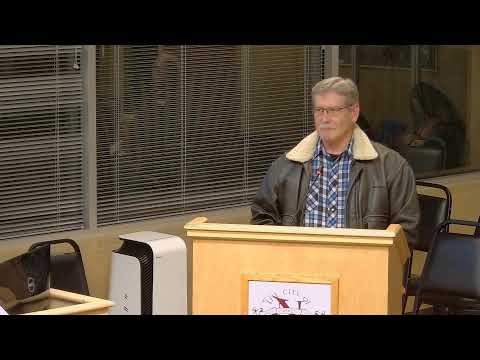
Public testimony and staff responses: Several speakers pressed the commission to remove language they characterized as divisive or unnecessary. Resident Nola Costin told the commission, "Diversity, DEI, is discriminatory. DEI looks at skin color and should not be included in our city's 10 year comprehensive plan." Other residents, including Tom Griffin, Debbie Webb and Lynn Prevett, urged the commission to keep the plan simple and limited to items required by state law. Rob Clark, a frequent commenter, suggested staff obtain a legal opinion clarifying vague terms in the draft, saying many provisions use non‑specific language such as "may consider," "shall consider," or "implement programs" without concrete measurable tests.
Staff described what parts of the draft are state or regional requirements and what is discretionary. Director Fitzgibbons summarized that a comprehensive plan is both a compliance document and a visioning document and noted the city must be consistent with state RCWs, King County countywide planning policies and PSRC requirements; she also said PSRC certification is needed for some transportation grants. Planning staff described the typical notice of application timeline for land use projects: initial completeness determination after a 28‑day review, sign posting by the applicant within two weeks of that completeness notification, and a 30‑day public comment period triggered by that posting.
ADUs and process details: During public comment an attendee, Joe Hughes, urged more flexibility in city setback rules for accessory dwelling units, saying the city’s current 20‑foot rear setback "is really restrictive." In the staff presentation, Director Fitzgibbons cited a Department of Commerce interpretation that the city must allow two ADUs on a single‑family lot — an outcome staff said they are planning for. Staff also described traffic‑calming measures that could be used where through streets are allowed, such as speed humps, mini‑roundabouts and curb bulbs.
Votes and appointments at the meeting: The commission held a separate personnel vote during the meeting. Commissioner Blocker nominated Lynn Troutman for vice chair; the nomination was seconded and approved by unanimous voice vote, and Troutman was seated as vice chair.
What’s next: Commissioners asked staff to return with clearer legal guidance and to reformat the draft so substantive policy text (the seven plan elements) appears with supporting appendices and analyses separated or referenced. Director Fitzgibbons said staff would check with the city attorney and state contacts about whether some required analyses can be provided as referenced appendices or must remain in the main plan text. The commission scheduled continued review at a future meeting; staff plans to present a revised draft after the legal review and reformatting.
Context and background: Commissioners and staff traced the draft back to the city’s existing comprehensive plan and said their intent was to preserve prior policies unless state or county law required changes. Staff said some items in the draft are new only because state law and regional policy now require them (for example, housing element content and analyses required by recent state legislation and Department of Commerce guidance). The commission spent roughly two years on outreach and drafting and trimmed the overall document length while attempting to keep required content.
Ending note: The motion to change the connected‑streets language failed and the commission did not forward a final recommendation on the comprehensive plan to the city council on Jan. 22. The commission directed staff to seek legal clarification and to return with a reorganized draft at a later meeting so commissioners, council and the public can more easily distinguish between required compliance items and discretionary policy recommendations.