Get Full Government Meeting Transcripts, Videos, & Alerts Forever!
Get email alerts on the Zoning topic
No spam. Unsubscribe anytime.
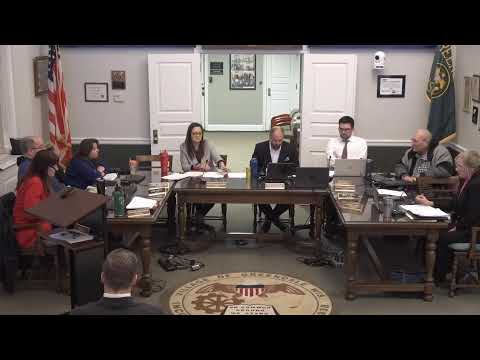
Village Board approves major zoning-code rewrite after debate over conditional-use process and vape-store limits
Summary
The Village of Greendale Village Board on a 5–2 vote approved an ordinance to repeal and recreate large sections of the village zoning code, including replacing "special uses" with "conditional uses," creating a planned‑development overlay and adding an institutional zoning district for municipal properties.
The Village of Greendale Village Board on a 5–2 vote approved an ordinance to repeal and recreate large sections of the village zoning code, including replacing "special uses" with "conditional uses," creating a planned‑development overlay and adding an institutional zoning district for municipal properties.
The overhaul implements changes prompted by the state law enacted as 2017 Act 67 and updates dozens of definitions and standards used to evaluate conditional‑use applications, officials said. "So for about a year we've been working with our planner Craig Huebner ... working on a very extensive update to our zoning code," Village Manager Mike Hawes told the board during the public hearing portion, summarizing work by the village planner and village attorney.
Why it matters: The rewrite clarifies how conditional uses are reviewed, adds standards the village must rely on to attach conditions, and creates tools—such as a planned‑development overlay—to allow flexibility for projects that do not fit existing district rules. Attorney Eric Larson told trustees the state law change made conditional uses a quasi‑judicial matter and required a complete rethinking of the code: "Act 67 ... created regulations on what a conditional use is, what your authority is over conditional uses, how conditional uses need to be considered," Larson said.
Key provisions and board debate - Terminology and standards: The ordinance replaces the older "special use" label with the more widely used "conditional use" and adds detailed standards to support decisions and avoid arbitrary conditions. Planner Craig Huebner said staff and the village attorney drew on experience in other communities when drafting the new standards. - Planned‑development overlay: The code creates a planned‑development overlay district to allow flexibility for projects that do not fit existing underlying districts while preserving the village and plan commission discretion to shape proposals. - Institutional district: The draft adds an institutional district to identify municipal, school and utility facilities that previously lacked consistent map designations. - Approval process for conditional uses: Staff presented two process options: a one‑step process (public hearing and final vote at the plan commission) and a two‑step process (plan commission recommendation followed by a village‑board public hearing and final vote). Attorney Larson explained the legal tradeoffs: "If it's a 2 step, you probably shouldn't have nothing to do with the plan commission because it's gonna be coming to you as the board ... you shouldn't be gathering evidence before the hearing." Several trustees and members of the public raised concerns about board members who serve on the plan commission hearing applications and about transparency for residents who may not attend plan commission meetings. - Vape‑store language removed: After debate, the board voted to remove language that would have limited "vape stores" to a manufacturing district as a conditional use. Opponents said singling out one legal retail product felt inappropriate; supporters cited neighborhood and school proximity concerns. The board removed that restriction before passing the ordinance.
Public input and local concerns During the public‑hearing period, several residents and a longtime planner who attends neighboring municipalities’ hearings urged more public notice and opportunities for resident comment at the plan commission level. A local resident said many residents are more familiar with village‑board proceedings than plan‑commission meetings and that limiting public input at the commission could reduce resident participation.
Outcome and next steps The board approved the ordinance as amended. The final motion adopted the updated zoning code (including the planned‑development overlay and institutional district), incorporated the drafting corrections discussed by trustees and staff, and removed the vape‑store restriction. The village also approved a companion ordinance to amend the zoning map to add institutional designations for municipal properties and remove obsolete special‑use overlays. Staff said minor grammatical and consistency corrections identified by trustees and staff would be incorporated before codification.
Quotations drawn from the hearing "So for about a year we've been working with our our planner Craig Huebner ... working on a very extensive update to our zoning code," Village Manager Mike Hawes. "Act 67 ... created regulations on what a conditional use is ... it requires a complete rethinking of that tool in our code," Village Attorney Eric Larson.
Ending Staff and attorneys said they will finalize the editorial corrections flagged during the hearing and return the final ordinances for codification. Trustees asked staff to continue outreach to clarify process changes—especially whether conditional‑use review stays a one‑step or two‑step process—and to consider follow‑up policy discussions on uses trustees identified as sensitive in retail districts.