Get Full Government Meeting Transcripts, Videos, & Alerts Forever!
Get email alerts on the Parking Payment Plan Meter Study Enforcement topic
No spam. Unsubscribe anytime.
Allentown Parking Authority: payment-plan software on schedule; meter study consultant chosen; limited overnight enforcement reinstated
Summary
The Allentown Parking Authority told council that software to allow parking-ticket payment plans is on track for beta testing in Q1 2025, a consultant was selected to conduct a meter study, and the authority voted to reinstate limited 24-hour enforcement focused on safety violations beginning Jan. 6.
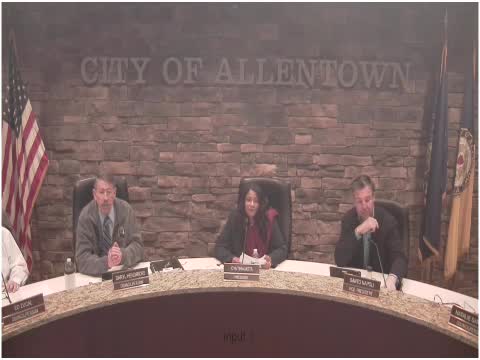
John Haney, a representative of the Allentown Parking Authority, told the City Council that the authority—s vendor is developing software to allow parking-ticket payment plans and that the code is expected to reach a beta testing stage by the end of the first quarter of 2025, with public rollout anticipated in mid-to-late Q2 2025.
Haney said the authority has worked with its software provider and with counterparts at the Administrative Office of Pennsylvania Courts so "everything is speaking the same language." He told the council the vendor had been given parameters — payment frequency, acceptable amounts and maximum term — and "is beginning to write the new code. Their target date to begin was Q1 of 2025... Completion of the new code is expected to be, done by the end of Q1, which will deliver to us a beta version for testing." Haney said the authority plans to test the beta, resolve bugs and then publish the program for public use around May.
The payment plan will be available to people before a ticket is turned over to the courts, Haney said: "what we're looking to do is make that available to folks before it goes to court... for those first, I'll say, 50 days of the life cycle of the ticket, people who receive [one] would be able to sign up for the payment plan." He also said there would be no additional fees or interest for using the plan and that the ticket amount would be frozen at the initial amount rather than escalating while the plan is active.
Council members raised questions about whether the authority had selected a new vendor for the payment-plan work. Haney clarified that there was no board vote to hire a new vendor for the payment plan: "This is our current vendor that we were already using for our ticket management system. So it was simply a request to them to add this functionality in." The authority—s vendor will add the payment-plan feature to the existing ticket-management system.
Haney also reported on a citywide meter study. He said the Allentown Parking Authority issued a request for proposals in October 2024, received two bids and "at its November board meeting, the APA board selected [a consultant] as the winning bidder." The consultant (company name not specified in the meeting record) will do on-site surveying and observations later this month and return recommendations, including proposed loading-zone adjustments intended to help small businesses and delivery traffic. The study was scheduled for completion by the end of Q1 2025; the APA and the council will review the consultant—s recommendations together before any implementation decisions.
On enforcement, Haney said the APA board "did consider this and voted to reinstitute the overnight enforcement beginning, I think it was January 6th." He said the scope of overnight enforcement has been limited to safety violations such as vehicles parked in no-parking zones, blocking fire hydrants and double parking, and that the APA dispatch line remains available for enforcement requests.
Haney said the parking fine increases adopted in June 2024 (Bill 40) have improved the authority—s finances: "I would say probably at a break even point. The fine increases definitely did help us with our finances... we're definitely at a point where we're treading water and we're able to sustain ourselves and our operations." He also said ticketing decreased slightly after the fine increase went into effect.
The council and the authority discussed procedural points: tickets already in the court system cannot be enrolled in the APA payment plan; magisterial district judges can offer payment plans for matters that have reached the court; and the APA—s internal appeal process would not bar someone from applying for a payment plan if an appeal failed.
The presentation concluded with council members thanking Haney and with no formal city-council vote recorded on any of the items presented.