Get Full Government Meeting Transcripts, Videos, & Alerts Forever!
Get email alerts on the Redevelopment topic
No spam. Unsubscribe anytime.
Germantown holds second visioning session for Pilgrim–Mequon intersection; Flower Source redevelopment and market plaza prompt debate
Summary
Village officials and Rinka Architects presented a draft framework for redeveloping the Flower Source property at Pilgrim and Mequon, proposing a market plaza, mixed‑use buildings and open space. Residents praised some ideas but raised repeated concerns about density, rentals, parking, traffic and preserving local history.
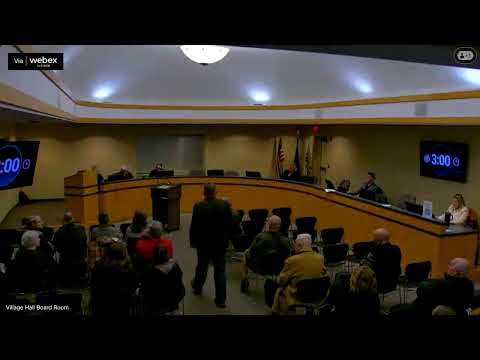
The Village of Germantown held a second public visioning session on October 12, 2025, to gather community input on possible redevelopment of the Flower Source property and the Pilgrim–Mequon intersection. Village Administrator Steve Kreklo said the developer — a Milwaukee‑area firm identified in public remarks as Gray Wolf Development — purchased the long‑running Flower Source site, which is currently zoned commercial retail. Rinka Architects led the presentation and used an online survey tool to collect live feedback from attendees and viewers on Channel 25 and YouTube.
The discussion focused on a framework that emphasizes a visible, mixed‑use gateway with a market plaza, retail fronting Pilgrim and Mequon roads, a band shell or pavilion for events, and significant open or natural areas behind the commercial frontage. “This is our second visioning session related to the Pilgrim–Mequon intersection area and in particular the Flower Source property,” said Steve Kreklo, introducing the firm and the village’s outreach effort. Kreklo and Rinka staff said the site is identified in the Village’s 2050 plan (adopted 2022) as a priority for higher‑quality development.
Why the project matters: The property sits at a high‑visibility corner (presenters cited traffic counts in the 10,000–12,000 vehicles per day range on adjacent corridors) and is zoned for commercial retail today. Village officials said the site’s treatment could shape the look and function of Germantown’s village center for decades. Rinka’s presentation laid out planning principles drawn from the 2050 plan and prior public input — including a “marketplace” or public plaza, a mix of uses, a strong economic base and features that celebrate Germantown’s character.
What was proposed: Rinka and village staff sketched a “market street” concept with a plaza and tented market stalls (10‑by‑10 vendor footprints were shown), optional band shell or temporary performance structure, outdoor dining, and a backstop of mixed‑use buildings with ground‑floor commercial and upper‑floor housing. Large portions of the site were also shown as natural or parkland behind the commercial frontage to form a buffer from adjacent neighborhoods.
Financing and zoning: Kreklo said the property is currently zoned commercial retail and that Gray Wolf Development initially approached the village with interest in developing under that zoning. He acknowledged a range of financing options remain open and said it was too early to decide specifics; he noted that other nearby communities had used tax increment district (TID) financing for similar projects and that TID is one possible tool. The village did not propose or vote on any rezoning or TID at the session.
Public reaction: Dozens of attendees spoke during the open‑comment period and through the live poll. Several residents said they supported a higher‑quality, walkable village center and a market plaza but raised consistent concerns: the scale and type of housing (many commenters said they opposed large numbers of rental units and urged more owner‑occupied housing), on‑site parking for events, vehicle traffic and intersection design, noise from proposed event programming next to housing, and preservation of Germantown’s historic character and existing parks.
“I would rather us focus on what we have and make it what it always should have been,” one resident said, urging the village to emphasize existing downtown sites and reuse under‑utilized buildings rather than create new development that could be financed with public tools. Another commenter asked whether wetlands on the property had been mapped and how those would be addressed; presenters said permitting, environmental review and technical studies are part of the next steps but did not give a schedule.
Process and next steps: Rinka asked the public to rank priorities in the live survey; early results favored a market‑style public plaza with farmers market programming and community events. Kreklo said the village will compile survey responses, written comments and the public‑comment record and prepare a Q&A and summary for posting to the village website. He also said staff would share the results with the Village Board; any formal land‑use or financing actions (rezoning, TID formation, developer agreements) would require separate public hearings and Village Board votes at future meetings.
Resident concerns to watch: Commenters repeatedly asked for more detail on proposed housing density, whether a proposed band shell and large events would be sited away from residential properties, where event parking would be located, and how the village would balance new development with protecting rural character and historic sites. Several speakers urged the village to preserve and upgrade existing downtown infrastructure and historic buildings rather than concentrate all activity at the Pilgrim–Mequon corner.
What officials said: Kreklo thanked attendees for the input and emphasized the process is early and iterative. “We’re here to collect that input,” he said at the start of the meeting. He reiterated that financing options like TID would be considered but not yet decided, and that the village is seeking community direction to shape a master plan for the site.
What to expect: The village said the survey will remain open for roughly two weeks following the session and that a Q&A and presentation materials will be posted to the Village of Germantown website. Officials encouraged residents to follow Village Board meetings (first and third Mondays) for formal updates and to send questions to the village comments email listed at the meeting.
Ending: The meeting closed with staff collecting additional comments and promising an online summary. The project remains at the visioning stage: no rezoning, no vote and no funding decision were made at the session.