Get Full Government Meeting Transcripts, Videos, & Alerts Forever!
Get email alerts on the Educational Equity topic
No spam. Unsubscribe anytime.
Springfield Township SD reports year‑3 Equity Action Plan progress; MAEC to begin assessment
Summary
Superintendent Dr. Anacone presented the final-year report on the district's three‑year Equity Action Plan, highlighting data disaggregation, student voice, expanded extracurricular access and an upcoming assessment by the Mid-Atlantic Equity Consortium (MAEC).
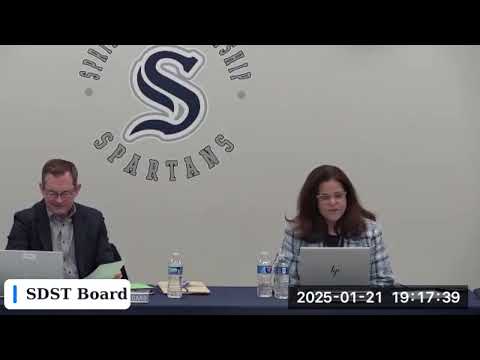
Superintendent Dr. Anacone presented the School District of Springfield Township’s year‑3 Equity Action Plan report at the Jan. 21 board meeting, highlighting use of disaggregated data, increased student voice and partnerships to expand access to extracurriculars and services. Administration said an outside equity assessment by the Mid‑Atlantic Equity Consortium (MAEC) begins this week and will cost the district nothing because MAEC is a federally funded program.
The presentation summarized the district’s equity work since 2019, when an equity vision and subsequent audit were started with the University of Pennsylvania. The administration told the board the district adopted board policy 832, Educational Equity, in 2022 and that the three‑year plan runs on a January–December cycle; the report presented is the plan’s final year (year 3).
Administration described concrete steps taken under the plan: instituting an annual, disaggregated data presentation on academic achievement; creating data protocols for principals and leadership teams; expanding family outreach and welcome materials for new students; piloting Chromebooks with middle‑ and high‑school students with a planned district purchase this spring based on student feedback; and strengthening partnerships with social‑service organizations to fund extracurricular participation and counseling when families can’t afford it.
The presentation reported that the district’s belonging survey shows very high results: "95% of our students across the district in grades 3 through 12 report that they have a good sense of belonging here," the report said. The administration also said roughly 23% of students qualify for free or reduced‑price meals, which it monitors as a cross‑cutting subgroup for equity efforts.
Board members and administrators discussed next steps. MAEC will convene consensus groups at each school, conduct virtual and face‑to‑face interviews with students, staff, families and board members, and aim to provide a cohesive set of recommendations by spring break to inform a new equity action plan for 2025–2028. The administration said it has already shared internal datasets with MAEC and that MAEC’s work will inform the district’s draft for the next three‑year plan.
Superintendent Dr. Anacone framed the work as long‑term and rooted in the district mission: “This is the mission of public education,” she said, urging continued attention to marginalized students and families. Board members thanked student representatives and administrators for the presentation and cited continued priorities: expanding early‑grade extracurriculars, closing gaps between parent and student perceptions on school experience, and increasing student leadership in future planning.
The district said the year‑3 slides and supporting resources will be posted on the district website, and administrators said they expect to deliver a proposed 2025–2028 Equity Action Plan to the board before spring break, timing pending MAEC’s findings.