Get Full Government Meeting Transcripts, Videos, & Alerts Forever!
North Dakota senators hear hours of testimony on SB 2128, split over 'truth in sentencing' and impact on reentry programs
Summary
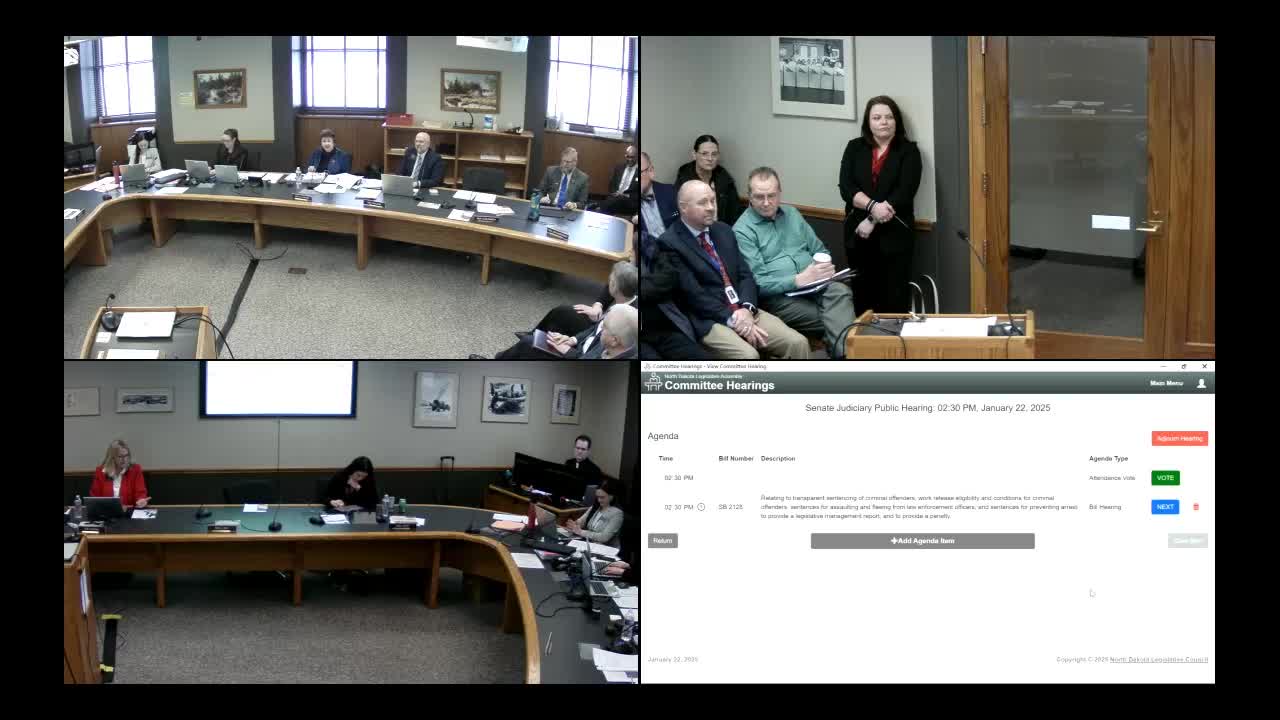
BISMARCK — The Senate Judiciary Committee reopened public hearings on Senate Bill 2128 on a bill that backers described as restoring "truth in sentencing" and opponents said would sharply restrict parole and reduce use of transitional housing and work-release programs.
BISMARCK — The Senate Judiciary Committee reopened public hearings on Senate Bill 2128 on a bill that backers described as restoring "truth in sentencing" and opponents said would sharply restrict parole and reduce use of transitional housing and work-release programs.
The measure, which drew more than a dozen witnesses and more than two hours of testimony on both sides, would change who is eligible for parole and transitional placement and tighten how good-time or earned credit can reduce time behind bars. Attorney General Drew Wrigley urged the committee to move forward, saying the public has been misled about how long people actually serve. "Truth and Sentencing. What we're offering to this committee and to the full legislature is truth in sentencing," Wrigley told the panel. Supporters, including law-enforcement groups, said the bill would ensure judges' sentences are respected and make prison terms more predictable.
Opponents — including corrections officials, reentry providers, defense lawyers and faith- and community-based programs — said the bill would reduce access to transitional facilities and work-release programs that officials say are vital to lowering recidivism and helping people return to stable housing and work. Scott Payton of Prison Fellowship testified in opposition, saying the bill's expansion of mandatory components and reduced early-release credits "risk creating unnecessary barriers to successful reentry while failing to enhance public safety meaningfully." Several witnesses cited national research and state experience they said show longer mandatory incarceration alone does not reduce recidivism.
Why it matters: The committee heard competing claims about public safety, prison capacity and program effectiveness. Department of Corrections and…
Already have an account? Log in
Subscribe to keep reading
Unlock the rest of this article — and every article on Citizen Portal.
- Unlimited articles
- AI-powered breakdowns of topics, speakers, decisions, and budgets
- Instant alerts when your location has a new meeting
- Follow topics and more locations
- 1,000 AI Insights / month, plus AI Chat