Get Full Government Meeting Transcripts, Videos, & Alerts Forever!
Get email alerts on the Electronic Pull Tabs topic
No spam. Unsubscribe anytime.
Committee rejects change to electronic pull‑tab ‘quarter close’ rule; AG warns of regulatory risks
Summary
House Bill 1290, which would remove the statutory requirement that charities shut down electronic pull‑tab games for calendar quarter closings and instead allow an electronic snapshot report, failed to advance after the attorney general’s gaming director warned it would create a regulatory burden and the committee voted to give it a 'do not pass'
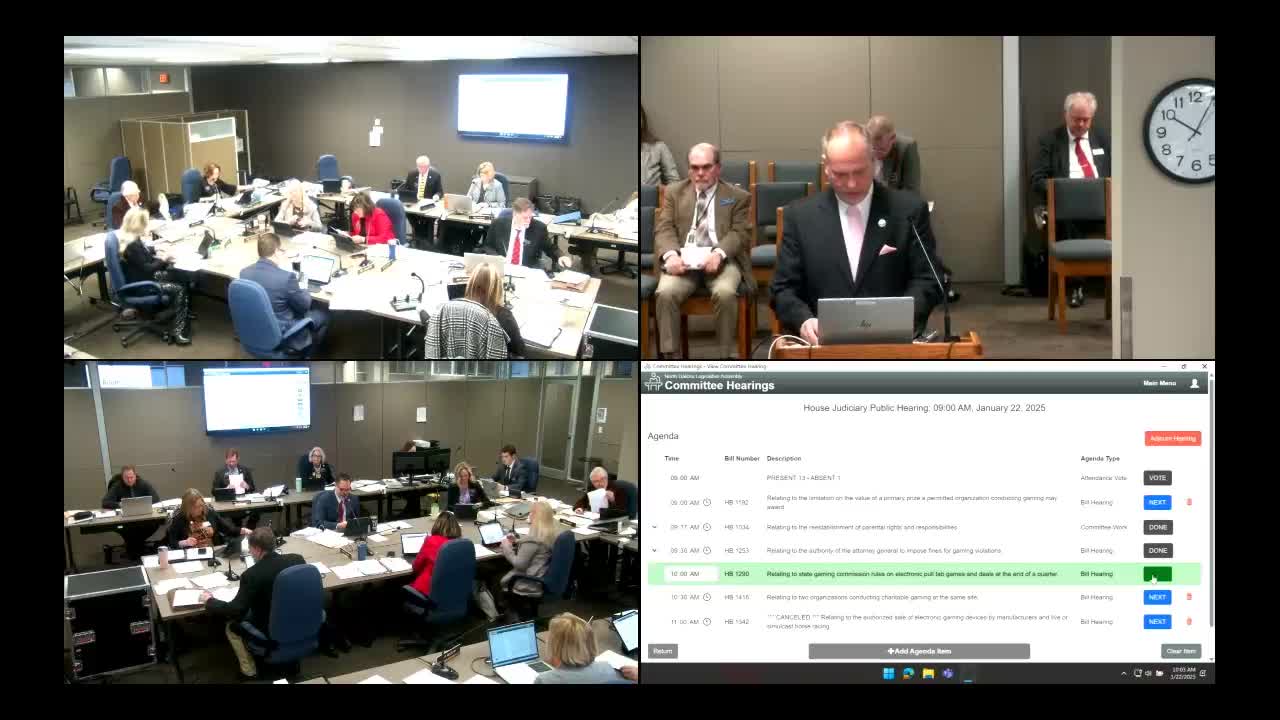
Bismarck — The House Judiciary Committee voted to recommend “do not pass” on House Bill 1290 after testimony from the Attorney General’s gaming division director and mixed testimony from industry and charities about whether eliminating the quarter close requirement would help charities or complicate regulation.
Representative Steve Vetter introduced the bill, which would allow charities that operate electronic pull‑tab (e‑tab) games to generate an electronic end‑of‑quarter report rather than physically shutting each game and reinitializing a new deal at quarter close. Sponsors and several charity operators told the committee that forcing a shutdown can accidentally lock charities into unpopular denominations, create administrative work during holidays, and sometimes leave small charities temporarily “upside down” on a deal when large early payouts occur.
Testimony described how e‑tab games are structured: a game title can have multiple deals (typically by denomination) and each deal commonly contains 15,000 tickets. Industry representatives said the technology can generate precise inventory and payout reports without stopping play. Supporters argued that small charities are most vulnerable when a deal closes mid‑quarter in an unfavorable state.
Deb McDaniel, gaming division director in the Attorney General’s Office, opposed the bill. McDaniel said the department relies on a quarter‑close auditing method and a state gaming stamp tied to finite ‘deals’ to trace plays and taxes; she said allowing continuous play without closing deals would blur deal boundaries, increase reporting burdens, and create auditing challenges. McDaniel also noted the state has invested in a gaming system built around the quarter‑close process.
After debate the committee voted 11–2 (with one member absent) in favor of a do‑not‑pass recommendation. Committee members who opposed the bill cited unresolved regulatory questions and the cost and disruption of rewriting a system that the AG’s office is phasing in.