Get Full Government Meeting Transcripts, Videos, & Alerts Forever!
Get email alerts on the Counties Mandates topic
No spam. Unsubscribe anytime.
Association of Minnesota Counties highlights mandate costs, child-protection changes and systems modernization
Summary
Matt Hilgert of the Association of Minnesota Counties summarized county responsibilities, urged clarity on mandates and funding, and warned that child-protection reforms and antiquated state systems create workforce and implementation pressures for counties
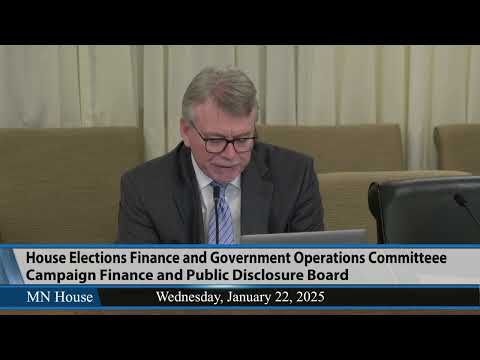
Matt Hilgert, representing the Association of Minnesota Counties (AMC), briefed the Elections Finance and Government Operations Committee on county responsibilities and priorities, emphasizing the fiscal and operational consequences of state mandates.
Hilgert described counties’ broad portfolio — roads and bridges, public safety (sheriffs and jails), community corrections and probation, child protection and social services, public health, environmental programs and tax-forfeiture administration — and stressed that many county functions are state-directed. He told members counties operate statewide but vary widely: St. Louis County is larger than several states by area while Ramsey is compact and has different fiscal pressures.
A central theme was unfunded or underfunded mandates. Hilgert said counties want clarity when the legislature places new requirements on local government and urged lawmakers to pair mandates with sustained funding. He identified child-protection reforms enacted recently (including the family-preservation or related active-efforts changes referenced in discussion) as a significant upcoming implementation challenge that will raise staffing and funding needs.
Hilgert also flagged workforce shortages — especially in child protection, probation, public safety and corrections — and urged modernization of state systems used by county staff, saying antiquated technology increases time per case, reduces efficiency and depresses workforce recruitment and retention. He said counties will follow up with the committee and provide a concise list of the most costly mandates and suggested the committee use that material to evaluate whether new requirements are fully resourced.
Hilgert asked the committee to consider mandate studies and to request information from counties about the largest cost drivers so lawmakers can make informed choices about pay-fors and levy impacts. He said AMC will provide a follow-up package describing priority mandates and implementation questions.