Get Full Government Meeting Transcripts, Videos, & Alerts Forever!
Get email alerts on the K3 Discipline topic
No spam. Unsubscribe anytime.
Elementary principals urge change to K–3 non-exclusionary discipline rule, say short suspensions sometimes needed for safety
Summary
Elementary principals testified to the House Education Policy Committee that the statute banning suspensions for kindergarten through 3rd grade leaves schools unable to respond when young students are repeatedly violent or seriously dysregulated and asked lawmakers to allow brief suspensions up to three days in limited cases.
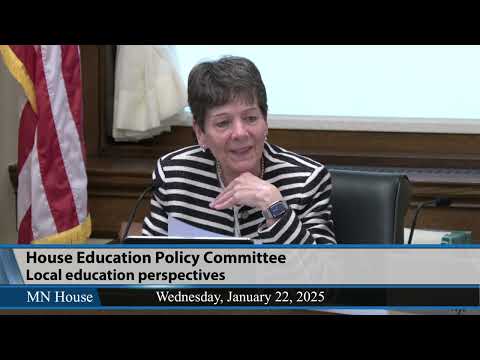
Principals from Minnesota elementary schools told the House Education Policy Committee on Jan. 22, 2025, that the state’s K–3 non-exclusionary discipline policy is preventing schools from responding to some dangerous or repeatedly harmful behavior and asked the committee to amend the statute to permit short suspensions in limited circumstances.
"This policy has stripped us of the ability to make the best decisions for the safety and well-being of our students and staff," said Lisa Carlson, principal at Woodland Elementary in Eagan and president of the Minnesota Elementary School Principals Association. Carlson described situations where a single dysregulated child can disrupt learning for 25 peers and said short-term removal can give staff time to plan a reentry that protects all students.
Patrick Glynn, principal of Jeffers Pond Elementary and a principal in Prior Lake–Savage Area Schools, said short suspensions provide "the gift of time" to plan reentry supports and that victims of harm need time and distance to feel safe. Glynn told the committee that in his school over five years he recorded 14 suspensions (five in-school and nine out-of-school); seven of the out-of-school incidents involved K–3 students who were receiving special education services and returned after a half or full day suspension with a reentry plan.
Why it matters: Principals said short suspensions are used only as a last resort and that removing the option forces schools into either immediate readmission or escalation to expulsion — a remedy principals said is inappropriate for very young children. They urged the committee to allow up to three days of suspension for K–3 students when necessary, coupled with continued monitoring and reporting to the Minnesota Department of Education.
What principals asked lawmakers to do
- Amend the non-exclusionary discipline statute to permit suspensions of up to three days for K–3 students in narrowly defined circumstances. - Require reentry planning and parent conferences when a suspension is used, and maintain state monitoring of suspension data for accountability.
The committee did not act on a statutory change during the hearing; principals requested lawmakers consider limited amendments that they said would restore a measured option for safety while keeping expulsions rare.