Get Full Government Meeting Transcripts, Videos, & Alerts Forever!
Get email alerts on the School Funding Mandates topic
No spam. Unsubscribe anytime.
Minnesota superintendents warn unfunded mandates, rising costs leave districts facing multimillion-dollar shortfalls; committee lays over HF6
Summary
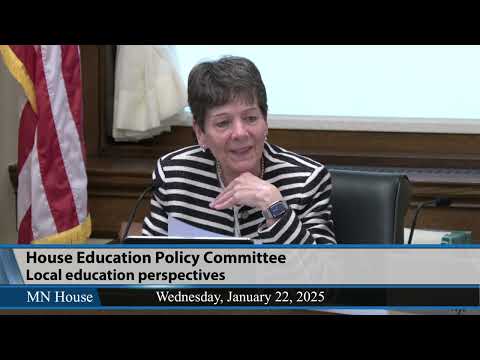
Superintendents and school leaders told the House Education Policy Committee on Jan. 22, 2025, that recently enacted state mandates and rising operating costs have produced multimillion-dollar deficits in districts large and small.
Superintendents and other district leaders told the Minnesota House Education Policy Committee on Jan. 22, 2025, that recently enacted state mandates and rising operating costs have produced multimillion-dollar deficits in districts large and small.
"We knew immediately we're in a $20,000,000 deficit because of that," said Corey McIntyre, superintendent of Anoka Hennepin Schools, describing higher contract settlements and the end of federal pandemic relief. He said his district has cut central-office positions and still faces roughly $12 million in additional shortfalls.
Why it matters: District leaders said the combination of flat or declining enrollment, inflationary costs, and new or expanded benefits for employees — including summer unemployment coverage, paid family and medical leave and earned sick and safe time — is forcing cuts to staff and programs and increasing pressure to ask voters for additional local revenue.
District-level examples and impacts
- Corey McIntyre, superintendent of Anoka Hennepin Schools, said special education and multilingual learner cross-subsidies total roughly $40 million for his district, and that anticipated reductions to certain aids could add about $3 million to that burden. He said the district made roughly $19 million in personnel reductions (about $5 million then $14 million) and still expects another $12 million in shortfalls if policy and funding remain unchanged.
- Michael Thomas, superintendent of Prior Lake–Savage Area Schools, told the committee that his district’s projected revenue increases of 2–2.5% fall short of expense growth of roughly 5% and that underfunded mandates leave districts "robbing" other priorities to meet new requirements.
- David Law, superintendent of Minnetonka Public Schools, summarized statewide feedback from dozens of superintendents and said the changes enacted over the previous biennium have created "statutory operating debt" and forced districts to reprioritize core classroom services.
Leave and benefits cited as major new costs
Several speakers described how changes to unemployment insurance (UI) eligibility, earned sick and safe time (ESST), and paid family and medical leave (PFML) are producing immediate and recurring budget pressure and administrative workload.
- John Morstead, Osseo Area Schools finance director and president of the Minnesota Association of School Business Officials (MASBO), said his district spent about $1.8 million on summer UI in the most recent year and warned that, without changes, districts must cover any shortfall from their general funds. He said statewide UI spending rose from about $45 million in the first year to $58 million the next year and that projected costs could exceed $60 million for an upcoming summer.
- Jeff Drake, superintendent of Fergus Falls Public Schools, estimated the district’s ongoing PFML payroll-tax cost at about $115,000 per year and predicted staffing complications if a teacher could be gone for extended periods. He estimated summer UI as a recurring $240,000 annual liability for his district.
- Donna Friedman, director of administration and human resources at Forest Lake Area Schools, said summer UI filings created a major administrative burden: processing stacks of UI documents required two to three full workdays per week during summer months and, in 2024, 139 employees received summer UI at an approximate cost of $252,000.
Special education, literacy and other mandates
Speakers repeatedly cited rising special education referrals, transportation costs, and new literacy requirements as cost drivers.
- McIntyre said the district estimates $1.5 million in new costs tied to staffing, training and space to comply with the K–3 discipline statute, and that textbook and curriculum materials for elementary literacy adoption were roughly $3 million higher than anticipated.
- Several superintendents voiced support for the REED (science of reading) initiatives but said implementation has been "overregulated and underfunded." Michael Thomas and others urged more time and funding to implement the REED Act with fidelity rather than rushing adoption.
Committee action and bill preview
Representative Peggy Bennett moved House File 6 before the committee "with the intention that the bill be laid over for possible inclusion in an omnibus bill or further action at a later date," and Chair Bennett later laid over House File 6. The bill, as previewed by the chair and sponsors, contains three articles: revisions to the REED Act, provisions to empower local control and create an "office of achievement and innovation," and a temporary package of funding and mandate flexibility through the 2028–29 school year. The chair said the local option would let school boards delay implementation of certain new mandates or transfer nonfederal funds where state law permits.
What leaders asked lawmakers to consider
District leaders broadly urged lawmakers to: find sustainable state funding for new benefit programs or exempt schools from some provisions; provide ongoing dedicated funds for REED Act implementation instead of one-time allocations; reduce administrative reporting burdens; and offer short-term mandate flexibility so districts can implement changes with fidelity.
Committee context and next steps
The testimony represented urban, suburban and rural districts and the committee laid over HF6 for future consideration. Lawmakers did not adopt the HF6 proposals during the Jan. 22 hearing; the chair said the bill would be considered later for inclusion in an omnibus bill.