Get Full Government Meeting Transcripts, Videos, & Alerts Forever!
Get email alerts on the Municipal Infrastructure topic
No spam. Unsubscribe anytime.
Regional authority urges more funding for transfer stations, recycling coordinators, HHW access and local organics infrastructure
Summary
The Housatonic Resources Recovery Authority told legislators that Connecticut needs to invest in municipal transfer stations, make recycling‑coordinator positions permanent and expand hazardous household waste access and local organics capacity to avoid future disposal disruption.
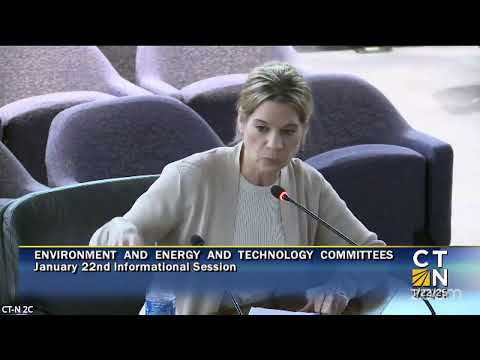
Jen Heaton Jones, executive director of the Housatonic Resources Recovery Authority, told the forum that local infrastructure and municipal staffing are critical to any statewide solution and that some local facilities are already straining.
Heaton Jones said local transfer stations are often outdated, unsafe and open limited hours, and that many municipalities lack dedicated, trained recycling coordinators. “Recycling coordinators…are no longer a hired position. They're just someone's other job,” she said, asking the state to consider funding permanent coordinator positions and certification to professionalize the role.
The Housatonic authority described a mix of local approaches to organics: municipal drop‑off sites, aerated static‑pile compost systems and satellite containers for 24/7 access. Heaton Jones said regional authorities can build capacity but need grants and buyer commitments for compost and anaerobic digester feedstock; she urged state help to “guarantee feedstock” so private digester investors can proceed.
She identified other local gaps: limited hazardous household waste (HHW) collection (often one event per year), uneven options for motor‑oil recycling, and transfer stations that need space and traffic‑flow upgrades. Heaton Jones asked the committees to fund public education via RecycleCT and to provide infrastructure grants that make regional collection and municipal transfer‑station upgrades feasible.
Why it matters: Even with state grant programs, Heaton Jones said, towns cannot scale diversion or host new processing without municipal investments and sustained education. The authority presented Kent and other towns as examples where local policies — pay‑as‑you‑throw and transfer‑station organics drop‑off — successfully reduced trash tonnage.
Next steps: The authority requested sustained funding for public education, deeper technical assistance on transfer‑station upgrades and incentives to attract private investors for organics processing and small composting businesses.