Get Full Government Meeting Transcripts, Videos, & Alerts Forever!
Get email alerts on the Disposal Capacity topic
No spam. Unsubscribe anytime.
Industry pitches new in‑state processing and upgrades as Connecticut confronts shrinking disposal capacity
Summary
Private operators and developers told legislators that Connecticut faces long‑term regional capacity pressure and urged investments in upgraded energy‑from‑waste, gasification and advanced sorting to limit out‑of‑state exports. Proposals included a 468,000‑ton gasification + advanced sorting campus and near‑term upgrades at existing plants.
Bill Corvo, manager of Smart Technology Systems, presented a proposal to process Connecticut municipal solid waste with advanced sorting, anaerobic digestion and Valmet gasification technology on a single campus. Corvo said the plan “is designed to process 468,000 tons of MSW a year” and would include advanced AI‑enabled sorting, refuse‑derived fuel (RDF) gasification, anaerobic digestion and a carbon‑capture step for CO2 co‑products.
Corvo estimated a multi‑hundred‑million‑dollar capital cost for a full campus and said a project could be operational by about 2028, depending on permitting. He described the proposal as a way to “replace the lost MSW processing capacity of MIRA, all within state boundaries and with a substantially lower impact to the environment.”
Representatives from ReWorld and existing energy‑from‑waste operators outlined alternatives. ReWorld executives said they operate several EFW facilities across the East Coast and that energy‑from‑waste remains a vital part of a multi‑tool solution that also includes recycling, organics diversion and regional transfer. ReWorld and other operators described ongoing capital investment at existing plants and said upgrades can extend operational life while meeting emissions standards.
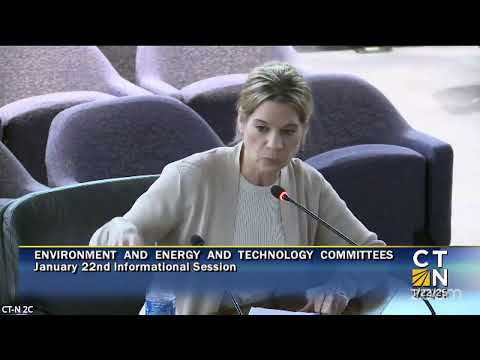
Fraser, speaking for a major EFW operator, told the committees her company’s Connecticut plants meet stringent controls and that its operations “operate up to 97% below the federal emission limits and we are 99.91% compliant with our same standards.” Private‑sector participants also emphasized that siting new large facilities is politically and logistically difficult and that public‑private partnerships and municipal commitments are necessary to secure feedstock for large capital projects.
Industry speakers and private haulers noted regional landfill closures, an aging fleet of U.S. waste‑to‑energy plants and rising landfill tip fees. Several private presenters said long‑distance rail and truck exports are a sizable ongoing flow for Connecticut MSW but warned that regional landfill capacity is declining and that continued exports would raise disposal costs for municipalities.
Why it matters: Connecticut’s remaining in‑state processing assets face aging infrastructure and competitive regional disposal markets. Industry proposals at the forum ranged from continued incremental upgrades at existing EFW plants to large new campuses combining advanced sorting, digestion and gasification. Legislators will weigh permitting, public acceptance, capital sources and long‑term contracting needs as they consider policy responses.
What legislators asked: Committees asked about retrofit feasibility at existing plants, capital cost estimates (broadly described in testimony as hundreds of millions of dollars) and potential state roles in financing, procurement or a state‑level waste authority to coordinate long‑term contracting.
Outcome: No formal commitments were made at the forum. Industry and agency presenters agreed to continue follow‑up meetings to share technical details and permitting plans.