Get Full Government Meeting Transcripts, Videos, & Alerts Forever!
Get email alerts on the Athletics Facilities Lighting topic
No spam. Unsubscribe anytime.
United ISD weighs solar and LED options for high school field lighting after parents and coaches press safety case
Summary
United ISD trustees heard extensive public comment on adding lights to high school football, band and turf fields. Staff reported a preliminary LED study and said state grant loan funds may be available; solar lighting remains under review because of battery and pole costs.
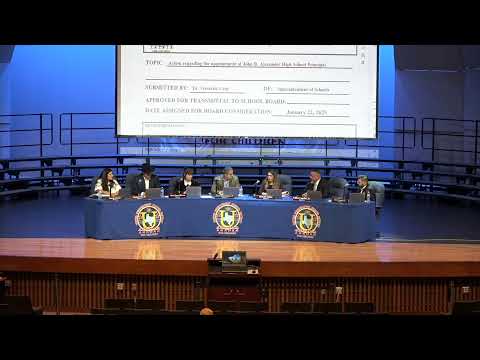
United Independent School District trustees discussed the need and potential for solar or LED lighting at high school football and band practice fields during the Jan. 22 board meeting, prompted by public comments from coaches, parents and alumni who called the need a safety and equity issue.
Speakers pressed the board to study lighting options so campuses can schedule practices in cooler hours, provide evening game opportunities for families and reduce heat-related risk for student athletes and band members. Staff said the district has completed a preliminary LED study and is preparing comparative cost options for the board to review at a future workshop.
Public comments emphasized safety and fairness. Coach Edwin Garcia, athletic coordinator and head football coach at John B. Alexander High School, told the board that only two district stadiums currently have lights and that a lack of evening lighting forces compressed scheduling and can increase heat-related health risks. Parent Claudia Gutierrez Sanchez said lighting would help working families attend games and expand opportunities for multiple sports and extracurricular programs. Several alumni and booster leaders added that added evening hours improve participation, team development and community engagement.
District energy staff and operations leaders gave preliminary technical and funding context. Manuel Menchaca of United ISD’s energy and environmental department said staff hired Texas Electrical Engineering Company (TESI) to do a preliminary study converting existing high-intensity discharge (HID) fixtures to LED, and that having that study positions the district to apply quickly if the State Energy Conservation Office (SECO) issues competitive loan funds. Alfonso Peña, Director of Business and Operations, described technical differences between parking-lot solar lighting — which requires about 1 foot-candle at 3 feet — and athletic-field lighting, which typically requires far more illumination (Peña said roughly 30 foot-candles for spectator/recreational use). Peña said field-scale solar illumination needs larger battery storage and different pole/post infrastructure than parking-light pilots.
Staff cautioned about funding limits: Menchaca said SECO’s likely program would fund fixture and lamp upgrades but would not finance the installation of new poles/posts; the district would need a separate funding source for poles at campuses that lack them. Board members and staff noted United South High School currently uses poles relocated from an older stadium (Kruger), while other main high schools lack posts entirely and would require new civil work.
Board members asked staff to return with a cost comparison for options (solar + storage, LED with conventional wiring, and hybrid approaches) and a proposed priority list of campuses. Trustees and staff referenced a prior district estimate of about $1.8 million for a multi-campus scope (board discussion indicated that figure had been used in an earlier study covering four campuses), but staff said that figure is dated and must be refreshed.
Next steps: staff agreed to gather vendor quotes, detail pros and cons of solar versus LED (including battery sizing, maintenance, estimated grant/loan payback timelines, and potential SECO loan terms), and present options at a future board workshop. No vote was taken; the agenda item was informational and continued for further analysis.
Community reaction and practical limits: speakers and coaches repeatedly framed lighting as both a safety issue (heat exposure, limited practice time) and an equity issue (some campuses get more facility time than others). Staff noted interim remedies such as short-term generator rentals are noisy and costly and that permanent solutions will require coordinated funding strategy.
Ending: Trustees directed staff to return with a detailed comparison and cost estimates for the February workshop so the board can evaluate technical needs, funding options and an implementation timetable.