Get Full Government Meeting Transcripts, Videos, & Alerts Forever!
Get email alerts on the Banking Spdi topic
No spam. Unsubscribe anytime.
Committee advances updates to Wyoming special-purpose depository law to ease SPDI operations and remove a supervisory fee
Summary
The Minerals, Business & Economic Development Committee advanced Senate File 95 to (1) enable conversion of a state-chartered special purpose depository institution (SPDI) to a trust, (2) adjust deposit and capitalization language, and (3) repeal a 0.2-mill supervisory fee applied to SPDIs and regulated trust custodians.
The Senate Minerals, Business & Economic Development Committee advanced Senate File 95, a bill that makes technical and substantive changes to Wyoming's special-purpose depository institution (SPDI) statute. Supporters said the changes clarify existing practice, reduce confusion, and improve Wyoming's competitive position for financial institutions that custody digital assets.
Jeremiah Bishop, Wyoming banking commissioner, told the committee the bill largely cleans up statutory language, aligns capital-accounting rules with standard practice and provides a formal process for converting the deposit-taking side of an SPDI into a trust. "This is where most of our rule making will be," Bishop said, summarizing the office's work to define application requirements and review processes for voluntary dissolution of the deposit-taking side.
Key provisions: The bill (1) permits conversion of a chartered SPDI to a trust form and provides a rulemaking pathway for the conversion; (2) lowers the statutory minimum account threshold for certain deposit accounts from $5,000 to $1,000 and adds a 5-business-day tolerance window so an account briefly below the threshold is not automatically treated as a violation; and (3) amends capitalization-account language to align surplus and undivided-profits accounting with traditional bank practice (the change does not increase the total capital required to charter an SPDI, according to the commissioner).
Fee repeal and rationale: The bill repeals a two-tenths-of-a-mill supervisory fee that applied specifically to SPDIs and certain regulated trust custodians. Commissioner Bishop and industry witnesses testified the fee is duplicative of existing supervisory and examination fees and that custody-market pressures have lowered custodial margins; removing the fee will make Wyoming more competitive for custody business without leaving the Division of Banking unable to recover supervision costs through other existing fee authorities.
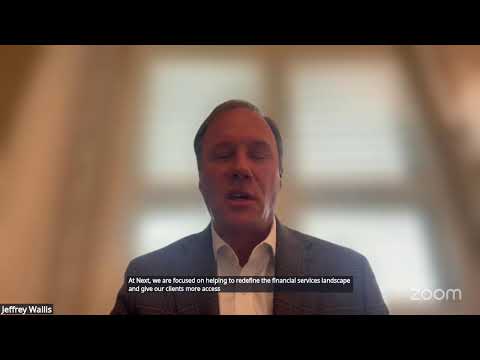
Industry testimony: Matt Kaufman (a private-sector participant in the interim working group) and Jeffrey Wallace, CEO of Nxt (a current SPDI applicant), both testified in favor of the bill. Kaufman said the changes reduce administrative friction for firms considering Wyoming domicile and do not materially change capitalization requirements. Wallace said he had chosen Wyoming after considering multiple jurisdictions and that the revisions would validate and support his firm's investment and hiring in the state.
Committee action: Committee members moved and seconded the bill (moved by Senator Cooper; seconded by Senator Rothfuss). The committee took a roll-call vote and recorded five ayes (Cooper, Jones, Nethercott, Rothfuss, Chairman Anderson). Committee members discussed emergency rules and other administrative work needed to implement the conversion process and amend supervision rules.
Next steps: The Division of Banking indicated it will pursue rulemaking, including emergency rules as necessary, to implement technical conversion procedures and finalize fee adjustments.
Quotes are taken from committee testimony. As Bishop said about the $1,000 minimum and the five-day tolerance: "It doesn't ... allow us to ding them with technical violations every single time they have a customer drop below $5,000. It allows them a 5 day window to correct that and not have to worry about us citing them for a violation of law."