Get Full Government Meeting Transcripts, Videos, & Alerts Forever!
Get email alerts on the State Property Tax Exemption topic
No spam. Unsubscribe anytime.
Senate panel narrows bill after months of debate over tax exemption for state-owned land
Summary
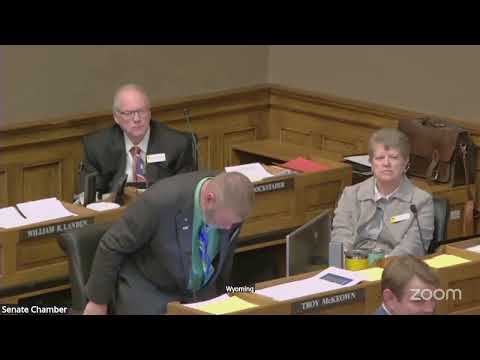
Senate committee members on Wednesday moved a narrower version of Senate File 81 — originally drafted to exempt all state-owned property from local property taxes — out of the committee of the whole after lengthy debate and two amendments that limit and time-box the exemption.
Senate committee members on Wednesday moved a narrower version of Senate File 81 — originally drafted to exempt all state-owned property from local property taxes — out of the committee of the whole after lengthy debate and two amendments that limit and time-box the exemption.
The bill, sponsored through the Agriculture Committee and later reviewed by Revenue, originally would have declared all property owned by the State of Wyoming tax-exempt and included a repeal date at the end of 2026. After a standing-committee amendment and a committee-of-the-whole amendment, the bill as reported applies only to certain state grazing leases and retains a temporary sunset intended to give lawmakers and state agencies time to respond to a recent Wyoming Supreme Court decision about the scope of constitutional exemptions.
Senator Crago, speaking in committee, tied the bill to Article 15, Section 12 of the Wyoming Constitution, which exempts property “when used primarily for a governmental purpose,” and said the measure was intended to address a court opinion that created uncertainty for leases and other state-owned uses. “In October of this year, our supreme court handed down a ruling, regarding the exemption of state owned property,” Crago said, quoting the constitutional language.
Supporters said the narrowed, temporary exemption would prevent assessors from issuing sudden tax bills that could reach lessees and state agencies and would buy time for a longer, statewide fix through the Revenue Committee. Senator Steinmetz told colleagues that without legislative action assessors would begin issuing tax notices this year that could impose large, unexpected liabilities on people who use state leases and the agencies that hold title. “If we don't do something this session, we'll be handing out enormous tax bills,” Steinmetz said.
Opponents, including Senator Case, argued the court ruling correctly limited exemptions to property used primarily for government purpose and warned the original, broader exemption would let government-owned commercial uses compete with private businesses by avoiding local taxes. “If you have a government owned ground, the grazing fees most likely, if there are no taxes, they could potentially be less than on the private ground,” Case said, noting the constitutional test for governmental purpose.
The committee adopted the standing committee amendment by recorded vote, 18-7, and later adopted a committee-of-the-whole amendment that narrowed the exemption to state-owned grazing leases and left the bill subject to a two-year sunset so the Legislature and agencies could study the broader implications. Sponsors described the measure as a pause that preserves revenue streams while the Legislature considers statutory changes to conform with the court decision.
Several senators pressed for broader study and for aligning any long-term statutory change with the trustees and beneficiaries who receive revenue from state lands, including school trust funds. Senator Hicks urged caution, saying revenue from state leases often flows to the school foundation program and that increasing costs or changing the tax treatment of those leases could reduce funds available to beneficiaries. “We need to understand the implications of the overall revenue coming back to the school foundation program,” Hicks said.
After the committee-of-the-whole amendments were adopted, the bill was reported out with a favorable recommendation. Sponsors said they expect additional bills and task-force work to address the broader constitutional and statutory questions before the temporary exemption sunsets.
Votes and formal tallies related to Senate File 81 occurred on the floor of the committee of the whole and in committee; the standing committee amendment passed 18-7. No final, statewide repeal or permanent exemption was enacted in this session on this bill; sponsors characterized the action as a temporary measure to allow more time for a comprehensive solution.
Background: testimony and committee discussion cited the October state Supreme Court decision interpreting Article 15, Section 12; committee members repeatedly referred to statute 39-11-105 (cited in committee as the statutory section listing existing exemptions and non-exemptions) and to practices of county assessors and the Office of State Lands and Investments. The bill’s supporters said the narrow, temporary change was intended to avoid disruptive tax notices to lessees and state agencies while the Legislature studies long-term statutory language.
Looking ahead, committee members and sponsors said they expect additional bills from Revenue and potentially a task force to study exemptions and the allocation of revenue from state-owned lands.