Get Full Government Meeting Transcripts, Videos, & Alerts Forever!
Get email alerts on the Voter Data Privacy topic
No spam. Unsubscribe anytime.
Committee approves substitute for bill restricting county clerks' use of voter data
Summary
The House committee unanimously adopted a substitute to House Bill 69, which defines which voter-record fields remain public and adds a code of conduct restricting county clerks from accessing or using voter information for purposes unrelated to their duties.
The House committee adopted a first substitute to House Bill 69 on a unanimous voice vote after a day of testimony and debate over what parts of voter records should remain public and whether county clerks may access records for political purposes.
The substitute codifies an explicit list of fields that remain public and adds a code of conduct that bars election officials from accessing or using voter information “for a purpose that is unrelated to the course of your duties,” Representative Riesha, the bill sponsor, told the committee. "You cannot use someone's voting information for political purposes or access their information without a reason that is directly related to the course of your duties," she said.
Why it matters: The bill grew out of complaints that county clerks' access to voter information had been used in ways some considered political. Supporters said the substitute balances transparency with individual privacy and prevents “weaponizing” of voter data. Opponents said the measure could reduce transparency for researchers and members of the public who study elections.
Committee discussion and summary
Sponsor remarks. Representative Riesha told the committee the substitute was crafted after meeting with county clerks, the lieutenant governor's office and other stakeholders. She said the substitute preserves currently public data and explicitly classifies other voter-record elements as private unless access is needed for a clerk’s official duties.
Support testimony. Davis County Clerk Brian McKenzie testified in favor, saying the bill "clarifies what is a voting history record" and creates a commonsense prohibition on officials using information outside their duties. Max Sims, who said he does data processing for the Republican Party, also supported the substitute, saying it leaves parties and candidates with the information they need while keeping less relevant data within clerk offices.
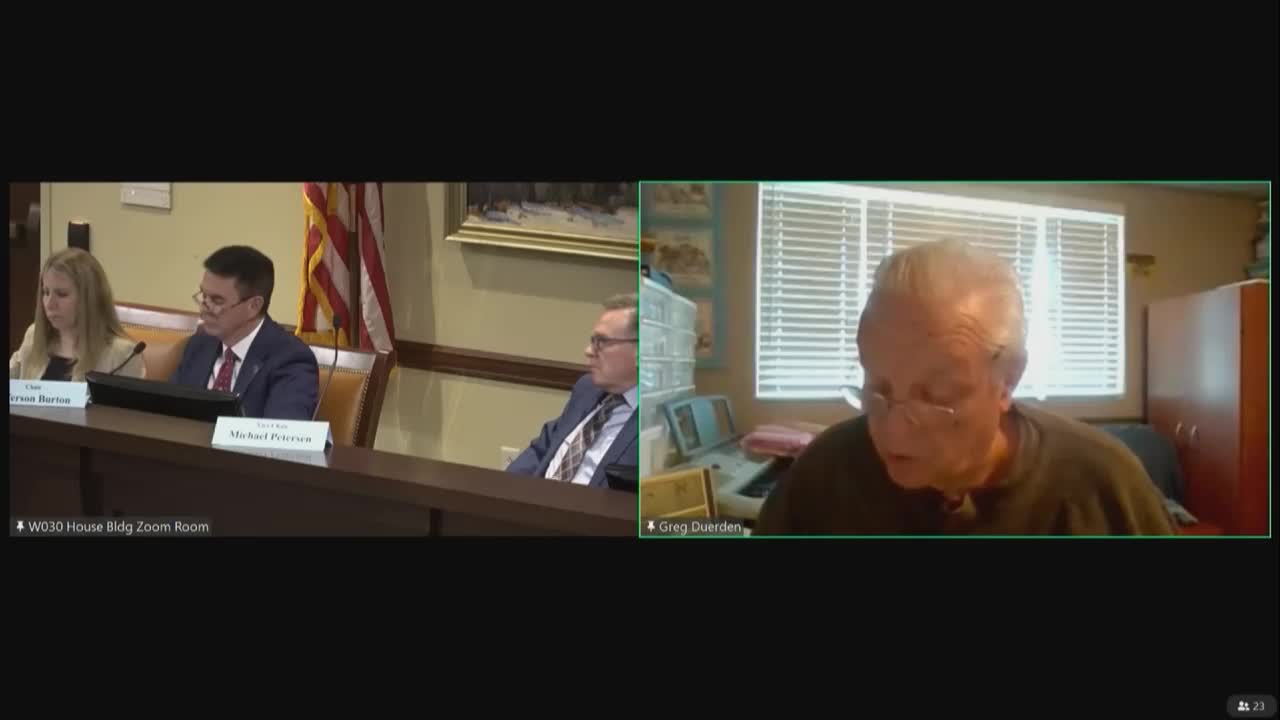
Opposition and transparency concerns. Voters and data analysts, including Wendy Hart and Marilyn Momoney, urged the committee to preserve broad access to voting information. Hart told the panel that greater transparency builds voter confidence and that details such as whether a ballot was returned by mail are valuable to public analysis. Greg Duerden, state chair of the Independent American Party of Utah, asked the committee to reject what he called a legislative solution to a private dispute and praised Utah County Clerk Aaron Davidson for his work.
County clerk testimony and the postage dispute. Utah County Clerk Aaron Davidson described a dispute that partly led to the bill: when he stopped paying return postage on ballots he said the change exposed postal delays and drew public comments from elected officials. Davidson said the county’s practice saved taxpayers money and increased the use of secure drop boxes, and he defended his decisions to encourage drop-box use rather than relying on postal returns.
State office view. Shelley Jackson of the lieutenant governor’s office testified the office was neutral but stressed that voting records should not be politicized and that aggregate data is appropriate to release while individual data can be weaponized.
Committee action and votes
Motion to adopt substitute. Representative Koehler moved to adopt the first substitute to House Bill 69; the motion carried on a unanimous voice vote.
Motion to recommend. Representative Keltner moved to favorably recommend the first substitute to the House; the motion carried unanimously.
What the substitute does (in committee discussion)
- Lists specific voter-record fields that remain public (language in the bill begins at the cited lines) while marking other fields private unless access is tied to an official duty. - Adds a code of conduct forbidding clerks from using access to voter records for purposes unrelated to their official duties. - Directs that if future bills change what information is public or private, coordinating language would be used so the most recent law governs.
Details and remaining questions
- The substitute does not change how ballots are cast (for example, mail versus in-person voting), committee members clarified. One committee member asked whether the bill would affect conversations about whether a ballot had been processed; the sponsor said curing and processing remain a duty of clerks and that necessary information to perform those duties would still be available to clerks. - Testimony indicated GRAMA requests (public-record requests) could still reveal some voter record details unless the new law explicitly classifies them as private.
Next steps
The committee voted to adopt the substitute and to favorably recommend the first substitute to the House. The substitute was forwarded to the House with a favorable recommendation.