Get Full Government Meeting Transcripts, Videos, & Alerts Forever!
Get email alerts on the Bmv Agency And Insurance Verification topic
No spam. Unsubscribe anytime.
BMV agency bill would add blackout plates and real-time insurance checks; implementation timeline set for 2028
Summary
House Bill 1390, the BMV agency bill, would permit a blackout personalized license-plate option, authorize a real-time insurance-verification system and make several cleanup changes to learner permits and credential expirations. BMV officials and insurers supported the real-time verification approach but set an implementation target of 2028.
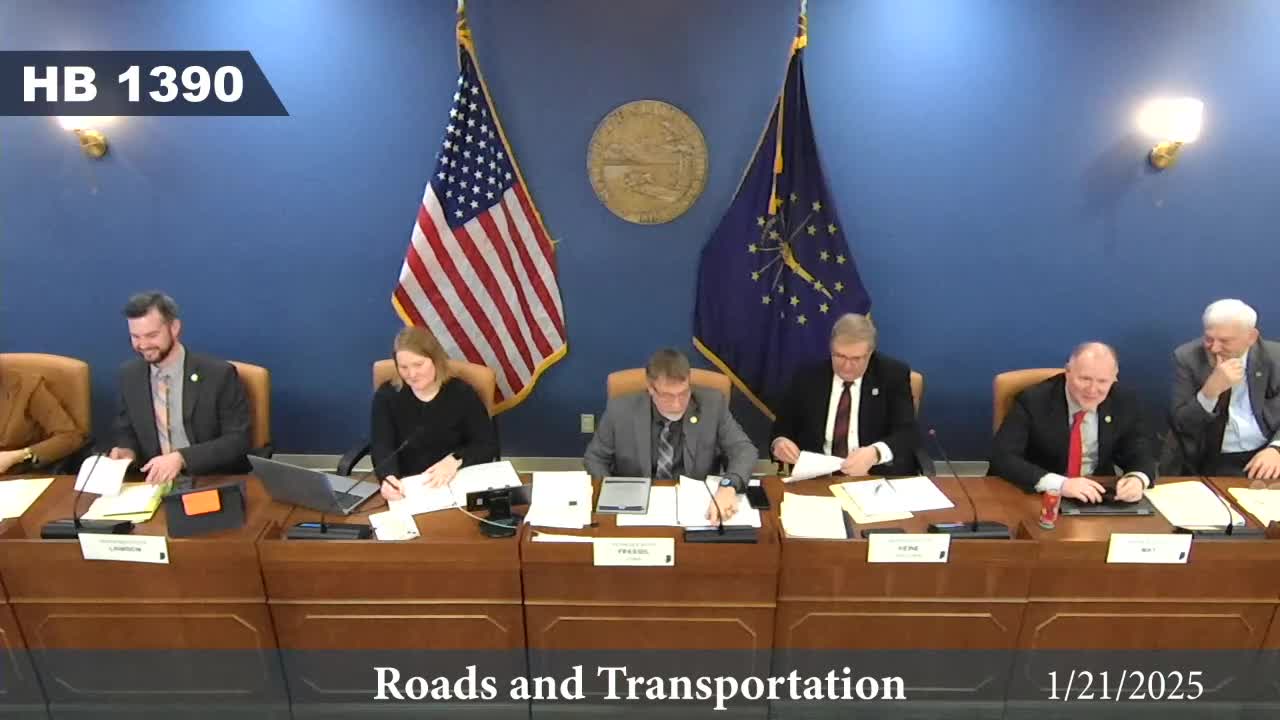
The Bureau of Motor Vehicles’ agency bill, House Bill 1390, received testimony Wednesday on several measures including a new "blackout" personalized license-plate option, real-time insurance verification to prevent inadvertent suspensions, and statutory cleanups for learner permits and credential expiration.
BMV legislative director Cody Eckert described two primary priorities: allowing a blackout plate (an all-black background with white text) for personalized plates and creating an instantaneous method for verifying evidence of motor-vehicle liability insurance directly with insurance carriers. "House Bill 1390 permits the BMV to offer a blackout color scheme," Eckert said. He described the insurance component as a way to prevent inadvertent suspensions that occur when a driver does not receive notice or the BMV does not receive a certificate of compliance.
Timetable and vendor standards: Eckert said the bill includes a delayed implementation timeline to allow procurement and technical work; the legislation sets an implementation target of 2028 for real-time insurance verification. In committee questions, he said the BMV modeled the proposal on systems other states have used and expects the lead time will let the agency prepare the technology and vendor selection processes.
Insurance-industry input: John Zarich of the Insurance Institute of Indiana testified in support of the insurance-verification provision and asked that Indiana follow the Insurance Industry Committee on Motor Vehicle Administration (IICMVA) model for electronic verification systems. "IICMVA has created a model in which to implement these electronic verification systems," Zarich said; he said the model provides a vendor-neutral framework adopted by other states and would help speed implementation. He also urged the committee to consider the different needs of commercial fleets during implementation.
Other BMV changes: Eckert outlined several legislative cleanups included in the bill: clarifying motorcycle-learner-permit renewal logic, expiring all credential types when the BMV receives notice of a holder's death, clarifying the 30-day temporary registration-permit authority for branch operations, and correcting citations for out-of-state title repossession procedures.
Additional testimony: Lynn Scheinman representing a heritage-group fleet operation addressed a separate provision (Section 7(b)) that adjusts allowable trailer lengths and hitch standards; she said safety, clarity for law enforcement and consistent enforcement would improve if the length and equipment rules were clarified.
Next steps: Representative Pressell and BMV staff indicated multiple amendments are expected; the sponsor said they will hold the bill for amendment and return with revised language. No committee vote was taken Wednesday.
Quotes: "We believe this is in the wheelhouse and then we also believe that we have the resources that will allow us to ensure that dealers and consumers both are protected adequately," Jared said earlier in the hearing about related consumer-protection transfers. Cody Eckert said of the implementation timeline: "The effective date that we have in here is 2028." John Zarich asked the state to use the "IICMVA model" as a framework for the verification system.
What to watch: the insurance-verification proposal has broad insurer support in concept; the practical details—vendor selection, integration with existing systems such as a mobile driver's license and treatment of commercial fleets—were flagged as items for the agency and stakeholders to resolve before implementation.