Get Full Government Meeting Transcripts, Videos, & Alerts Forever!
Get email alerts on the Dealer Services And Towing topic
No spam. Unsubscribe anytime.
Committee hears broad dealer-services bill; towing licensure draws the most concern
Summary
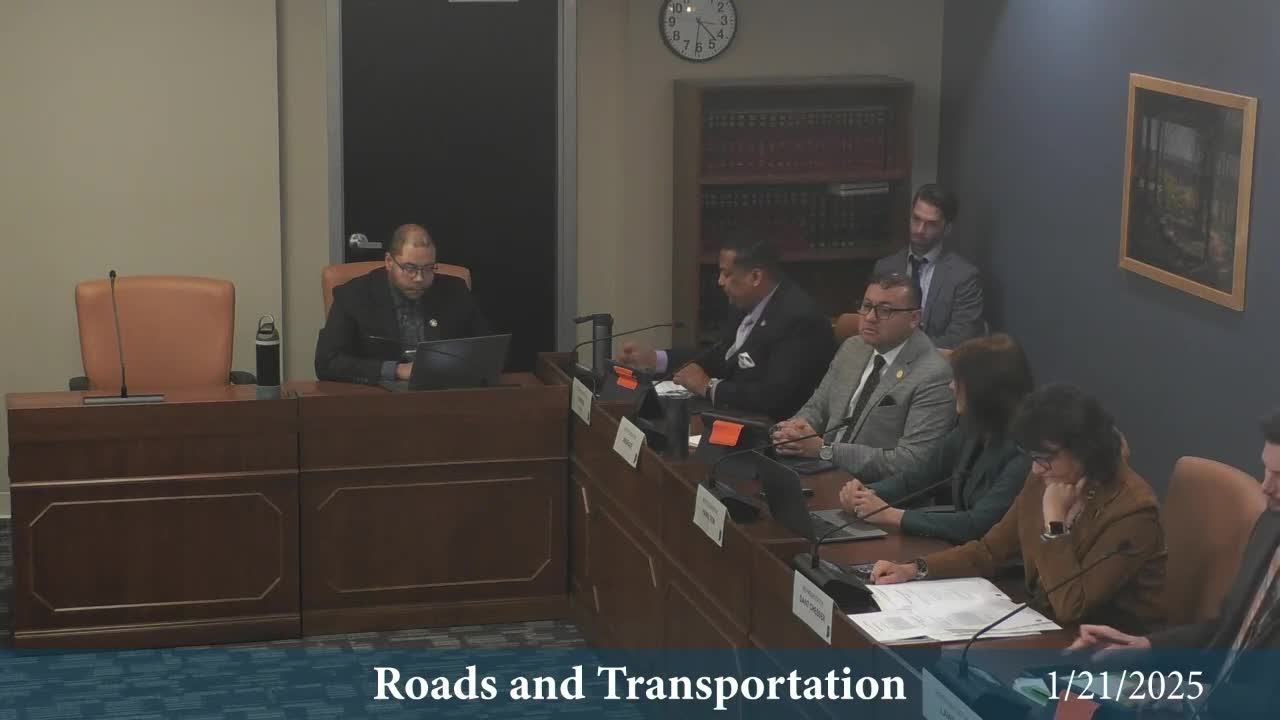
House Bill 1382, a multi-part dealer-services bill, drew detailed testimony Wednesday on licensing and enforcement for towing companies and other provisions affecting vehicle dealers across Indiana.
House Bill 1382, a multi-part dealer-services bill, drew detailed testimony Wednesday on licensing and enforcement for towing companies and other provisions affecting vehicle dealers across Indiana.
The bill’s primary new component would require state registration and create an enforcement regime for towing companies, a change supporters said is intended to protect consumers and independent dealers who use a buy-here, pay-here model. "The big portion of House Bill 1382 is a towing company licensing and enforcement," said Sean Grady, co-director of the Auto Dealers Services Division in the Secretary of State's office. Grady said the proposal pairs licensure requirements similar to other entities the division regulates with an enforcement structure moved out of Title 24 of the Indiana Code into a newly created Indiana code chapter for towing.
Why it matters: dealers and consumer advocates said the lack of a central licensing authority leaves recovery disputes to civil litigation and the attorney general’s consumer office, which stakeholders said cannot reliably pursue every complaint. John Zarich of the Insurance Institute of Indiana said safeguards around nonconsensual tows (emergency tows after accidents) would protect consumers and insureds from opaque or high fees.
Supporters and opponents: the Secretary of State’s office, independent dealer groups and some insurers backed the licensing idea. Jared (Secretary of State staff) estimated from Bureau of Motor Vehicles data that roughly "approximately a 1,000" registrants could be expected if the towing-registration requirement is enacted. Proponents stressed that the division has met regularly with the Attorney General’s Office and towing stakeholders to clarify roles; Grady said the AG would retain involvement for certain special cases.
The Indiana Towing and Wrecker Association expressed conditional opposition. Carrie Driscoll, the association’s president, testified the group has participated in drafting but said "we are not quite there" on final language and asked for further technical changes. Several towing-industry witnesses said they want fair, uniform rules and the association said it will continue stakeholder meetings with the Secretary of State’s office.
Other provisions: the bill also contains several dealer-related changes that witnesses said have broad industry agreement. Those include revised rules for manufactured-home dealers to reflect nontraditional ownership structures; an amendment to allow a dealer manager to be responsible for multiple locations without being on-site; elimination of a zoning-affidavit requirement for out-of-state manufacturers and dealers; and cleanups to independent-dealer prelicensing training language added by prior bills (including SEA 222).
Discussion and next steps: committee members and witnesses indicated consensus on many dealer provisions, but said towing fee caps and certain enforcement details remain unresolved. Grady said the division has largely reached consensus with the Towing and Wrecker Association on most language but that questions remain on fee maximums. Representative Heine (State Representative) and others said amendments are forthcoming and that the committee would address them at a future hearing; no vote was taken on HB 1382 Wednesday.
Quotes from the hearing: "Because there's no agency routinely enforcing laws, the enforcement typically considers it a civil matter," Grady said, describing why dealers face obstacles to recovering impounded vehicles. Jared of the Secretary of State's office said the upfront registration estimate was "approximately a 1,000." John Zarich of the Insurance Institute said the 2019 law protecting nonconsensual-tow situations "did a lot of things to address that," but added further statutory clarity on itemized fees could help consumers.
What remains unresolved: stakeholders flagged fee-accountability language, the precise division of enforcement responsibilities between the Secretary of State and the Attorney General, and technical drafting on registration and grandfathering for long-established tow operators. The committee’s chair said amendments would be circulated before the next meeting and the towing language will be taken up again.