Get Full Government Meeting Transcripts, Videos, & Alerts Forever!
Get email alerts on the Government Processes And Transparency topic
No spam. Unsubscribe anytime.
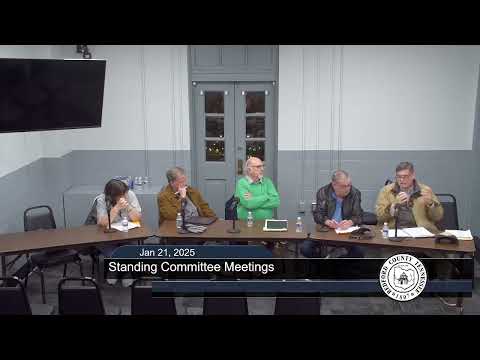
Commissioner urges review of committee rules after controversy over omnibus resolution and budget timing
Summary
A commissioner urged the county to review committee rules and limit omnibus resolutions after public complaints about Resolution 20-416, and recommended using special committees under Tennessee law to improve transparency.
A commissioner urged the Bedford County Commission to review committee rules and limit the use of omnibus resolutions after public complaints about a multi-part resolution identified in the meeting as Resolution 20-416.
The commissioner said Resolution 20-416 combined multiple projects — including a Liberty School project, a juvenile facility matter and a surplus facility — into a single omnibus action that generated public outcry. “The biggest complaint… is the resolution 20 416,” the commissioner said, noting that five or six members of the public spoke at a prior meeting to object to packaging multiple proposals in one resolution.
The commissioner proposed revisiting committee roles and recommended considering creation of special committees under Tennessee Code Annotated 5-21-105. He summarized provisions he said were in that statute: that a special committee can be composed of five members appointed by the county legislative body; that the director of finance shall be the ex officio secretary of such committees; and that the budget committee should establish policies and procedures for preparing the annual operating and capital budgets.
“My main responsibility with that committee is to watch the finance director,” the commissioner said, naming the financial director, Robert Daniel, as the official the finance committee should oversee. He said commissioners should ensure budget preparation is not left solely to the county mayor, superintendent of schools or highway department.
The discussion also included concerns about transparency for projects referenced as the DUC Sun Electra Plant and “Project Cardinal,” and broader questions about adherence to the Tennessee Open Meetings Act and salary caps for county employees. The commissioner said those matters had generated disappointment and calls for clearer procedures.
Commissioner Vick and others debated an amendment adopted in December that referenced state authority and the “Dillon Rule.” Vick said Tennessee is a Dillon Rule state and characterized the county commission as limited to powers granted by the state; other commissioners questioned whether that interpretation applied equally to counties and municipalities and whether the amendment had been shared before the December meeting. The transcript records back-and-forth about whether the amendment had been debated in committee and whether it was appropriate to have it come forward as it did.
The commissioner said the proposal — and a written set of suggested finance-committee duties he received from Charlie Curtis — would be provided to fellow commissioners and discussed further at the next meeting. He urged commissioners to read the statutory provisions cited and to consider forming or following special committee guidelines to avoid recurring concerns about process and transparency. No formal vote on committee reorganization occurred at the meeting; the item was set for future discussion.