Get Full Government Meeting Transcripts, Videos, & Alerts Forever!
Get email alerts on the State Independent Living Council Budget topic
No spam. Unsubscribe anytime.
Legislative analyst outlines State Independent Living Council finances; governor recommends small fund shift
Summary
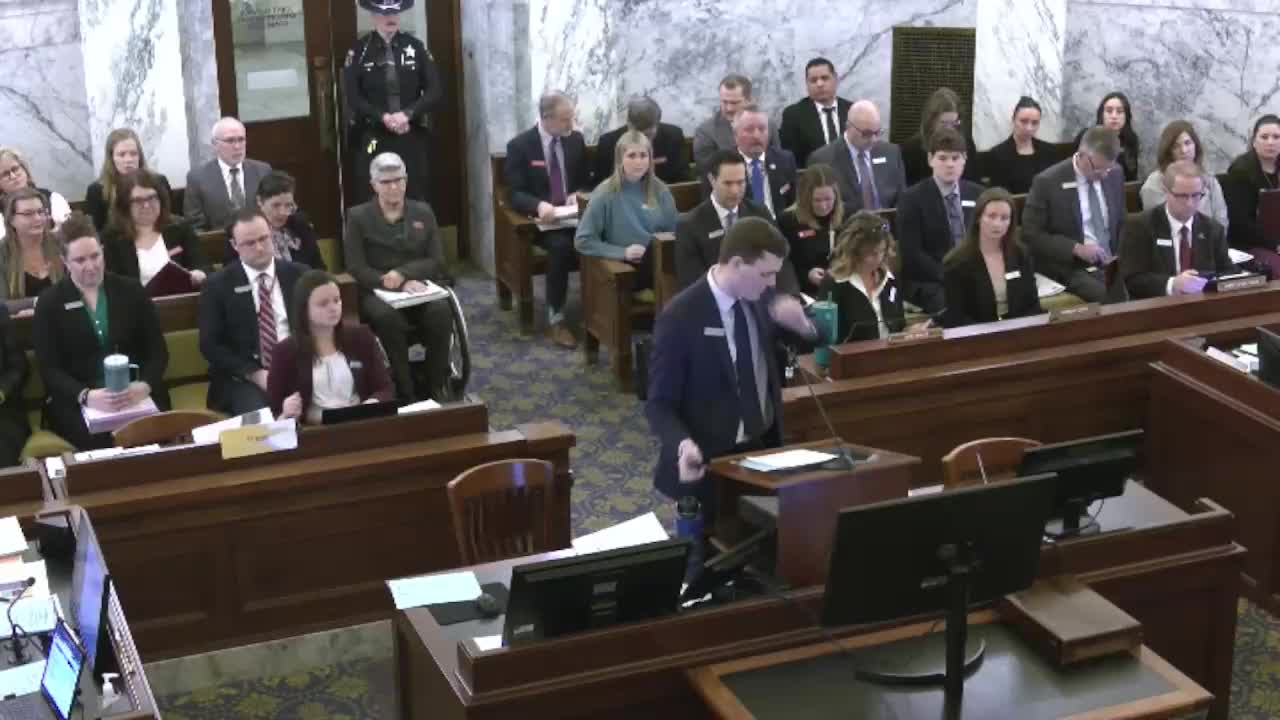
Kellan McGurkin, a budget and policy analyst with the Legislative Services Office, told the Joint Finance‑Appropriations Committee on Jan. 15 that the Idaho State Independent Living Council typically spends nearly all of its dedicated fund revenue but holds roughly $280,000 in reserve and that the governor recommends shifting $11,700 in appropriation from the council’s dedicated fund to the general fund for FY2026.
Kellan McGurkin, a budget and policy analyst with the Legislative Services Office, told the Joint Finance‑Appropriations Committee on Jan. 15 that the Idaho State Independent Living Council (SILC) generally spends nearly all of its dedicated‑fund revenue but keeps an ending balance of about $280,000, roughly six and a half months of operating expenses.
McGurkin said SILC has four full‑time positions, including Executive Director Mel Levitan, and that roughly 69% of the council’s expenditures are personnel costs. He noted occasional timing mismatches between federal grant receipts and the state fiscal year that can make a given year look as if the agency “spent more than it received,” though the analyst characterized that as a timing artifact rather than structural overspending.
McGurkin identified the governor’s recommendation for FY2026 to shift $11,700 in appropriation from SILC’s dedicated fund to the general fund so the general fund would cover roughly half of recent statewide increases in health benefits and changes in employee compensation for the agency’s positions. “The governor’s recommendation is for a total of $11,700 in appropriation to be shifted from the agency’s dedicated fund to the general fund,” McGurkin told the committee.
Executive Director Mel Levitan, who appeared after the analyst, told the committee the council is governed by a majority of people with disabilities and that volunteers from across Idaho help the council meet its mission. Levitan thanked the committee for a $10,000 increase provided last year that the council used to complete overdue audits: “with that $10,000, we have a 22, a 23, and a 24 budget or audits completed with no findings,” Levitan said.
Committee members asked clarifying questions about the meaning of years in which expenditures exceed receipts. McGurkin reiterated that the apparent overspend in some years results from federal grant timing rather than an ongoing structural deficit, citing $3,000 in FY2022 and $13,000 in FY2023 as examples of those timing differences. The analyst also noted SILC typically maintains about 6.5 months of expense in its dedicated fund as a cushion if federal funding were to be delayed.
The committee took no formal vote during the presentation. The council’s FY2026 enhancement and the governor’s recommended fund‑shift remain before the committee for further consideration during budget setting.
SILC’s statutory authority is in Title 56, Chapter 12, Idaho Code; McGurkin directed members to the Legislative Budget Book (health and human services section) for details and to agency slides available on SharePoint.