Get Full Government Meeting Transcripts, Videos, & Alerts Forever!
Get email alerts on the State Budget topic
No spam. Unsubscribe anytime.
Committee hears governor—s FY2026 budget projecting $5.9 billion in revenues; members warned of tradeoffs on tax relief, transfers
Summary
The Joint Finance‑Appropriations Committee received an FY2026 budget briefing from Legislative Services Office staff who said the governor—s recommendation assumes roughly $5.9 billion in ongoing general fund revenues, about $5.65 billion in general fund appropriations and leaves a modest projected ending balance while relying on transfers and one‑time cash.
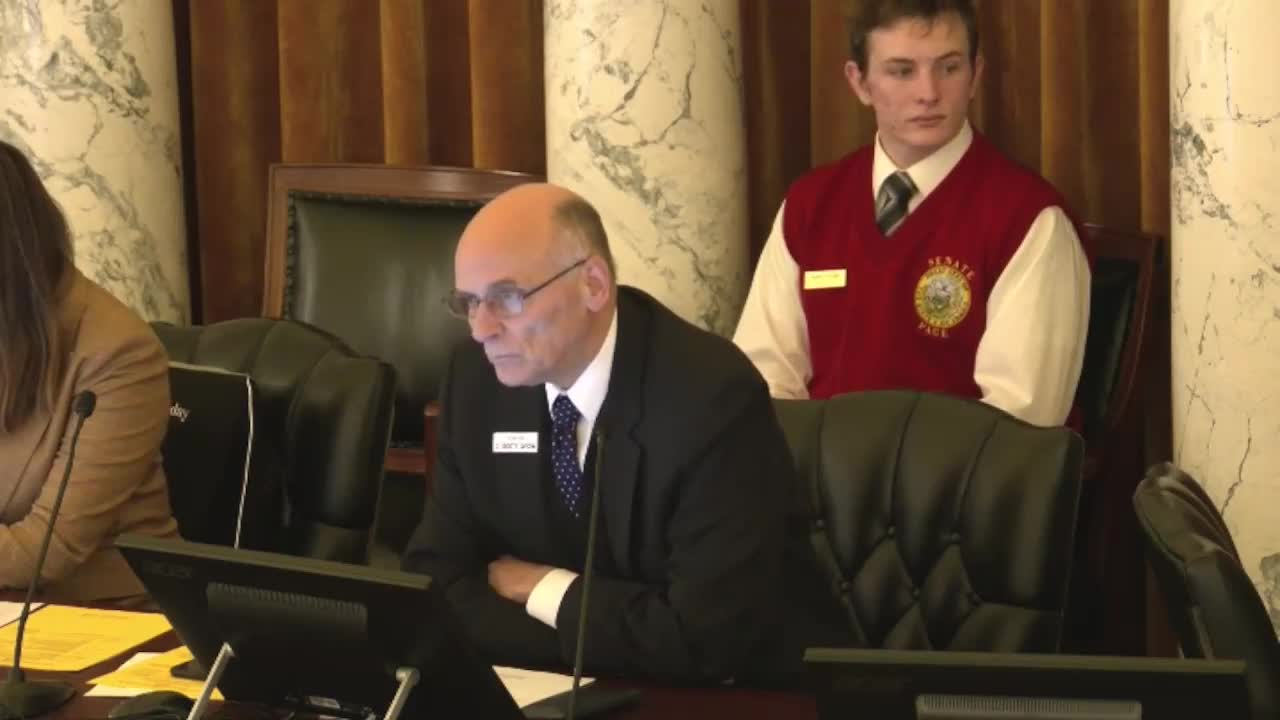
The Joint Finance-Appropriations Committee heard an overview of the governor—s budget outlook and cash reconciliation from Keith Bybee, division manager for budget policy analysis in the Legislative Services Office. Bybee told the committee the governor—s FY2026 recommendation assumes about $5.9 billion in ongoing general fund revenues and a total of roughly $6.36 billion in cash available once adjustments are included, and proposes roughly $5.65 billion in general fund appropriations for 2026.
Why it matters: the governor—s recommendation leaves a relatively small projected ending balance while the state still faces choices between tax relief, ongoing program growth and transfers to savings or targeted spending. Committee members were repeatedly reminded that past legislatures created structural balances that now create policy tradeoffs this session.
Bybee walked members through the revenue and expenditure lines that underlie the governor—s recommendation and the committee—s cash reconciliation. He said Idaho—s revenue peak during the COVID years pushed the state from about $4.0 billion in general fund receipts to more than $6.2 billion over two years, and that population growth has kept the baseline higher than pre‑COVID trend levels. Using the governor—s numbers, staff showed a structural balance on the order of $700 million for FY2025 and FY2026, the portion of revenues exceeding projected ongoing obligations.
Key budget figures cited by staff: program maintenance for the general fund of about $5.4 billion; governor—s enhancements of about $242 million; total recommended general fund appropriations of about $5.65 billion for FY2026; and a projected ending balance in the governor—s plan of roughly $227 million. Bybee noted the governor—s recommended budget uses some one‑time cash (he identified about $160 million) while much of the increase comes from higher ongoing revenue forecasts.
Bybee also summarized cash transfers included in or affecting the governor—s plan. The governor—s proposal would transfer approximately $477.3 million to other funds for spending or savings (including transportation and wildfire accounts) while a closure of the bond levy equalization program created by last session—s House Bill 521 will return $62.8 million in that account to the general fund, Bybee said. He explained House Bill 521 deleted the old bond‑levy equalization program and enacted a new statewide school bonding structure that distributes on average daily attendance (ADA); cash remaining in the deleted program is being moved back to the general fund.
The committee heard that the governor proposes a $59 million transfer to the budget stabilization fund for FY2026; if adopted that transfer would raise the fund to about $939 million and would reach the statutory 15% cap based on the governor—s revenue projection. Bybee reminded members that last year the Legislature temporarily suspended the automatic cap transfer so money would remain in the stabilization account instead of automatically returning to the general fund.
Public education reserves were also discussed: staff said the Public Education Stabilization Fund (PSIF) would rise to about $293.6 million under the governor—s projection and that the fund is subject to its own statutory cap. Bybee described the PSIF as an overdraft protection mechanism that automatically pays public school support if support units come in higher than projected.
Members raised follow‑ups. Representative Tanner asked about the governor—s emergency fund and prior COVID‑era transfers; Bybee said he would follow up with a report to the committee detailing past expenditures from that fund. Representative Furness and others asked how interest earnings on cash balances are counted; Bybee deferred to the treasurer—s office presentation and staff later said a treasurer briefing would show interest earnings and how they offset tax‑anticipation borrowing.
What happens next: Bybee said the committee will move into program maintenance work groups and agency presentations beginning Monday (health and welfare was cited as an early hearing), and reminded members that the committee must weigh one‑time transfers, ongoing enhancement requests and possible legislative initiatives that members may bring forward.
Ending: the presentation framed the coming JFAC session as a portfolio of choices about tax relief, program growth and savings. Staff emphasized the committee has room to make policy shifts but must decide how much of the structural balance to commit to ongoing obligations versus one‑time spending or transfers.