Get Full Government Meeting Transcripts, Videos, & Alerts Forever!
Get email alerts on the Riverfront Development topic
No spam. Unsubscribe anytime.
Kankakee leaders break ground on riverfront redevelopment after years of planning
Summary
City and partners held a ceremonial groundbreaking for a multi-phase Kankakee riverfront redevelopment, announcing nearly $2 million in grants, about $500,000 in philanthropy and a long-term phased plan that will include trails, park improvements and property acquisitions.
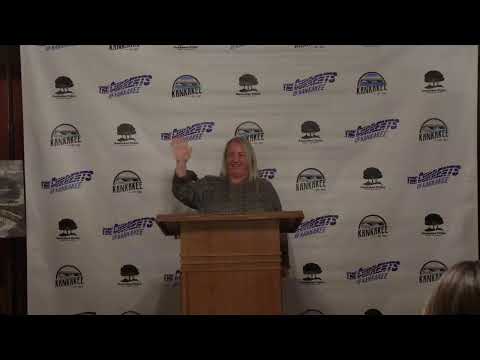
KANKAKEE, Ill. — City officials, state lawmakers and local partners on an unannounced date gathered at the Bradley House for a ceremonial groundbreaking marking the start of a multi-phase riverfront redevelopment that city leaders said is funded largely through grants and philanthropy.
Mayor Curtis said the project has been discussed for many years and emphasized the city will own the new riverfront improvements without outstanding debt. “This is going to be completed. And when it's all said and done the community is going to be able to use this and we're going to own it free and clear. We're not going to owe any money on it. It's being paid for,” Curtis said.
The project is a partnership among Kankakee City, the Kankakee Riverfront Society and the Kankakee Valley Park District, organizers said. State lawmakers at the event described financial support from multiple levels of government and private philanthropy. Senator Joyce said, “I'm excited that we have nearly $2,000,000 in grant money for this. Nearly a half a $1,000,000 in philanthropy money from the public.”
Why it matters: city and partner speakers framed the riverfront work as a long-term economic and quality-of-life investment that could spur housing and commercial activity along the river. Mayor Curtis and other presenters contrasted Kankakee's potential with riverfront developments in other Illinois communities and urged regional participation and fundraising to continue the effort.
Project scope and near-term steps: Curtis said the initial construction now underway is just the first step in a program he estimated could take 25 to 30 years to fully complete, with substantial visible progress expected in the next five to six years. Organizers described a connected trail that is in the final phases of engineering and would run from the bridge at Riverside across to Kennedy Avenue, continuing south to Station Street and below the Court Street Bridge to improve safe access. The city is also acquiring property along the West River Walk, including structures near the dam cap west of Legion Park, and expects portions of that area to be cleared as part of future phases.
Environmental review and permitting: speakers said the project required environmental studies. Senator Joyce described a mussel study that identified seven endangered mussels and said the state Department of Natural Resources engaged with city officials during review. “The mussel study showed 7 endangered mussels,” Joyce said, noting that coordination with DNR delayed earlier plans but was resolved sufficiently to allow the groundbreaking.
Community role and fundraising: organizers and volunteers emphasized years of community engagement. Bobby Burrowatz, who the event identified as chairperson of the Peggy Gervont Society and a city economic and community development official, described the effort as the culmination of over seven years of meetings and neighborhood conversations. “I am really moved tonight. This is a huge milestone for the city of Kankakee, for the Kankakee Riverfront Society...a culmination of over 7 years of community work,” Burrowatz said.
Local partners and contractors named at the event included PSI Construction, OSH Engineering, Tesco and Associates and Hitchcock Design Group. Park District Commissioner Ray Eads said he and others made personal donations to jump-start fundraising and urged residents to support ongoing contributions.
What was not decided: the event was ceremonial; no council votes or formal regulatory approvals were recorded at the gathering. Speakers said additional grant applications, engineering and design phases remain and that further public meetings and fundraising will continue.
Next steps and timeline: organizers said they plan to pursue additional grants in the fall, continue engineering and design for subsequent phases while construction proceeds on the first phase, and begin additional phases as funding and permitting allow. Mayor Curtis and partners characterized the work as long-term and phased, with several more milestones and public events planned as the project advances.