
N.H. committee hears bill to let medical dispensaries buy hemp-derived, nonintoxicating cannabinoids
Get AI-powered insights, summaries, and transcripts
Subscribe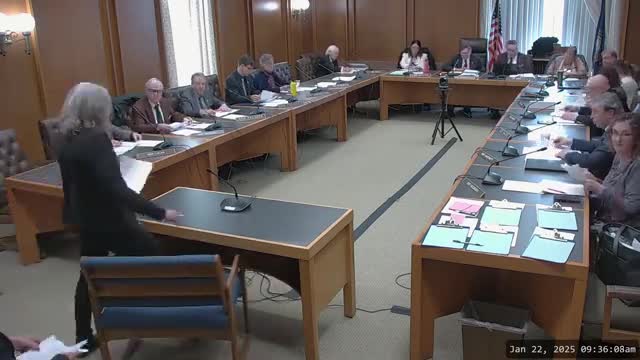
Summary
Lawmakers heard testimony on House Bill 51 to let Alternative Treatment Centers (ATCs) purchase hemp-derived nonintoxicating cannabinoids (for example CBD) from third parties, with testing and a 0.3% THC cap. Supporters say it could lower costs and expand therapeutic options; opponents raised federal-state legal questions.
CONCORD — Lawmakers on the House Committee on Health, Human Services and Elderly Affairs heard testimony on House Bill 51, which would allow New Hampshire licensed alternative treatment centers (ATCs) to purchase hemp-derived, nonintoxicating cannabinoids from third-party producers for use in therapeutic products, while requiring testing and a 0.3 percent THC cap.
The bill’s prime sponsor, Representative Wendy Thomas of Merrimack, told the committee HB 51 would let ATCs purchase commercially produced hemp oils and concentrates that are high in nonintoxicating cannabinoids such as CBD so dispensaries can make a wider range of therapeutic products and potentially reduce costs for patients. “Essentially, this bill would allow ATCs to buy 3rd party hemp products containing non intoxicating cannabinoids to use in their products,” Thomas said.
Why it matters: Supporters said some patients seek products that are higher in CBD and other nonintoxicating cannabinoids to manage chronic pain, anxiety or seizures, and that allowing third-party sourcing could reduce production costs and expand options without introducing intoxicating products. Former Representative Jerry Knirk, chair of the Therapeutic Cannabis Medical Oversight Board, described cannabis as a complex herb with many cannabinoids and said the board voted 7–0 to support HB 51.
Testing and safety: The Department of Health and Human Services’ therapeutic cannabis program administrator, Michael Holt, said the department supports the bill and that the measure requires externally sourced cannabinoids to be tested before entering an ATC and to have the finished products retested. “The bill requires all externally sourced cannabinoids to be tested before they're put into a product and those products tested afterwards, essentially double testing for this third party cannabinoids,” Holt said, and added the department can absorb necessary administrative work within its budget.
Industry practice: Operators also told the committee they already produce and sell CBD and ratio products but face higher costs when they grow CBD-rich strains indoors. Matt Simon of Granite Leaf Cannabis described current practice and testing: independent, state-licensed labs test material procured by ATCs and the ATC then uses the tested material to make finished products that are themselves tested prior to sale.
Federal-state legal questions: Opponents raised concerns about the federal-state definitions of hemp, marijuana and cannabis and the so-called “source rule” — whether material is legal based on whether it was produced from hemp or marijuana seedstock — and noted New Hampshire does not have a USDA-approved hemp plan. Sue Hamala of Smart Approaches to Marijuana (SAM) New Hampshire recommended aligning state definitions with federal law and developing a USDA plan before expanding sourcing.
What the bill would do: HB 51 would explicitly expand the statutory definition of cannabis used in the therapeutic program to include nonintoxicating hemp-derived cannabinoids, require testing (including limits to keep THC at or below 0.3 percent), and authorize ATCs to incorporate these inputs into regulated therapeutic products.
Outlook and next steps: The public hearing closed after a number of stakeholders testified; no committee vote was recorded in the transcript. Supporters argue the change will broaden patient options and reduce costs; opponents urged clarifying federal-state legal alignment and safeguards in rule language.
Ending note: The department emphasized testing and regulatory oversight would remain central to any rollout of third-party hemp sourcing, while the Therapeutic Cannabis Medical Oversight Board has formally recommended support for the concept.