Get Full Government Meeting Transcripts, Videos, & Alerts Forever!
Get email alerts on the Code Enforcement topic
No spam. Unsubscribe anytime.
Dalton City code enforcement reviews 2024 work, outlines civil-nuisance process and 2025 goals
Summary
Dan Lewallen, Dalton City code enforcement supervisor, told the council Jan. 21 that the unit opened 667 cases in 2024, issued citations in fewer than 5% of closed cases, and plans a civil-nuisance complaint process through municipal court plus a property-maintenance ordinance in 2025.
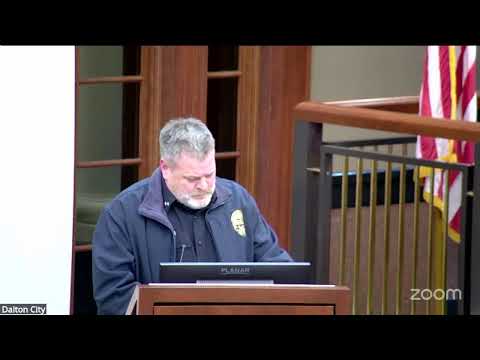
Dan Lewallen, Dalton City code enforcement supervisor, presented a recap of 2024 and goals for 2025 at the Dalton City Council meeting on Jan. 21, saying the unit opened 667 cases last year and that fewer than 5% of closed cases resulted in citations.
The presentation outlined training and interagency work the unit completed in 2024 and several specific goals for 2025, including a 5% increase in field inspector productivity, identifying the city’s top 10 problematic properties for enforcement in coordination with the city attorney, creating a civil-nuisance complaint process handled through municipal court, pursuing inspection warrants for complex cases, and drafting a comprehensive property maintenance ordinance.
Lewallen said the unit emphasized training and coordination last year: one inspector was hired in January 2024; inspectors and a supervisor obtained certifications including International Code Council Property Maintenance and Housing Inspector and Zoning Inspector credentials; the unit inspected about 60 establishments for alcohol-license applications and renewals; and staff participated in regular project-review and zoning-appeals meetings with Whitfield County and the Downtown Dalton Development Authority.
“We often run into cases where someone may see something … it may occur at hours that we’re not able to be there,” Lewallen said when describing limits to city staff’s ability to verify some complaints. He said some residents “will try to, I say, weaponize the city against each other,” and described the proposed municipal-court-driven civil-nuisance process as a way to screen complaints and have disputes resolved formally.
Lewallen said the municipal-court approach would mirror a Conyers program: complainants would file with the court, the court would determine whether a city code violation likely occurred, and—if so—the matter would be handled through municipal procedures rather than repeated informal calls to code enforcement. He also said the unit will continue the Spring Clean initiative, identifying the neighborhood around Lakeshore Park and South Hamilton Street (between Grace and Nichols streets) for the 2025 effort.
Council members asked how the proposed process would reduce the department’s role as an intermediary in neighbor disputes; Lewallen reiterated that the court filing would require sworn testimony and would allow the court to evaluate whether a code violation has actually occurred before further city resources are expended.
The presentation concluded with the goal of reducing case adjudication time to six months from case start to final adjudication and with continued outreach and interagency coordination.