Get Full Government Meeting Transcripts, Videos, & Alerts Forever!
Get email alerts on the Municipal Finance topic
No spam. Unsubscribe anytime.
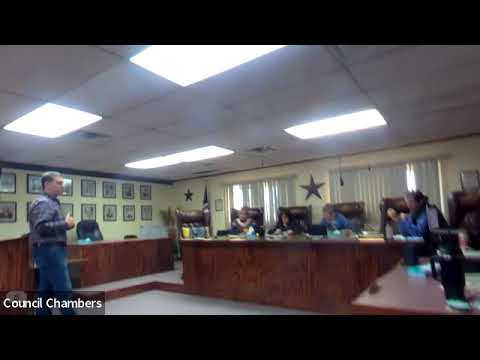
Alpine workshop reviews municipal financing options for equipment, streets and utility projects
Summary
The City of Alpine held a workshop where a municipal adviser from Government Capital reviewed options — from equipment financing to certificates of obligation and revenue bonds — to help the city plan for equipment replacements, street repairs and utility projects.
The City of Alpine held a budget workshop presentation during which Drew, a municipal adviser from Government Capital, outlined a range of financing options that the city might use to pay for equipment, street repairs, utility-line replacement and larger water and wastewater projects. The presentation aimed to help councilors connect potential projects to appropriate debt or lease tools ahead of the next budget cycle.
Drew said the session was informational and not a sales pitch: "this is not a sales pitch. It's just literally just information." He described two broad service lines his firm offers — short-term equipment financing and longer-term municipal advisory services — and walked the council through specific instruments available to Texas cities and counties.
The overview emphasized practical choices for Alpine's list of potential projects, including vehicles and removable equipment, line replacements, a possible crematorium replacement and larger wastewater work. Drew said equipment purchases that can be removed or unbolted (ambulance boxes, water meters, skid steers and similar items) are commonly financed under contracts that follow the Texas Public Property Finance approach and typically fund within 30 to 45 days after council approval and attorney review.
He described short-term options such as tax anticipation notes (used for temporary cash-flow needs, usually up to a year) and limited tax notes (typically for smaller public-works projects and limited to seven years). "Limited tax note is typically for small projects," Drew said, giving a hypothetical example of repaving a short street and citing a rule-of-thumb that road work currently costs about $1 million per mile.
On larger financings he explained differences among revenue bonds, certificates of obligation (COs) and general obligation (GO) bonds. Revenue bonds tie repayment to project-generated revenues (for example, a wastewater plant funded by user-rate revenue) and often carry higher yields because they rely on enterprise revenue rather than lawfully available tax funds. Certificates of obligation, Drew said, are commonly used in many Texas cities as a middle ground: they can be authorized by council with public notice and — unless 5 percent of registered voters petition for a public vote within the notice period — do not require going to the voters. COs can be structured for multiple terms (he said market practice is usually up to 30 years even though statutes allow longer).
General obligation bonds require voter approval and are typically reserved for very large projects or when the city wants explicit public consent; Drew noted a defeated GO measure cannot be reissued as a CO for the same project for three years. He urged transparency when using COs as some jurisdictions have drawn public and media attention for large CO financings.
Drew also discussed municipal advisory engagement: as a municipal adviser his firm takes a fiduciary role to evaluate which instrument best fits the city's needs and said advisory fees generally are charged only when a transaction closes. He described how four factors tend to drive municipal interest rates: the broader market (10-year U.S. Treasury is a commonly used benchmark), the issuer's credit (recent audits and current budget), the financing term, and the dollar amount being borrowed.
Council members asked detailed follow-ups about how different instruments affect Alpine's tax rates and operating budget. Councilmember Nance and others pressed on the difference between tax-rate components: debt service (I&S) versus maintenance and operations (M&O). Drew said I&S is the portion of the tax rate used to pay debt service and that M&O is subject to annual tax-rate limits and variations (including statutory caps that affect year-to-year increases). He also described strategies planners use to "feather" payments across overlapping debt schedules so near-term tax impacts are moderated.
Several numeric clarifications were recorded during the presentation: Government Capital was described as founded in 1992 and having executed billions in financings nationwide (Drew said the firm had completed more than $6,000,000,000 in transactions); limited tax notes are commonly structured up to seven years; equipment financings often fund in 30–45 days after council approval and attorney review; and the 10-year Treasury yield (a common market benchmark) was cited in the mid-4 percent range during the discussion. Drew also gave a prior-case example in which a limited tax note of roughly $1.25 million financed utility relocation pending state reimbursement.
No formal motions or votes were taken during the workshop. Several council members asked that staff incorporate the financing choices into upcoming budgetary planning and capital-improvement discussions; the presentation concluded with the adviser offering to provide fee schedules and comparative scenarios if the city requests further analysis.
Why it matters: Alpine staff and council have infrastructure and equipment needs on the horizon and will need to decide whether to budget from operating funds, use equipment financing, issue COs or seek voter-approved GO bonds. Each path has implications for repayment source, timeline, public notice and potential tax impacts.
The presentation covered the range of financing tools and trade-offs; next steps discussed were to gather project cost estimates, ask staff to include candidate projects in the capital plan, and obtain comparative financing scenarios to bring back to council for explicit budgeting or future agenda action. The council did not adopt any financing at the workshop.