Get Full Government Meeting Transcripts, Videos, & Alerts Forever!
Get email alerts on the Competitive Cheer topic
No spam. Unsubscribe anytime.
Corner Canyon competitive cheer prepares for state meet after season of intense training
Summary
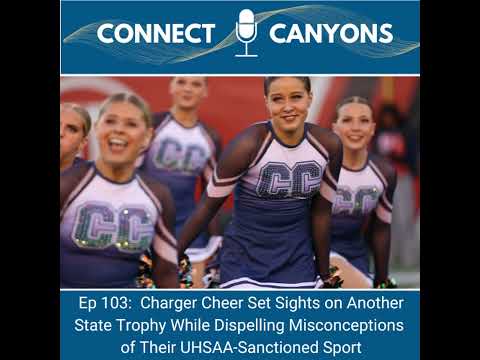
Corner Canyon High School's competitive cheer squad, a multi-time state and national champion program, described the physical and mental preparation that has driven its success and said it will compete at the Utah High School Activities Association state championships at Utah Valley University the night after this episode was recorded.
Corner Canyon High School's competitive cheer team will compete at the Utah High School Activities Association (UHSAA) state championships at Utah Valley University the night after this episode was recorded, coach Whitney Lund said.
The Corner Canyon program, which Lund described as now being "also a sport" with competition central to its role, has won multiple UHSAA state titles and national championships and spends year-round hours on conditioning, tumbling and mental training to prepare routines judged across three categories, team members said.
Lund, Corner Canyon's coach, said the evolution of cheer from sideline support to a sanctioned sport has "really upped the athleticism of the sport," adding that the competitive show routine requires stunts, tumbling, dance and endurance. "Cheering on the sidelines is the easy part of our job," she said.
Students described the training load and the season structure. Alicia Wong, a senior and team captain, said practices include strength work, running and conditioning; she called a 2 minute, 30 second competition routine "very, very difficult." Eva Johnson, another senior, said she practiced gymnastics for 13 years before joining the squad and that athletes must adapt tumbling from a spring floor to a dead floor used in cheer competitions. Reagan Allaman, a senior who described returning from a severe back injury, said the physical recovery required core strengthening, long-term bracing and gradual rebuilding of skills.
The team outlined how scoring works at the UHSAA state meet: a show or traditional routine (2 minutes, 30 seconds) counts for 70 percent of the total score; game-day sections (a game-day cheer and a band dance) make up the remaining 30 percent, split as two 15 percent components. "Show is 70, and they add that together to determine who will win the state championship," Lund said.
On technical roles, Lund described five primary positions used in stunting and routines: main base, side base, back spot, flyer (top girl) and tumbler. Team members said many athletes specialize in one role; tumblers perform running and standing passes while bases and back spots focus on stunts.
Mental preparation was emphasized alongside physical training. Lund said the team includes daily mental training and regular conversations about mindset at practice. Allaman described periods when she "got in my head" about tumbling and how teammates' support and focused work restored her confidence.
The squad also shared numbers that reflect its depth: Lund said the team will take 23 athletes to nationals, noting that at nationals "14 of them do standing handsprings into fulls" and "15 out of the 23 do running handsprings into fulls," and that many athletes perform specialty passes.
The Corner Canyon athletes described year-round commitments: spring tryouts and skill-building, daily summer practices (the team noted early-morning sessions and multi-hour workouts), and fall schedules that combine game-day cheering with competition preparation. Johnson said specialty training and consistent classes for tumbling and dance are required to reach the program's baseline skill expectations.
The episode concluded with the team and host expressing support ahead of the state meet at Utah Valley University. "Tomorrow night is the state competition," the host said, and the team acknowledged it would be on the competition floor the following evening.