Get Full Government Meeting Transcripts, Videos, & Alerts Forever!
Get email alerts on the Metcom Cip topic
No spam. Unsubscribe anytime.
Metcom presents FY2015 capital plan; commissioners question cost increases and St. George’s Park funding
Summary
St. Mary’s County Metropolitan Commission presented its proposed Fiscal Year 2015 capital-improvement budget and five-year plan on April 8, showing roughly $29 million in FY2015 projects and proposed increases in connection fees and system improvement charges.
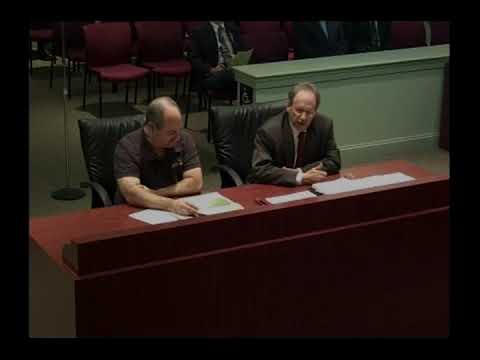
St. Mary’s County Metropolitan Commission (Metcom) staff presented the proposed Fiscal Year 2015 capital-improvement budget and five-year capital plan to the county commissioners on April 8 and described projects, estimated costs and proposed rate changes.
Metcom staff said the FY2015 capital plan totals about $29 million for that fiscal year and roughly $298 million across the five-year window included in the packet. Becky Schick, Metcom chief financial officer, told commissioners the draft budget relies primarily on loans with some reserve funding and that projected debt and rates reflect assumptions about the number of new connections (EDUs) and the portion of costs attributable to new versus existing customers.
Why the budget matters Metcom staff proposed rate and connection-fee increases that would affect new-connection costs and monthly charges. Schick said the proposed system improvement charge for a residential water equivalent dwelling unit (EDU) in FY2015 would be $9.27 (up $0.99) and the sewer improvement charge $14.46 (up $0.85). The proposed one-time capital contribution (connection) charge for water was $7,052 (an increase of $2,940) and sewer $4,951.14 (an increase of $1,238.33), for a combined capital contribution charge of about $12,003 per EDU (presenter’s figures).
Staff described project priorities and changes Metcom Administrator (presenter) said staff revised cost estimates following criticism the prior year and used more recent construction-bid data and updated unit prices. Several project cost estimates increased substantially after that review: the Saint Clement Shores replacement and upgrade moved from earlier lower estimates to roughly $12 million in the FY2015 plan (presenter’s estimate), a larger scope and higher unit prices were cited. Staff said Saint Clement Shores serves about 230 customers and had 24 breaks during a two-week freeze period this past winter, which accelerated the project’s priority.
Town Creek and required hookups Metcom staff said the Town Creek upgrade project would replace aging 2–4 inch lines, bring the area up to Metcom standards and permit installation of meters. Staff estimated about 30 additional properties along Town Creek Drive would be required to connect once the line is extended; commissioners asked whether residents had been notified and staff said project design was not yet far enough along to begin individual notices, but said notification and a public meeting would occur before hookups were required.
Commissioner concerns: cost estimates, disclosure and timing Several commissioners criticized large upward adjustments in cost estimates and asked for more accurate outside estimates for near-term years. One commissioner said it was difficult for Metcom commissioners and the county to set rates when capital cost estimates changed dramatically. Staff responded that current-year projects (FY2015) had been re-estimated using recent bid data and that they would refine 2016–2017 estimates and could ask outside estimators for further validation.
St. George’s Park and funding questions Commissioners questioned the county role in pre-funding the St. George’s Park project and whether developer-funded or county-funded approaches should apply. Metcom staff said a county-funded scenario amortized over 20 years at 3% interest would require about $8 million in project costs while projected capital-contribution revenue would be roughly $4 million, leaving an estimated shortfall of about $4 million (presenter’s calculation). Commissioners asked staff for a focused executive summary of the feasibility analysis and for Metcom to provide additional documentation and historical background on the project; staff agreed to provide that information for further discussion.
Other notable projects and program items Metcom staff reviewed many projects in water, pumps, storage and sewer infrastructure including: a connector main along MD-235 to Airport Road; Piney Point replacement work; design work to extend a water main from FDR Boulevard to Old Rolling Road; Hickory Hills and Bay Ridge wells and water towers; the Great Mills wastewater pump station relocation and rehabilitation; interceptor rehabilitation projects; a planned Marley-Taylor treatment-plant engineering and potential capacity expansion (from 6.0 to 7.5 million gallons per day in one scenario); and ongoing meter and asset-management projects. Staff said meter and asset-management work (GIS and a CityWorks-based system) is intended to prioritize projects and reduce recurring maintenance costs.
Process, next steps and public input Staff outlined the schedule: a public hearing to be held that evening at the Metropolitan Commission office on both the CIP and the operating budget; the Metcom board will review public comments and consider approval later in April; and staff plans to return to the county commissioners for final action on May 27 before an implementation date of July 1, 2014. Commissioners and staff also discussed affordability metrics (an EPA guideline cited as 4.5% of annual family income for water and sewer costs), Metcom’s debt limits and the role of state priority-funding areas and land-application requirements for advanced wastewater treatment.
Ending Commissioners requested additional documentation (additional engineering-cost breakdowns for near-term years, a three-page executive summary on St. George’s Park feasibility, and an engineering-budget breakdown for next fiscal year). Metcom staff agreed to provide the requested materials and continue public hearings and board-level reviews before any final county decisions.