Get Full Government Meeting Transcripts, Videos, & Alerts Forever!
Get email alerts on the Metco Deib topic
No spam. Unsubscribe anytime.
Concord-Carlisle hears METCO and DEIB updates as transportation costs and state funding shifts draw attention
Summary
METCO leaders and the districtDEIB director reviewed program changes, staffing gains and academic supports while committee members flagged transportation costs and a possible state funding formula change; METCO urged local advocacy for state funding increases.
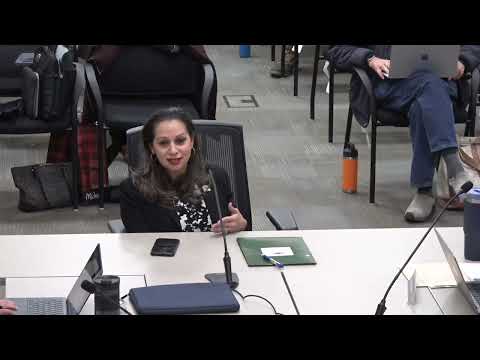
Millie (CEO and president of METCO Inc.) and Andrew Nyamica (director of DEIB for Concord Public Schools and Concord-Carlisle) briefed the Concord-Carlisle Regional School Committee on METCO program developments and district equity work on Jan. 21.
The session outlined staffing changes, targeted academic supports and new programming aimed at sustaining METCO studentsand invited the committee to support advocacy for state-level funding adjustments.
METCO leadership provided context and recent changes. "I have been involved with the Concord METCO program for a very long time," Millie told the committee, noting recent investments she said were notable to visiting METCO leaders: a Saturday sports bus, a split METCO staffing pattern with separate k-8 and high-school roles, and two school-committee seats for METCO parents. Millie said Concordwhich she described as a frequent example at statewide METCO gatheringshad moved quickly after student recommendations to create dedicated space, expand staff and add supports.
Millie described recent research showing long-term benefits for METCO participants and urged the committee to use that evidence to close remaining achievement gaps. She warned the committee of a possible change at the state level to the METCO grant formula: "DESE is sounding like they're gonna change that and go to a strict October 1 enrollment and just divide the money out," she said, noting that small enrollment dips could reduce district grant receipts by roughly $50,000 to $60,000 each.
Andrew summarized the districtwide DEIB (diversity, equity, inclusion and belonging) agenda and tied it to METCO supports. He read DESEthe state Department of Elementary and Secondary Educationvision and described local steps: a k-12 literature review committee, expanded professional development (including implicit-bias work for support staff), and department-level equity goals at the high school. "When we provide access for these students, particularly in AP, they do well," Andrew said, pointing to historical AP-exam pass rates by subgroup and arguing that access plus supports produce measurable results.
Committee members pressed on two budget-related topics: transportation and grant funding.
- Transportation: Committee members noted the district spends a substantial share of its METCO budget on buses. The district presentation showed roughly $1.2 million in METCO-related costs for Concord Public Schools during FY25; the federal/state METCO grant covers about $691,000 and the district budget covers roughly $545,000. Committee members observed that, at the high school level, transportation runs can cost thousands of dollars per student; one committee member estimated the effective transportation cost approaches $5,000 per METCO high-school student using district figures.
- METCO grant and advocacy: Millie said the state grant currently includes a three-year rolling "hold harmless" component that has kept funding relatively level, but DESE staff are proposing to end that mechanism and move to a single October 1 enrollment count. That change, Millie said, could reduce Concordand many other districtsgrant awards unless the legislature increases METCO funding. Millie asked the committee to support METCOled advocacy events: a legislative briefing at the State House planned for Feb. 25 and a larger METCO advocacy day set for March 20. "We are asking for $3,200,000 increase on the budget this year," she said of METCO Inc.'s lobbying request on behalf of METCO programs statewide (METCO Inc.'s request is statewide, not a district-only ask).
Committee members and METCO leaders also discussed program design options that other districts use to strengthen academic outcomes: targeted K-8 literacy or math interventions, summer/after-school acceleration programs, cohort-based efforts such as the Calculus Project, and staffing strategies that give METCO students designated advisors or tutors. Millie and Andrew urged the committee to consider shifting existing district spending where appropriate and to push for additional state grant funding to support targeted academic work.
Why it matters: Concord-Carlislelike many suburban METCO districtsis balancing local budget investments against a state reimbursable grant whose method of calculation may change. Local decisions about buses, staffing, and targeted academic programming affect both student access to extracurriculars and classroom opportunities for historically underserved student groups. METCO leaders framed an immediate request for help with state advocacy and longer-term attention to program design and budget priorities.
The committee did not take a formal vote on METCO program structure or grant-related policy at this meeting, but members asked for additional budget detail, signaled support for the planned advocacy dates, and requested survey results from METCO families about transportation needs and after-school participation.