Get Full Government Meeting Transcripts, Videos, & Alerts Forever!
Get email alerts on the K 12 Budget Healthcare topic
No spam. Unsubscribe anytime.
St. Mary’s County schools report $5.8M–$6.5M health‑care shortfall; three fix options presented to commissioners
Summary
Superintendent and school finance staff told the Board of County Commissioners that the school system faces an estimated $5.8 million to $6.5 million shortfall in fiscal 2014 health‑care costs and presented three options that range from using reserves to requesting a county loan or supplemental appropriation.
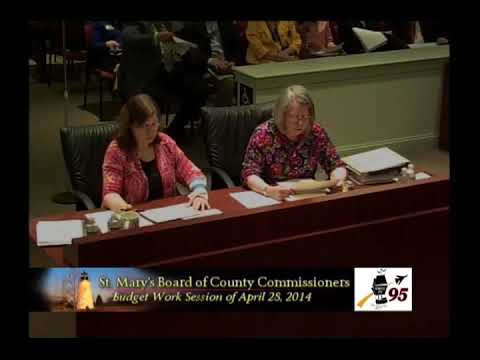
St. Mary’s County Public Schools Superintendent Doctor Martirano told the Board of County Commissioners on April 28 that the school system faces an estimated $5.8 million to $6.5 million shortfall in fiscal 2014 health‑care costs and outlined three options for closing the gap.
Martirano and the school system's newly hired assistant superintendent for fiscal services and human resources, Tammy McCourt, said higher-than-expected prescription costs, more employees enrolled in plans and several very large individual claims drove the shortfall. "Healthcare is the real issue and I’ve been saying that for years," Martirano said, citing a run of unusually high brand‑drug usage and catastrophic claims.
The school system’s finance presentation, delivered by McCourt, estimated that prescription fills and brand‑drug usage had increased materially and that projected health claims for the remainder of the year made exact final totals uncertain. McCourt described an estimated shortfall “in the range of 5.8 to $6,500,000” and said two months of claims were still outstanding at the time of the presentation.
Why it matters: the schools must pay salaries, utilities and transportation regardless of budget gaps, and the county and school system staffs said a solution is needed quickly to protect cash flow and avoid disrupting operations. McCourt warned that fully exhausting reserves would leave the district with little cushion for FY2015.
Options presented: the superintendent and finance staff gave the commissioners three alternatives: - Option 1: Use 100% of the school system’s health‑care reserve (listed in materials as $1,000,000), use 100% of the unassigned fund balance (materials listed $2,000,000), and apply $2.3–$3.0 million of immediate internal savings from spending freezes and other cuts. This option would eliminate the district’s fund balance cushion and health reserve for FY2015. - Option 2: Use 100% of the health reserve, use 50% of the unassigned fund balance (approximately $1,000,000), apply $2.3–$3.0 million in internal savings and request the remaining $1.0–$1.7 million from the county by June 15 as a loan or supplemental appropriation; also request the county’s June distribution be advanced to May 15. - Option 3: Use none of the health reserve, apply $2.3–$3.0 million in internal savings, and request $3.0–$3.7 million from the county by June 15 in the form of a loan or supplemental appropriation; request the June county distribution be advanced to May 15. This option preserves the district’s health reserve and fund balance but requires larger county assistance.
School staff also proposed budget adjustments for FY2015 if county support is granted: increasing budgeted health care funding by roughly $6.5 million above the recommended FY2015 level, returning to a modified retrospective health structure with CareFirst (the district’s insurer), raising employee premium rates, and dedicating future refunds and savings to re‑establish a health reserve. McCourt said the district planned to reconvene its health care committee to examine co‑pays, prescription plan design and other cost controls and that negotiation with employee associations will be required to implement some plan changes.
County reaction and next steps: Commissioners pressed for specific details about the $2.3–$3.0 million of internal savings the district said it could produce and for documentation of the health‑care provider’s cost projections. Commissioner Cynthia L. Jones and others asked for a clear timeline for negotiations with the unions and for a plan to protect classroom positions. The board directed county and school staff to meet, exchange detailed backup, and return with firm numbers and recommendations so the commissioners can decide whether to provide an early distribution, a loan, or a supplemental appropriation.
The school board presented the three options for discussion only; no county appropriation or loan was approved at the April 28 meeting. The school system asked the county to consider advancing the June distribution to May 15 and to be prepared to consider a loan or supplemental appropriation if the parties cannot close the gap with internal savings and reserves.
Ending: County and school staffs agreed to meet rapidly, provide detailed line‑item backup and projections, and return to the commissioners before the county’s May 13 adoption of the fiscal 2015 budget so elected officials can consider whether and how to assist the school system.