Get Full Government Meeting Transcripts, Videos, & Alerts Forever!
Get email alerts on the Property Tax Relief topic
No spam. Unsubscribe anytime.
St. Mary’s County moves to add 65-plus property tax credit, estimates $250,000 revenue offset
Summary
County CFO presented a proposal to add a 10% property tax credit for residents aged 65–69 with eligibility limits; commissioners agreed to proceed toward application and public hearing with a $250,000 revenue offset estimate.
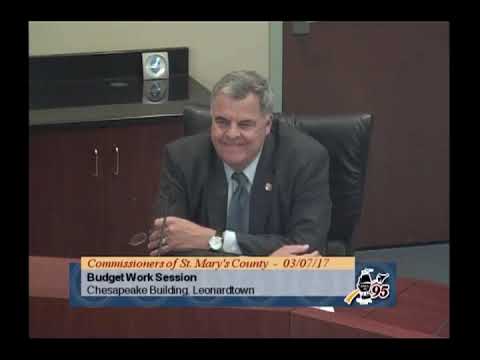
The Commission of St. Mary’s County reviewed a plan on March 7 to add a new 10 percent property tax credit for homeowners who turn 65, a change county Finance Director Jeanette Cudmore presented as an expansion of the county’s senior tax-credit program.
Cudmore told commissioners the proposed FY 2018 credit (code 6510 on the county’s scorecard) is budgeted at $250,000 as a revenue offset. Under the criteria discussed, the credit would apply to households with a maximum assessed value of $400,000 and an income threshold of $80,000. Applicants would need to show deed evidence and age verification; veterans would continue to show DD Form 214 as appropriate.
Cudmore said the treasurer’s office would calculate which tax-relief option provides the most benefit to an individual taxpayer and that the county would prepare an application and public-hearing package if the commission affirms the approach. She said county staff will collect trend data after implementation and return to the FY 2019 budget process to adjust the policy if application rates or costs differ from the estimate.
A commissioner asked for comparative data showing how St. Mary’s senior credits compare with other Maryland counties. Cudmore said the county’s program is “much more generous” than most jurisdictions and noted staff had already checked Anne Arundel, Caroline, Charles and Calvert counties for program designs and caps. She said staff will provide any updated statewide comparisons they receive before the public hearing.
The commission did not take a formal roll-call vote in the session; staff said they would move forward to produce an application and schedule the public hearing if the commission continues to agree with the design.