Get Full Government Meeting Transcripts, Videos, & Alerts Forever!
Get email alerts on the Fdr Boulevard topic
No spam. Unsubscribe anytime.
Commissioners weigh accelerating FDR Boulevard phases to support possible BRAC-driven growth; staff to model fiscal impacts
Summary
In light of potential base-related development and a possible BRAC, commissioners discussed accelerating construction of FDR Boulevard phases 1 and 3 over 2014–16 to improve infrastructure near NAS Patuxent River; staff was asked to produce a revised CIP sheet showing construction vs. land-acquisition costs and debt-service effects
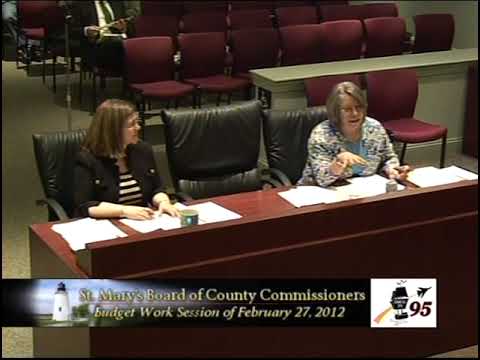
St. Mary's County commissioners spent extensive time on Feb. 27 discussing whether to move up construction of key sections of FDR Boulevard to support development near the Naval Air Station Patuxent River and to strengthen the county’s external scoring for a possible BRAC in 2015.
Commissioner Daniel Morris urged the board to advance phases 1 and 3 of the long-planned FDR Boulevard — work that would connect Peg Road northward toward St. Andrew's Church Road — over a three-year period (FY2014–FY2016). Staff said phase 1 design is 100% complete and land acquisition is roughly three-quarters finished, and that phase 3 design solicitation could start this year with land acquisition the following year.
Supporters argued accelerating phases 1 and 3 would show the county’s commitment to regional infrastructure improvements and help absorb traffic from potential new development linked to the Navy’s Enhanced Use Lease (EUL) negotiations. Opponents and more cautious commissioners asked for a clear fiscal picture: how much land acquisition costs, construction costs and resulting debt-service increases would be if phases were advanced.
County staff said prior-approved funding already covers some design and land acquisition and noted roughly $8–9 million in acquisition cost estimates for the corridor; staff agreed to produce a simplified CIP sheet that separates land-acquisition costs from construction and shows the debt-service impacts of moving the work forward. Commissioners asked staff to remove or simplify less relevant sub‑phasing (4 and 5), present the FY14–16 construction plan and supply traffic estimates that underpin the projected daily trips diverted from Route 235.
Why it matters: FDR Boulevard is a major roadway project tied to long-range growth, regional access and potential federal mission decisions; moving work forward affects land acquisition timing, bonding and county debt service, and can influence BRAC scoring and the county’s ability to host mission-related development.
Outlook: Staff will provide a revised five‑year CIP display showing prior approvals, split land vs. construction costs and a debt-service analysis for the 2014–16 scenarios; commissioners will review those numbers before deciding whether to accelerate construction funding.