Get Full Government Meeting Transcripts, Videos, & Alerts Forever!
Get email alerts on the Impact Fees topic
No spam. Unsubscribe anytime.
County holds impact fee rates; staff to study excise-tax option and potential enabling legislation
Summary
St. Mary's County finance staff presented the annual impact-fee update and recommended keeping current fees in place for now while studying whether an excise tax (square-foot basis) would be more equitable; commissioners asked staff to prepare an updated analysis and to assess enabling state legislation
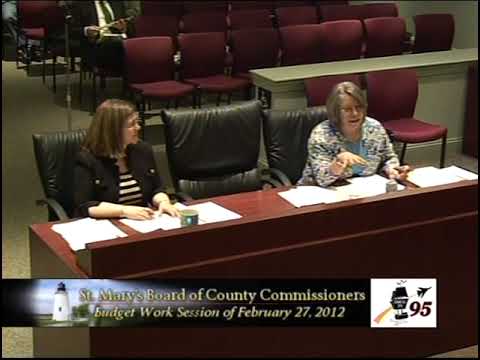
St. Mary's County finance staff reviewed the annual impact-fee calculation during the Feb. 27 budget work session and recommended holding the county's current fee structure in place while researching alternative methods, including an excise tax based on square footage.
Finance staff said the county’s impact fees are intended for growth-related capital needs — schools, roads and parks — and explained how carryover balances and multi-year residential-construction estimates feed into the five-year capital plan. The packet showed about $6 million in uncommitted school impact-fee carryover; staff said that is typical because new schools are built infrequently and the fees accumulate until used.
The staff presentation included updated per-unit calculations for schools, roads and parks and a comparison table showing St. Mary’s County’s fee structure versus other Maryland counties. “The current impact fee is still $45100,” the presentation stated; staff and commissioners discussed how other counties sometimes use square-foot or excise-tax methods instead of St. Mary’s flat fee.
Commissioner Lawrence D. Jarboe and others raised equity concerns about a flat impact fee: smaller homes pay the same flat fee as larger homes, which can be a greater share of cost for modest housing. Commissioner Daniel Morris and the chief financial officer said some counties have switched from impact fees to excise taxes that can be based on square footage; that change requires state enabling legislation. Staff recommended leaving the fee in place for FY13 and preparing updated analyses, including a new impact-fee study and legislative review if the board wants to pursue an excise tax.
Why it matters: Impact fees are a dedicated capital source that help pay for new roads, schools and parks created by growth; changes in methodology or rate affect developers, new homeowners and county capital revenues. Commissioners directed staff to research the statute and prepare a plan if the board wants enabling legislation to pursue an excise tax for consideration in the 2013 legislative session.
Ending: Staff will keep the current fee schedule in place for now and return with a targeted study and legal analysis of an excise-tax alternative and the timeline for possible legislative action.