Get Full Government Meeting Transcripts, Videos, & Alerts Forever!
Get email alerts on the Rescue Tax Hollywood topic
No spam. Unsubscribe anytime.
Hollywood Volunteer Rescue Squad asks St. Mary’s County to double rescue tax to cover operations and building plan
Summary
Hollywood Volunteer Rescue Squad representatives told the St. Mary’s County Board of County Commissioners at a Jan. 29, 2013 budget work session that the squad faces growing operating deficits and is requesting a rescue tax increase from 0.011 to 0.022 to avoid drawing down reserves and to fund a planned station renovation.
Hollywood Volunteer Rescue Squad representatives told the St. Mary’s County Board of County Commissioners at a Jan. 29, 2013 budget work session that the squad faces growing operating deficits and is requesting a rescue tax increase from 0.011 to 0.022 to avoid drawing down reserves and to fund a planned station renovation.
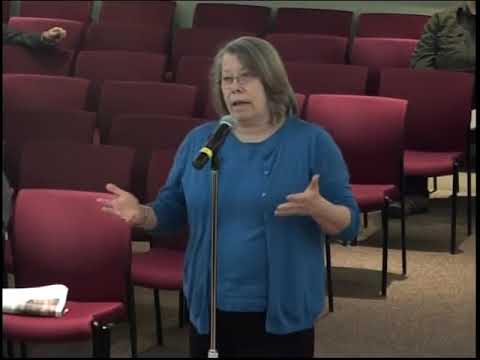
The request was presented by Natalie Himes, president of the Hollywood Volunteer Rescue Squad; Tim Linehan, treasurer; and Assistant Chief Barbara Weibel. Himes summarized the purpose of the presentation as “to request for a tax rate increase,” and said the squad would review revenue and expense trends, fundraising and alternatives, and plans for a new facility.
The request follows several trends the squad described to commissioners. Tim Linehan said county and state funding make up roughly 70 percent of Hollywood’s revenue while donations and fundraising account for about 10–34 percent depending on the year; he added that volunteer time donated by members had an estimated value of about $750,000. Linehan also presented dispatch data showing a sharp rise in mutual-aid calls within the county: mutual-aid in-county dispatches rose from 35 percent of calls in 2010 to about 55 percent in 2012, producing many more total dispatches than calls confined to the squad’s first-due area.
The squad’s five-year projection, shown to the commissioners, used two scenarios: remaining at the current 0.011 rate (blue bars) and increasing to 0.022 (red bars). Linehan said the current funding trajectory produces a cumulative five-year deficit of roughly $750,000, while the higher rate would move the squad toward break‑even. He told the board that construction costs for a proposed station renovation are projected in fiscal 2018 and that the squad expects to use accumulated building reserves for part of that cost. The squad’s capital plan referenced the county Fire and Rescue Revolving Loan Fund and the county’s Capital Improvement Program process.
On the proposed building, Assistant Chief Barbara Weibel said the architect is producing three concept plans for expanding the station on the existing site, consolidating equipment now housed in separate structures, adding four ambulance bays plus a wash bay or engineer bay, and creating a partial basement to store utility vehicles. Weibel said the architect flagged health-and-safety issues at the existing site — including diesel fumes, gear storage and onsite food service — that a renovation would address.
The squad described fundraising and other revenue alternatives. Squad leaders said they conducted chicken-dinner drives, mail campaigns and other community events and that their auxiliary raised roughly $20,000 this year. They said they evaluated EMS billing through a third‑party company; Linehan estimated billing could generate about $400,000 annually but noted exceptions, collection costs and tax-code complications.
Commissioners asked for clarifications about reserves, loan timing and the county process. Commissioner Morgan (first name not stated in the record) and other commissioners noted the squad reported cash on hand and a building reserve. The squad said it had about $490,000 in cash and that roughly $300,000 of that was a building fund (treasurer Tim Linehan and squad representatives provided those figures during the hearing). County staff explained how the CIP schedule and revolving-loan approvals typically align with capital-budgets and bond authority, and said loan-processing time is months, although earlier communications from the Emergency Services Committee had placed some items five years out (the record shows conflicting prior CIP guidance that staff and commissioners discussed during the session).
Commissioners expressed reluctance to approve an immediate doubling of the rescue tax without further analysis. Commissioner Russell and others said a doubling to 0.022 would make Hollywood among the county’s highest rescue-tax rates and urged the squad to work with county finance staff to consider alternatives — for example, pursuing revolving‑loan financing, revising the CIP timing, expanding fundraising, or developing a phased capital plan — before advertising a public hearing. Commissioner Russell said: “I don't think I would be supportive of adopting that particular rate” without more study.
After discussion the Board directed Hollywood’s representatives to meet with county staff to refine their financial plan and return to the board before the county advertises a public hearing; staff and commissioners indicated such hearings would likely be scheduled late February so any adopted rate could be considered during the county’s March budget process.
Ending: The squad requested the increase to maintain operations, replace equipment and pay for capital work; commissioners thanked the volunteers, asked staff to work with squads to find a sustainable path, and did not set a final rate at the Jan. 29 session. The board asked staff to return with recommendations before placing a notice for public hearing.