Get Full Government Meeting Transcripts, Videos, & Alerts Forever!
Get email alerts on the Active Transportation topic
No spam. Unsubscribe anytime.
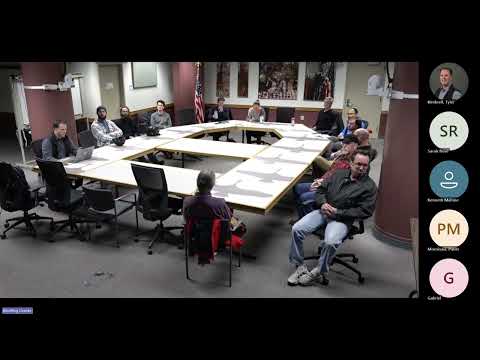
Bicycle advisory board adopts resolution seeking stronger protection for Maxwell bike lanes, adds design‑standard requirement
Summary
Spokane’s Bicycle Advisory Board voted to send a resolution supporting protected and buffered bike lanes on Maxwell from Petit to Walnut to the Transportation Commission, and amended it to require adherence to recognized design standards (NACTO/AASHTO) where feasible.
The Bicycle Advisory Board on an unspecified date voted to adopt a resolution supporting a grant‑funded project to install protected and buffered bike lanes on Maxwell from Petit to Walnut and asked that the final design maximize continuous, parking‑protected facilities and avoid door‑zone lanes.
The board’s action came after city staff presented the latest designs and answered members’ questions about safety tradeoffs, parking changes and available right‑of‑way. City staff member Inga said the design team “went with this version because I thought it was safer than having to deal with the right hook,” describing a choice that places some bicyclists in mixed traffic at heavy right‑turn locations rather than keeping a separate bike lane that would put cyclists immediately adjacent to turning vehicles.
Board members pressed staff on several points, including an earlier drawing that added a parking lane next to county‑owned property; staff confirmed that parking was removed from that segment after review. Members asked about lane widths (staff gave the curb lane dimension as about 12.5 feet at one point) and about whether a continuous, curb‑protected bike lane could be built to the intersection rather than merging into a right‑turn lane. Staff described several options the design team has considered: keeping a continuous protected bike lane up to intersections (losing a right‑turn lane), allowing the bike lane to merge with the right‑turn lane to reduce right‑hook risk, or providing intermediate designs that widen the right‑turn lane and create a designated cyclist waiting area at the stop bar.
Staff also said the project would include intermittent hardscape (two‑foot concrete islands with delineators in some blocks where budget and drainage allow), added crosswalks and a rebuilt signal with a separated left‑turn phase at a major intersection — measures intended to improve safety for pedestrians and cyclists. Staff warned that continuous concrete protection “can’t go the whole way” because of drainage and budget constraints, and that some narrower segments will use a 6‑inch curb and delineators.
Board members recommended additional refinements: reducing exposure to vehicle doors, looking for opportunities to weave the bike lane between the through and right‑turn lanes where geometry allows, and carrying bike‑striping and green paint through intersections so cyclists remain visible. Pablo, a board member, said the draft resolution signaled support for better protection but asked whether the board was being specific enough about what “better” means: “so I guess the resolution is that we want something better. We’re not actually saying what it is.”
To address that concern, the board amended the resolution to explicitly ask that the final design adhere to established national design guidance (references in discussion included NACTO and AASHTO) and other best practices for all‑ages‑and‑abilities bicycle facilities. The amendment was moved and seconded and passed by voice vote; the board then voted to adopt the resolution as amended by voice vote. The board’s staff liaison said the Bicycle Advisory Board can ask the Transportation Commission to adopt or append its recommendation after the commission conducts its own review.
Why it matters: Maxwell runs near Maple and Ash, where heavy right‑turn movements and commercial activity raise collision risk for people on bikes. The board’s resolution asks project designers to maximize physical protection and to follow national guidance, which could influence the city’s final striping, curb and signal decisions as the project goes to bid.
Next steps: The board forwarded the amended resolution to the Transportation Commission for its consideration. Staff noted the project is grant‑funded and going to bid; final construction details will depend on bid results, drainage constraints and available funding.