Get Full Government Meeting Transcripts, Videos, & Alerts Forever!
Get email alerts on the Surveillance topic
No spam. Unsubscribe anytime.
Residents press city about new license‑plate reader cameras; commission refers questions to police and council
Summary
At the Jan. 21 meeting several residents raised privacy and cost concerns about recently installed license‑plate reader cameras; commissioners said the matter lies with the police department and City Council and suggested public outreach.
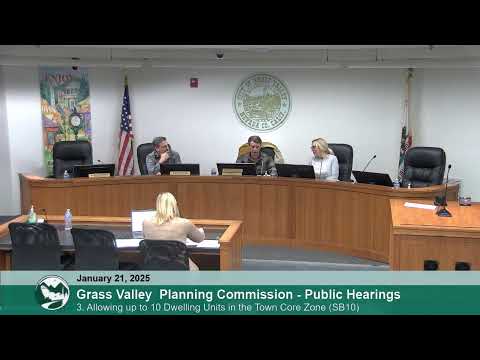
Several residents used the Jan. 21 public comment period at the Grass Valley Planning Commission meeting to raise concerns about newly installed camera posts and license‑plate reader (LPR) devices around the city.
Laura McCleary, who said she submitted a public records request to the Police Department, described small black posts topped with cameras and solar panels and reported the department’s reply that the devices are part of a Flock Safety LPR system. She said the department’s response indicated a 30‑day maximum retention period for data and that the system involves outside agencies; she also cited what she said was a cost figure of about $66,000 to $66,550 from general funding. McCleary said the deployments felt like overreach: “It just seems like, you know, here we are in a small town… I think it’s an overreach. And I think it’s actually really creepy. I don't wanna live in a 15 minute, city.”
Commissioners and staff responded that the Planning Commission does not have jurisdiction over police surveillance purchases and recommended that residents contact the Police Department and City Council. One commissioner suggested the Police Department publish public information explaining what was installed and how data are used to increase transparency. The commission did not take formal action on the devices.
Background and clarifications provided during the meeting: the public record response quoted to the commission noted Flock Safety as the LPR provider, a 30‑day maximum retention for some records, and stated that data may be accessible by outside agencies. A staff member reiterated the Planning Commission’s limited purview and directed residents to city council as an avenue for policy questions.
No formal vote or policy change was recorded; commissioners urged that the Police Department or City Council provide public outreach to explain what was installed, how data are used, and the retention and sharing policies.
Context: License‑plate reader systems raise privacy, retention, and data‑sharing questions in many jurisdictions; at this meeting the issue was raised by residents during general public comment and the Planning Commission directed residents to police and council channels for further action.