Get Full Government Meeting Transcripts, Videos, & Alerts Forever!
Get email alerts on the Short Term Rentals topic
No spam. Unsubscribe anytime.
Planning Board sends short‑term rental ordinance to town warrant after public hearing
Summary
After a lengthy public hearing and edits based on earlier forums, the Planning Board voted to place a proposed short‑term rental regulation on the town warrant. The draft sets safety inspections, occupancy limits and enforcement procedures; residents debated scope, appeals and impacts on tourism and housing.
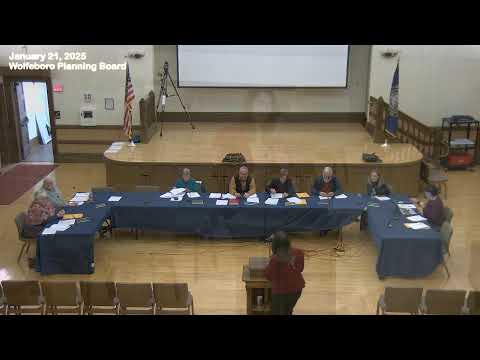
The Wolfeboro Planning Board voted Jan. 21 to move a proposed ordinance regulating short‑term rentals to the town warrant after a public hearing that drew many residents.
The draft ordinance states its purpose is to regulate short‑term rentals to promote health and safety, minimize neighborhood disruption and promote general welfare. Under the proposal, short‑term rentals would be permitted in all zoning districts by conditional use permit issued by the planning board. As part of approval and every two years thereafter, the dwelling would be inspected by Wolfeboro Fire & Rescue and the code enforcement officer.
Key provisions read to the board include: smoke and carbon monoxide detectors that meet the New Hampshire Fire Code and the New Hampshire State Building Code; emergency escape doors or windows in sleeping areas; a visible kitchen fire extinguisher; a maximum occupancy of two people per bedroom plus two additional occupants; bedroom counts determined by NH DES septic approvals or town assessing records (whichever is fewer); functioning septic systems for properties not on town sewer and, where necessary, NH DES approval or an updated septic evaluation; compliance with the town’s off‑street parking standards (Article 22); proof of a current New Hampshire rooms and meals tax identification number; and a requirement that the property owner or designated manager provide contact information and be available to address issues during rental periods.
Enforcement language cited the state zoning enforcement statutes (RSA 676:17 series) as the procedural route: code enforcement first attempts compliance, then may issue citations and take further enforcement action if compliance is not achieved.
Public commenters raised several recurring concerns. Suzanne Ryan urged more specificity about appeals and warned that changing the approval route to conditional use permit could force some denied applicants to superior court; she cited attorney commentary that conditional use permit procedures must be clearly detailed to avoid due‑process claims. Mary Jane Shelton and other residents expressed concerns about restricting stays shorter than 30 days, saying that requirement could reduce tourist visits and hurt local businesses that depend on short visits. Linda Gagne asked why the proposal applies new inspection and safety requirements to short‑term renters and not to longer‑term tenants; planning staff and board members responded that long‑term tenancies are governed by other state regulations and that the short‑term rules aim to address rapid turnover, party events, septic capacity and safety for transient guests.
Bobby Budman supported the proposal as a safety measure, saying short‑term visitors should be able to locate fire extinguishers and that inspections align short‑term units with conditions expected of inns and hotels.
Board members said the language had been revised after an Oct. 15 public forum and a December public hearing to reflect that approvals would be conditional use permits rather than special exceptions and to incorporate fire department and code officer input. The board also clarified that existing short‑term rentals will be grandfathered and that denials may be appealed by applicants through existing statutory routes; the planning board suggested variances or other procedures available through the zoning process when appropriate.
After the hearing, a planning board member moved to send the proposed short‑term rental ordinance to the town warrant. The motion was seconded and carried by the board; the planning board recorded the vote and will include the proposal on the warrant for voter consideration.