Get Full Government Meeting Transcripts, Videos, & Alerts Forever!
Get email alerts on the Regional Planning topic
No spam. Unsubscribe anytime.
Regional planning agency outlines grants, data tools, climate and detention projects for Schenectady County
Summary
The Capital District Regional Planning Commission told the Schenectady County Legislature committee it has secured federal and state grants, completed a broadband feasibility study for the county, and is overseeing a $26 million juvenile detention expansion reimbursed primarily by New York state.
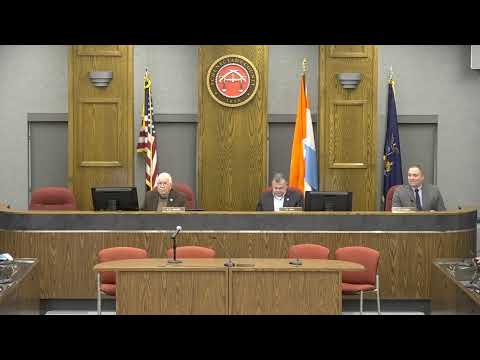
Marcus Stuagione, executive director of the Capital District Regional Planning Commission, briefed the Schenectady County Legislature Committee on Economic Development and Planning on the agency’s current programs and recent grants.
The commission told legislators it functions as a New York State certified data center, a designated Economic Development District for the federal Economic Development Administration and a local development district for the Northern Border Regional Commission; it provides planning and grant-writing support to county municipalities and produces data visualizations and dashboards for local use.
In his presentation, Stuagione highlighted five program areas the commission prioritizes: data services and visualization, federal economic development district work, Northern Border Regional Commission grants, sustainable communities initiatives (including a NYSERDA Clean Energy Communities program), and water-quality planning in partnership with the Department of Environmental Conservation.
The commission said it helped secure grants for Schenectady County, including about $700,000 in NYSERDA Clean Energy Communities awards since 2017 and a $300,000 grant that the county used to purchase electric vehicles for its fleet. The commission also described a completed regional broadband feasibility study funded by a $350,000 Department of State grant that identifies unserved and underserved locations and estimates costs for expansion.
Stuagione said the commission was awarded $1,000,000 from the U.S. Environmental Protection Agency to develop a comprehensive regional climate action plan that will propose sector-specific carbon reduction strategies; he said Schenectady County serves on the Municipal Climate Leadership steering committee and that a draft plan is expected in September.
On water-quality work, he said the commission recently completed a project in the city of Albany that will remove about 400,000,000 gallons per year of combined sewage from the Hudson River. He also noted the commission oversees the intermunicipal board that runs the regional juvenile detention facility and that the commission is managing a $26,000,000 renovation and expansion to accept 16- and 17‑year-old youth under New York State’s Raise the Age law. Stuagione said the state will reimburse the project at 89 percent, leaving the four counties collectively responsible for about $2,400,000; Schenectady County’s share was described as about $550,000 spread over 15 years.
Stuagione also described data products the commission maintains, including capitalregionindicators.org, developed with partners including the University at Albany and the Capital Region Chamber; he said the site contains roughly 50 Census-derived indicators for every municipality, school district and census geography in the four-county region and that the commission offers training on these tools.
Legislators asked how the commission engages municipalities; Stuagione said each county has commissioners on the CDRPC board (five from each county) and that the commission also works with stakeholder groups such as IDAs, Metroplex, the Chamber of Commerce, and local water-quality organizations. Charles Davidson of the county manager’s office was identified as a county representative on a climate steering committee.
The commission asked the legislature to continue county contributions, saying that in 2024 each county dollar invested in CDRPC leveraged $4.75 of outside revenue and that the counties’ core contributions are used as grant match to attract outside funds.