Get Full Government Meeting Transcripts, Videos, & Alerts Forever!
Get email alerts on the Economic Development topic
No spam. Unsubscribe anytime.
Johnson highlights $150 million in infrastructure spending, EV and industry expansions, $17 million in transit grants
Summary
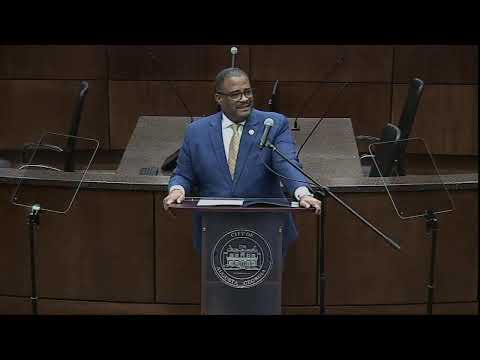
Mayor Garner L. Johnson said the city dedicated $150 million to roads, drainage and sidewalks, touted industrial expansions and tourism figures, and said Augusta Transit secured $17 million in grants — including $12.1 million for electric buses and plans to deploy five buses in 2025.
Mayor Garner L. Johnson told the State of the City audience that the administration dedicated $150,000,000 to road paving, storm drainage upgrades and sidewalk repairs and outlined recent private and public investments intended to expand jobs and tourism.
The mayor cited several private-sector expansions: she named a ScienceCO electric-vehicle materials plant expansion, a StandardAero hangar expansion, TF Casting Solutions and a new James Brown Arena project as examples of investments that the mayor said will bring thousands of jobs. Johnson also said the city’s partnership with the Biden–Harris administration designated Augusta as a workforce hub city and a regional tech hub, which she said helps connect residents to quality careers.
Economic and tourism figures offered in the address included a mayoral statement that visitor spending totaled $854,000,000 in 2024 and supported about 26,000 jobs; the mayor described tourism as the region’s fifth-largest industry.
On transit and clean energy, Johnson said Augusta Transit secured $17,000,000 in grants, including $12,100,000 intended for electric buses and workforce development; she said the department planned to deploy five electric buses in 2025, calling it the region’s largest clean-energy transit project. The mayor added that Augusta Transit planned upgrades to 619 bus stops to achieve ADA compliance.
Public-safety and infrastructure execution items the mayor cited included paving 24 roads, cleaning 77,000 feet of ditches, demolishing 45 vacant structures and conducting code-enforcement sweeps that produced more than 1,500 inspections and 205 new cases.
Why this matters: capital spending, grant awards and private-sector projects affect jobs, mobility and the city’s ability to recover economically from the storm.
The mayor concluded by saying the city will continue to partner with regional and federal partners to support workforce programs, secure grant funding and move projects into construction.